Contact Us Careers
Lung Cancer

For advanced lung cancer with bone and brain metastases, a new evaluation report has been released

时间:2026-04-22 人气:

If you cannot understand the subsequent professional description, you can finish reading this text in two minutes

Disease Overview


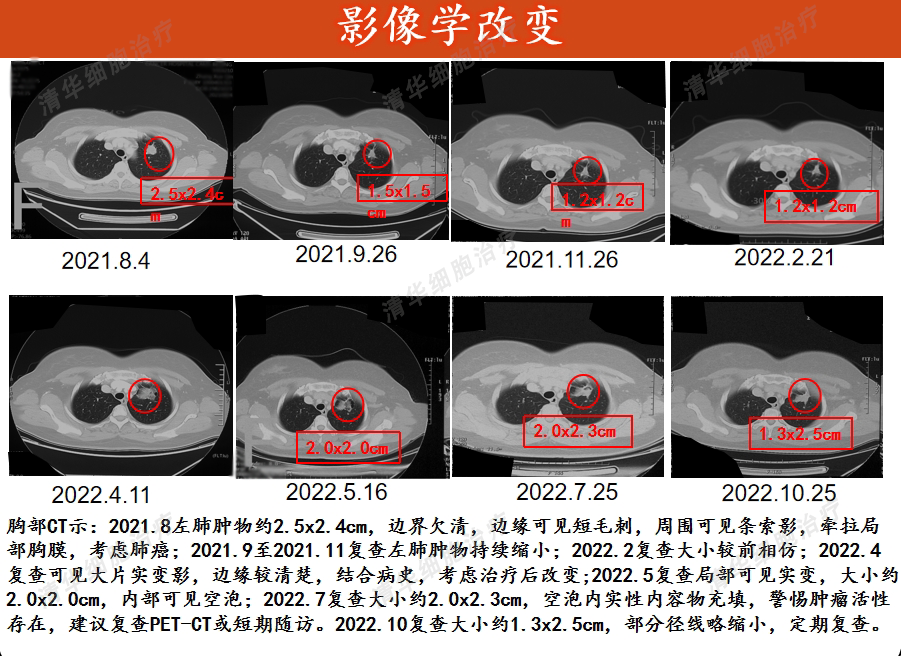
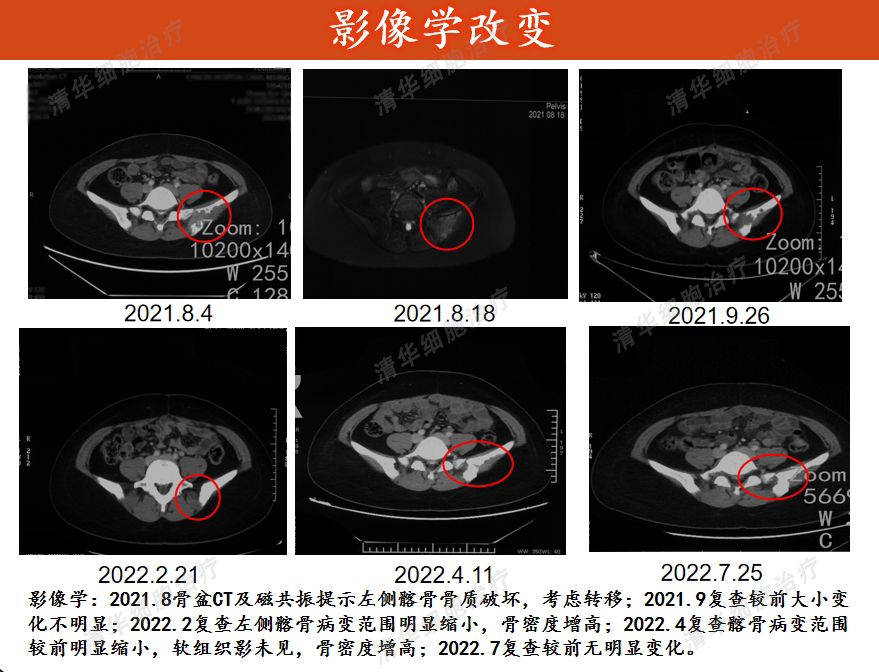
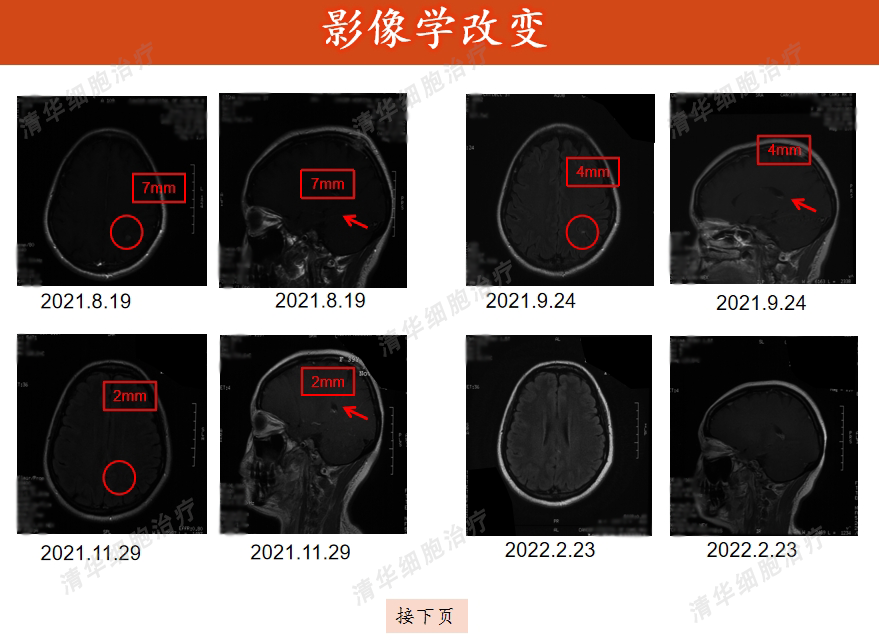
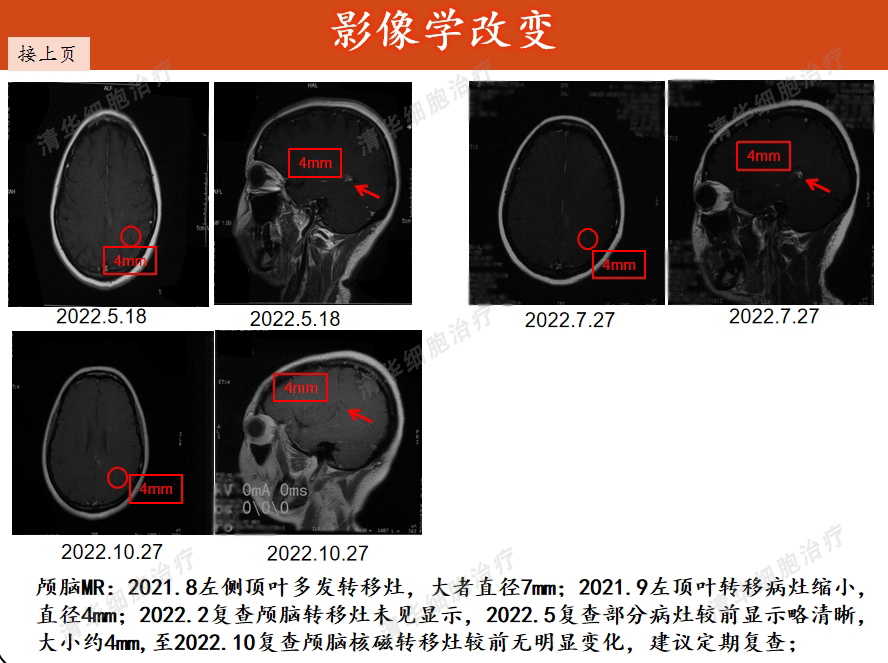
On August 5, 2021, Ms. Zhang underwent a CT contrast-enhanced scan, revealing an irregular mass in the left upper lobe of the lung, suggesting a high possibility of left upper lobe cancer. The left ilium showed signs of bone destruction, indicative of metastasis. Subsequent pathological biopsy confirmed the diagnosis: moderately-to-poorly differentiated adenocarcinoma in the left upper lobe of the lung. Genetic testing results indicated a mutation in exon 19 of the EGFR gene. A follow-up MRI scan detected bone destruction in the sacrum and left ilium, as well as multiple nodules in both hemispheres of the brain, considered to be metastatic lesions.
Due to the presence of multiple metastatic lesions, surgical treatment was not pursued. Ms. Zhang commenced oral targeted therapy with Osimertinib.
Department
Pu    
small
   
Knowledge

Recognition


EGFR gene mutation

The EGFR gene is a type of gene that expresses epidermal growth factor receptors, promoting normal cell division and proliferation under physiological conditions. However, mutations in certain proto-oncogenes can lead to the development of tumors, with a higher incidence in non-smoking female lung adenocarcinoma. Typically, mutations in individual exons of EGFR make lung adenocarcinoma more sensitive to specific targeted drugs, which is why Ms. Zhang chose the targeted drug Osimertinib for treatment after discovering multiple metastases.

Taking targeted drugs can delay tumor progression to some extent, but there is a problem of drug resistance. Ms. Zhang and her family were concerned that targeted drugs alone could not control tumor growth, so they sought the help of Professor Zhang Minghui's NKT treatment team at Tsinghua University School of Medicine. After carefully reviewing the case presentations of NKT cell therapy, they particularly hoped to try it to delay tumor progression.  
After carefully reviewing Ms. Zhang's medical records, Professor Zhang Minghui made the following analysis and judgment:

1. The patient has lung adenocarcinoma, which has already developed multiple metastatic lesions at the time of diagnosis, and there is no opportunity for surgery.

2. The patient is currently undergoing targeted therapy, but due to the presence of an unresected primary lesion, the tumor burden remains significant.

3. NKT therapy utilizes potent immune cells to eliminate tumor cells, with essentially no side effects, making it highly patient-friendly.

4. Currently, the patient has the option to undergo high-precision radiotherapy or radiofrequency ablation to eliminate the primary lesion and reduce the tumor burden, while concurrently receiving targeted therapy in combination with NKT cell therapy to maximize tumor suppression.
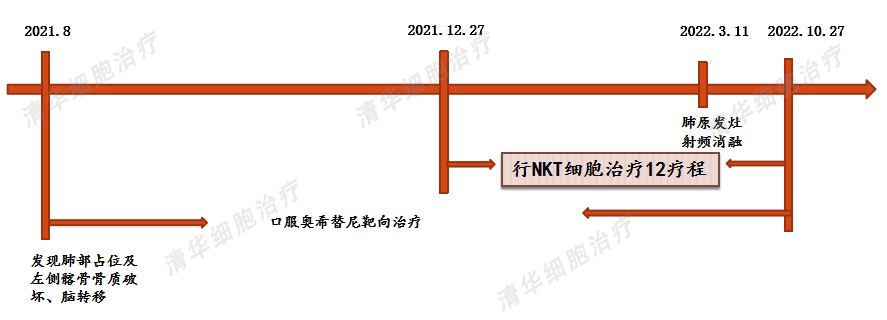
After consulting with Professor Zhang, Ms. Zhang decided to undergo NKT cell immunotherapy in December 2021, with an initial regimen of one course per month. In March 2022, radiofrequency ablation was performed on the primary lesion to reduce the tumor burden, and subsequent multiple follow-up examinations have assessed the overall condition as stable.
As of October 2022, 12 courses have been completed, and no significant progression has been observed without undergoing surgery, achieving the expected outcomes.


Imaging

,  


Tumor markers

 
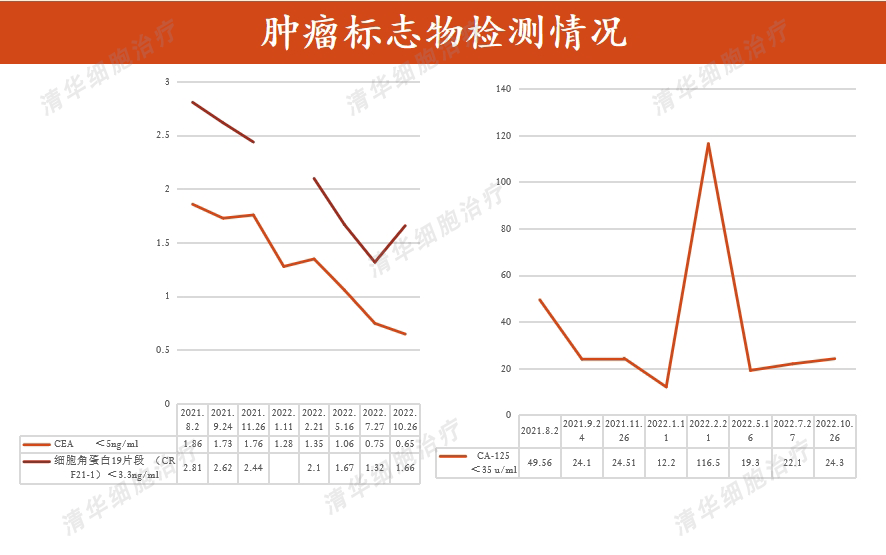
Tumor markers: CEA, Cyfra21-1 showed no abnormalities from August 2021 to February 2022; CA125 gradually decreased to the normal range from August 2021 to January 2022, but significantly increased during the follow-up examination in February 2022. Close monitoring is recommended to guard against recurrence.


 Conclusion and Comments

Ms. Zhang's quality of life has been greatly improved, her mental state is excellent, and she feels more energetic and vigorous than before. She has returned to her pre-illness state, living and working normally without being affected by the disease. Her latest life treatment score has reached 91 points.
When Ms. Zhang discovered her tumor, she had already developed brain and bone metastases, thus losing the opportunity for surgery. However, under Professor Zhang's advice, she underwent radiofrequency ablation and targeted drug therapy combined with NKT cell therapy. Over the past year, her overall condition has remained stable with no progression, as evidenced by multiple follow-ups.
Brain metastases (BMs) and bone metastases significantly affect the prognosis of lung cancer patients. Many studies aim to prolong patients' lifespan and improve their quality of life. Among them, Osimertinib is a highly selective EGFR mutant inhibitor. Some studies have shown that the efficacy of Osimertinib treatment can control tumor progression to a certain extent.
Due to the high malignancy and late stage of Ms. Zhang's tumor, she would typically have lost the opportunity for long-term survival. However, with the combination of various treatments, Ms. Zhang's condition has remained stable for a long time. In this process, NKT cell immunotherapy has played an indispensable role in reducing the risk of recurrence and metastasis. It not only eliminates residual tumor cells but also strengthens the immune system, thereby achieving long-term stability for patients.
Popular science knowledge is provided for reference only. For individual patients, clinical medical advice should prevail.   

Reference:< H359>

【1】Pruksakorn D, Phanphaisarn A, Settakorn J, Arpornchayanon U, Tantraworasin A, Chaiyawat P, Klangjorhor J, Teeyakasem P. Prognostic score for life expectancy evaluation of lung cancer patients after bone metastasis. J Bone Oncol. 2017 Nov 3; 10: 1-5.
NKT Classic Case Review

Click on the image

to view< H391>