About Lehe
乐于心,和与众,与己乐,与人和; 心宽念纯,百病无生。

乐于心,和与众,与己乐,与人和; 心宽念纯,百病无生。


If you cannot understand the subsequent professional description, you can finish reading this text in two minutes
Disease Overview
knowledge
Mucinous adenocarcinoma of the lung
According to the WHO histological classification, lung adenocarcinoma can be divided into mixed type, alveolar type, papillary type, bronchioloalveolar carcinoma type, adenocarcinoma with mucin secretion, and some variant types. Mucinous adenocarcinoma of the lung (MPA) is a special subtype of lung adenocarcinoma, characterized histologically by the presence of abundant mucin within the tumor, with unique clinical pathological features and immunophenotypes.
The overall prognosis of MPA is worse than that of other subtypes of lung adenocarcinoma, possibly due to its higher metastatic rate, including intrapulmonary metastasis, hematogenous metastasis, and lymphatic metastasis.
1. The patient was diagnosed with lung cancer in 2013 and underwent surgical treatment. The tumor was mucinous adenocarcinoma of the lung, which is relatively rare clinically and has a poor prognosis.
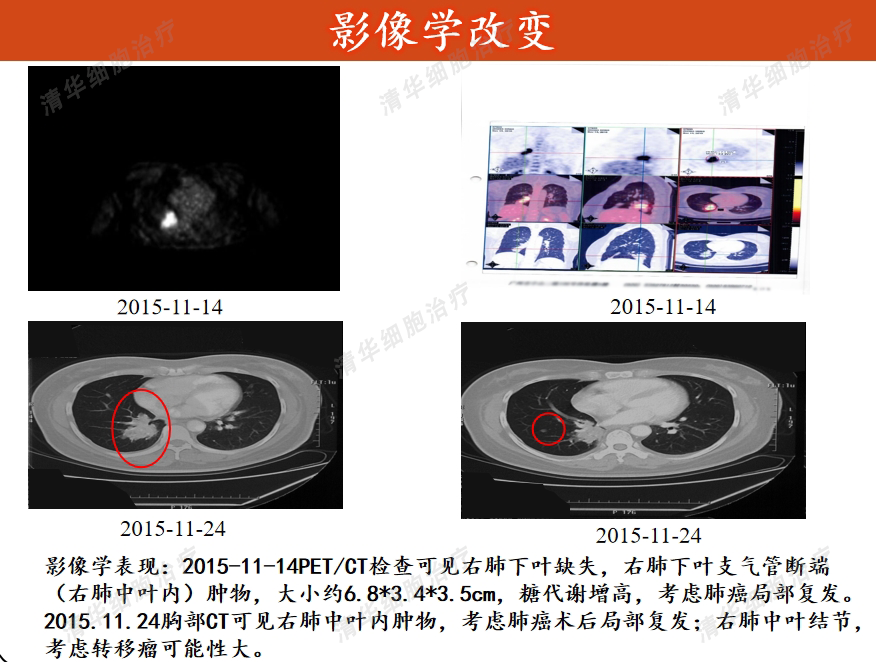
2. The patient's first surgery revealed no lymph node metastasis and was staged relatively early, yet recurrence occurred two years later.
3. Apart from specific pathological types, involvement of visceral pleura and segmental bronchi is also a risk factor for future recurrence.
4. NKT therapy utilizes powerful immune cells to eliminate tumor cells that may remain undetected in the body, with essentially no side effects. Combining NKT cell therapy after surgical treatment can effectively inhibit tumor growth, prolong survival, and improve quality of life.
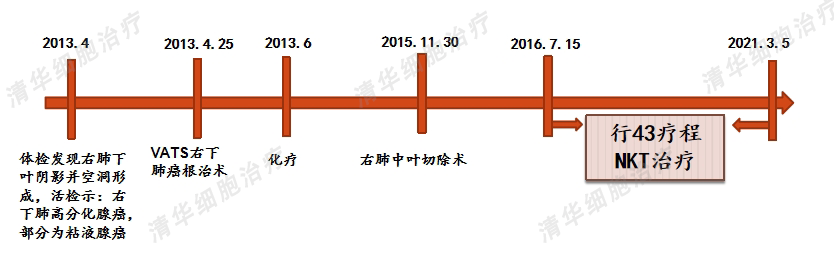
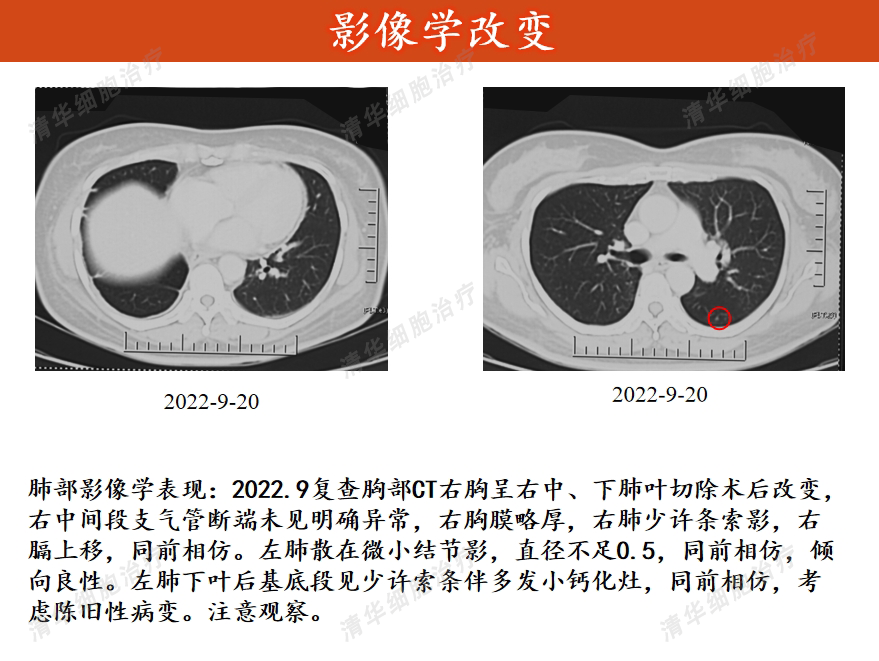
In 2016, Ms. Zhong began NKT cell therapy, and by March 2021, she had completed 43 courses of treatment. Multiple follow-up examinations showed no clear signs of tumor recurrence, and her overall condition remained stable.
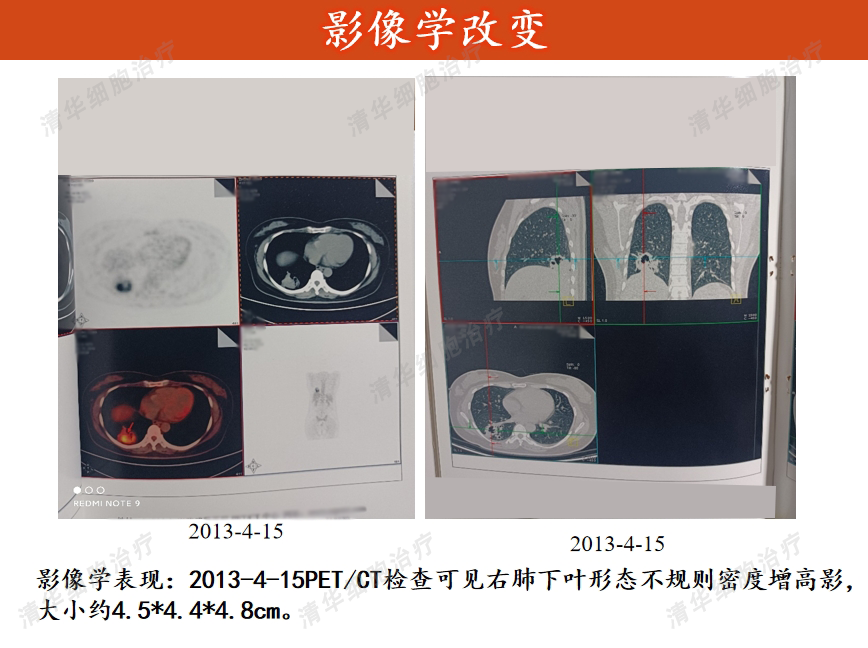
Imaging
Conclusion and Comments
Reference:< H303>
Click on the image
Address: Room 1101 (Unit 101), 11th Floor, Building 1, No. 7 Courtyard, Kexueyuan Road, Life Science Park, Changping District, Beijing
Phone:010-8265 9866
Email:lehemedneo@hotmail.com