Contact Us Careers
Other Solid Tumors

Fighting kidney cancer for 11 years: this is his way of survival

时间:2026-04-22 人气:

If you can't understand the subsequent professional descriptions, just take two minutes to read through this text

Overview of the condition


Mr. Chen discovered intermittent gross hematuria without pain in March 2013. Upon visiting the hospital for an ultrasound examination, a giant mass lesion (6.6cm*5.4cm) was found in the upper pole of the left kidney. On March 21, 2013, a radical nephrectomy of the left kidney was performed via abdomen incision. Postoperative pathology revealed: clear cell carcinoma of the left kidney.
Postoperatively, he underwent autologous DC tumor vaccine therapy.
Four years later, on October 12, 2017, Mr. Chen's follow-up PET-CT scan revealed nodular shadows in the upper and lower lobes of the right lung with increased metabolism, suggesting the possibility of malignant metastasis. There was also a slightly high-density shadow in the right occipital lobe, considered to be possibly metastatic.
To treat the metastatic lesions, Mr. Chen underwent gamma knife radiotherapy for some lung lesions and brain metastases at the People's Liberation Army Army General Hospital in October 2017.
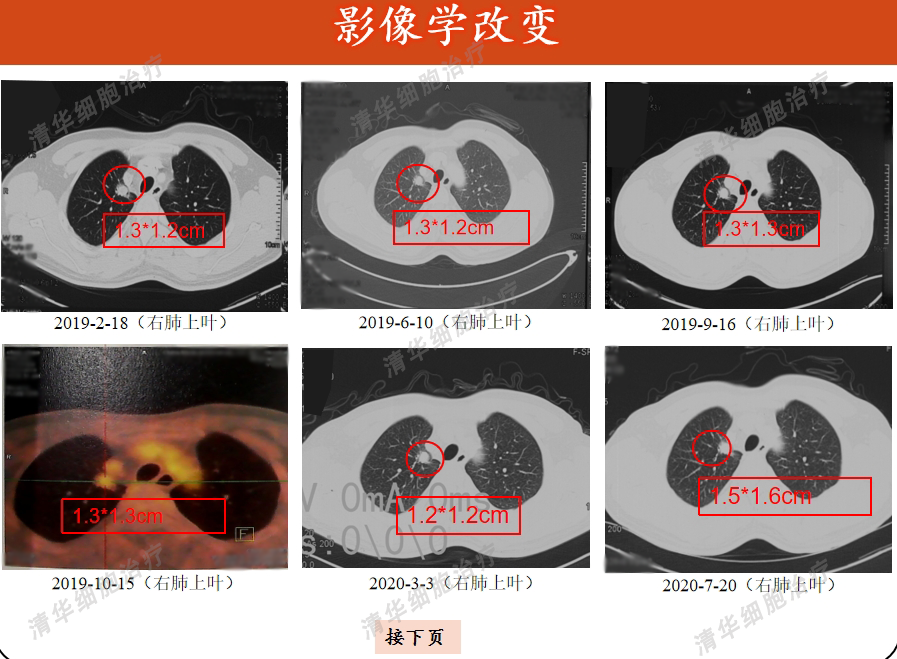
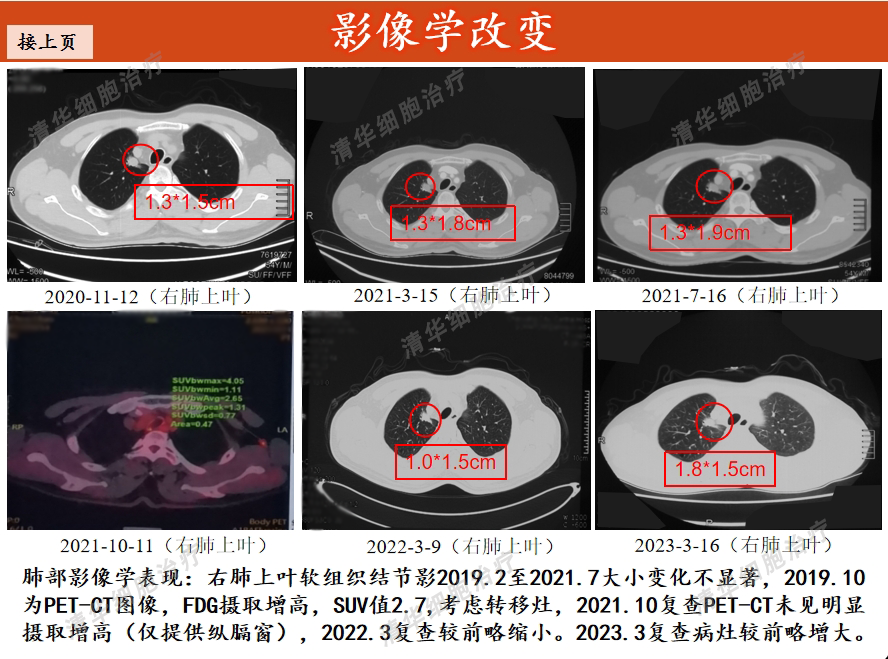
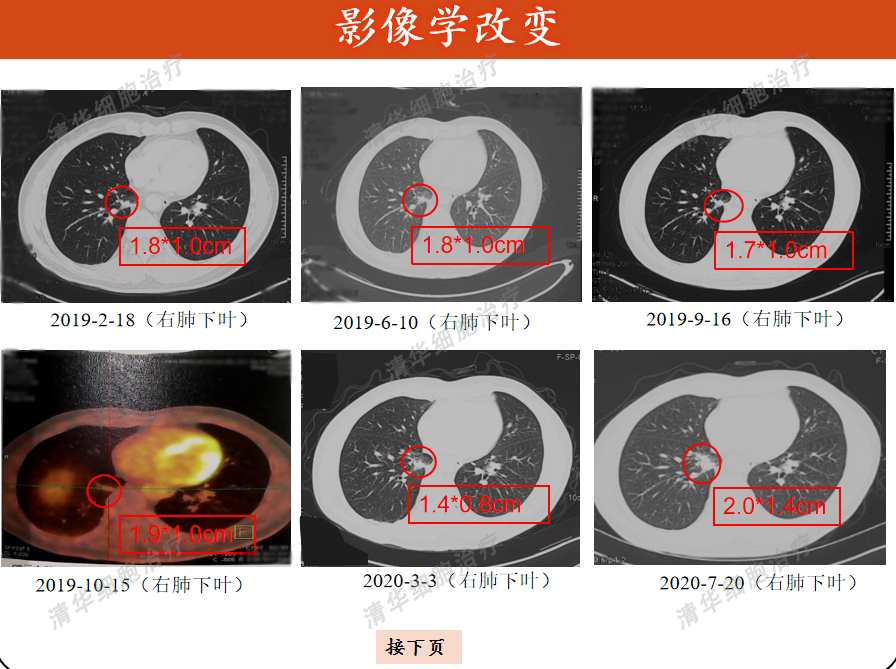
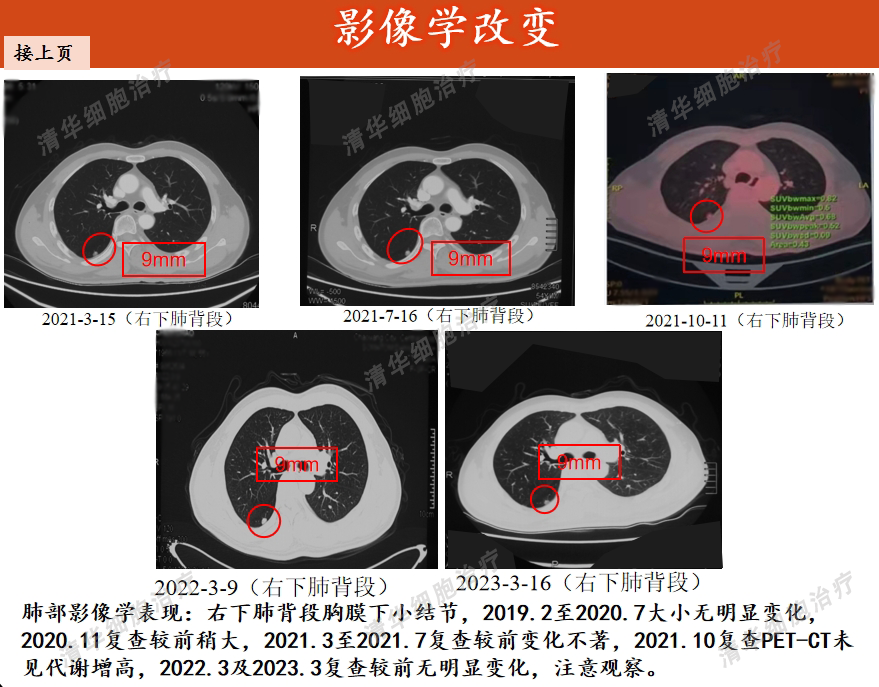
Two years later, in February 2019, Mr. Chen underwent a follow-up chest CT scan: a metastatic tumor adjacent to the mediastinum in the upper lobe of the right lung, with the lesion slightly larger than in the previous examination. The disease progressed again .
Department
Pu    
small
   
Knowledge

knowledge


Renal cell carcinoma  
 

The most common pathological type of kidney cancer is renal clear cell carcinoma, which is composed mostly of clear cells, hence the name clear cell carcinoma.

Painless hematuria throughout the entire urination process is a characteristic of kidney cancer. Pain may also occur in kidney cancer, but it is mostly located in the kidney area, commonly referred to as the "lower back" by the general public. However, in recent years, most kidney cancer patients are found to have asymptomatic kidney cancer during health check-ups, accounting for more than 50% to 60% of all kidney cancer patients. Therefore, regular physical examinations are of great significance for early detection and treatment.
After four years of stable condition, Mr. Chen experienced consecutive lung and brain metastases, which made him very nervous. Although radiotherapy had weakened the tumor to some extent, it later progressed again. Mr. Chen was very worried about this, and in order to control the tumor's development, he sought the help of Professor Zhang Minghui's NKT cell therapy team at Tsinghua University School of Medicine, hoping to delay the tumor's progression with the cooperation of NKT therapy.
After reviewing Mr. Chen's medical records, Professor Zhang Minghui made the following analysis and judgment:

1. The patient was diagnosed with renal clear cell carcinoma and underwent radical surgery in a timely manner. Post-surgery chemotherapy for renal cancer exhibits significant individual variability, with most patients being insensitive to chemotherapy. Mr. Chen chose not to undergo chemotherapy.

2. However, renal cancer is sensitive to immunotherapy, such as NKT cell therapy, anti-PD-1 monoclonal antibody, and anti-PD-L1 monoclonal antibody. For patients who cannot undergo traditional chemotherapy after surgery, immunotherapy provides a new option. Mr. Chen chose dendritic cell vaccine post-surgery and maintained stability for four years, which sufficiently demonstrates this point.

3. However, subsequent metastatic lesions were found in the lungs and brain, indicating that immunotherapy needs to be continuous and cannot be taken lightly.

4. Radiotherapy treatment reduced the tumor burden to some extent, but the tumor progressed afterwards, requiring additional therapeutic intervention. NKT therapy has few side effects and can be administered after radiotherapy has reduced the tumor burden to delay tumor progression.
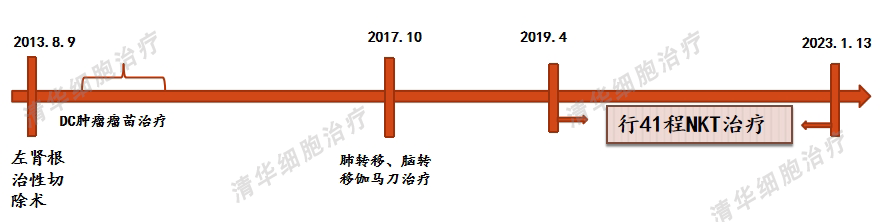
 

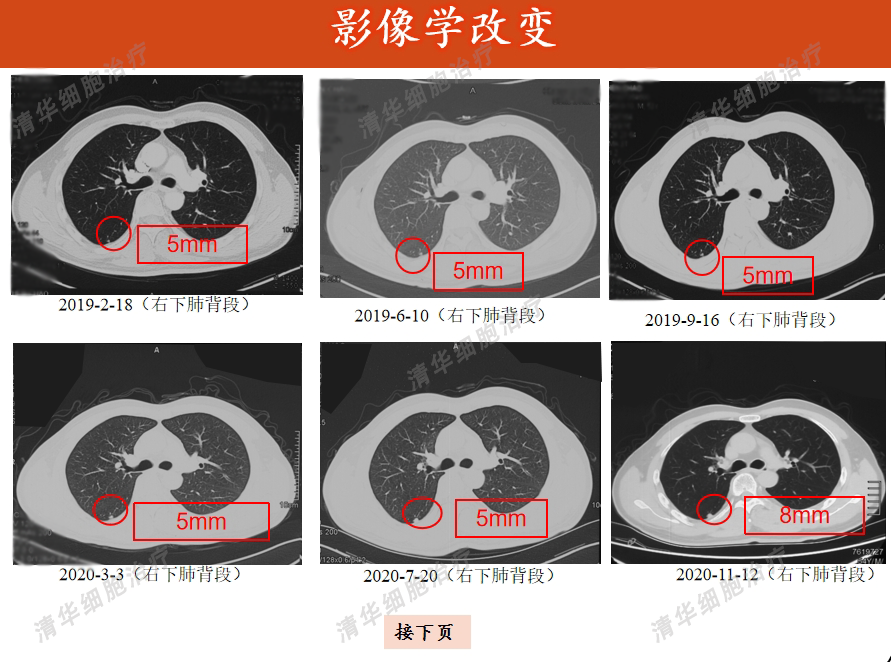
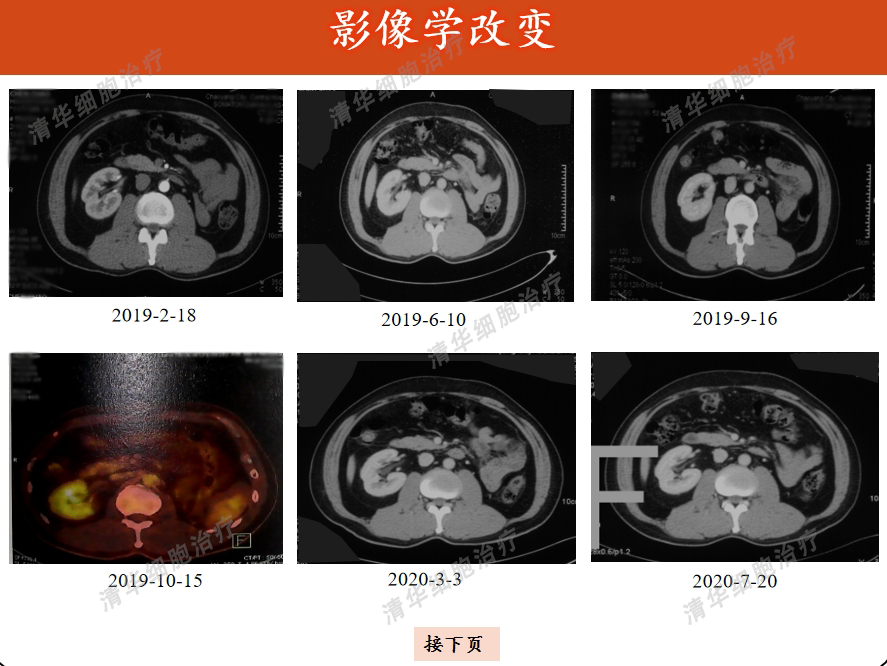
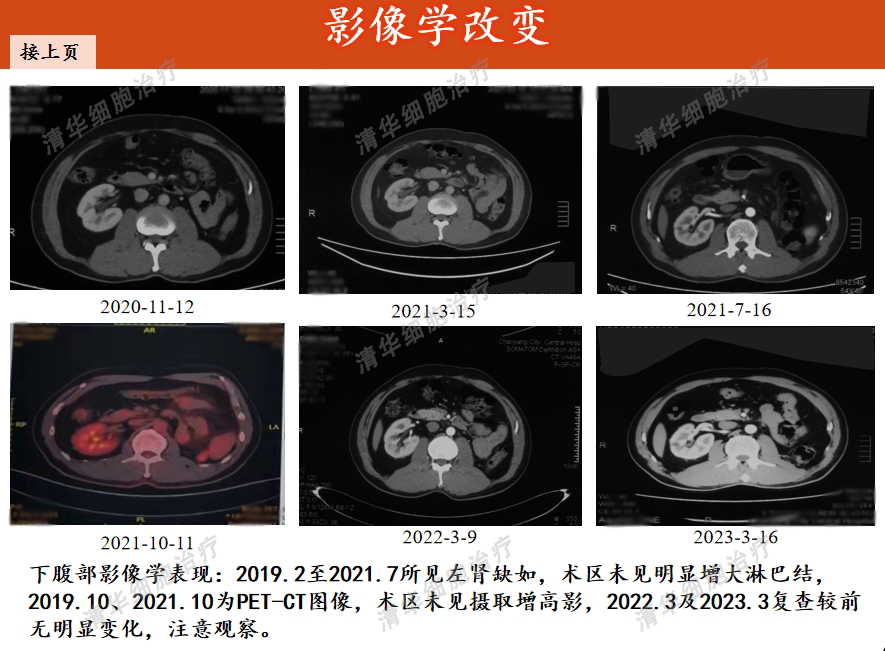
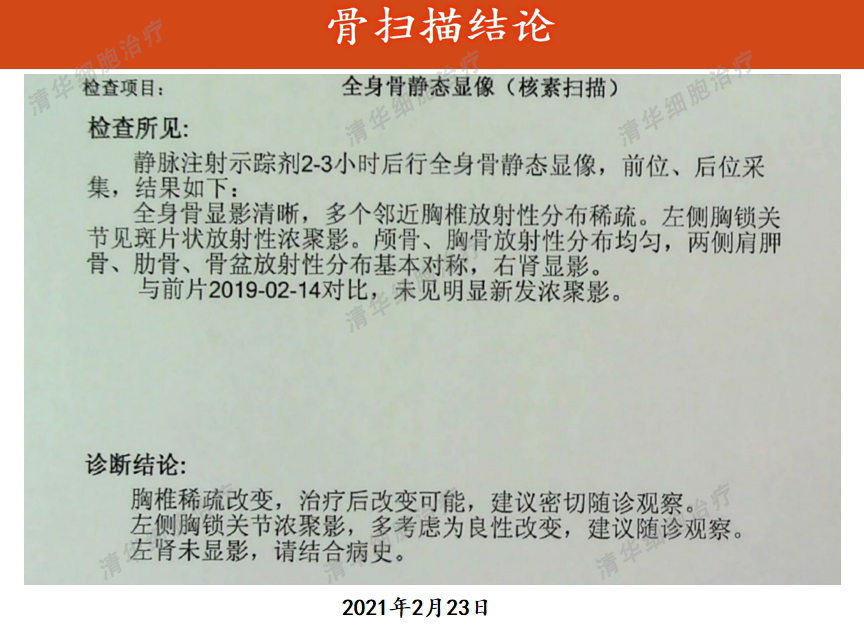
Mr. Chen underwent NKT cell immunotherapy in April 2019 and has completed 41 courses of treatment (as of January 2023). Multiple follow-up examinations during this period have shown no signs of metastasis or recurrence, and the overall evaluation is stable.


Image aspect


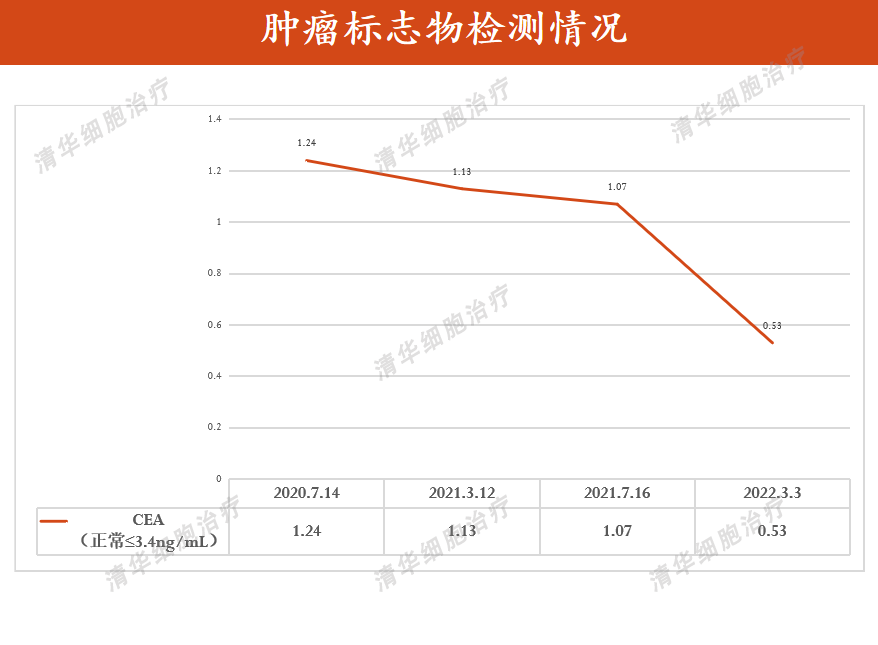
Tumor markers

Month  
 

Normal range of tumor marker CEA from July 2020 to March 2022.


 Conclusion and Comments


During this follow-up visit, Mr. Chen's mental state has significantly improved compared to before. He reported good appetite and sleep, and his quality of life is excellent. His score this time is 89, which is higher than before (88).
Mr. Chen underwent radical surgery and experienced a stable period of up to 4 years, but ultimately developed metastasis. Typically, multiple metastatic lesions deprive patients of the opportunity for further surgery, so the goal of treatment is to control tumor progression. In Mr. Chen's treatment, radiotherapy was used to reduce tumor burden, followed by NKT cell therapy to further control the tumor and achieve the desired effect. Over the nearly 4 years of treatment, no progression was observed.
An analysis was conducted on 112 patients. The median age of the patients is 58 years old (ranging from 33 to 77 years old). The total number of metastatic lesions is 444, with an average of 4 brain metastases per patient. There were 28 cases (25%) of single brain metastasis. The overall survival rates at 12, 24, and 36 months after radiation surgery were 37.7%, 16.4%, and 9.3%, with an average overall survival period of 9.1 months (95% CI=7.1-11.8)[1].
Mr. Chen completed radical surgery and still experienced metastasis after a stable period of up to 4 years. This situation is not common overall, but it also indicates that the primary tumor has a high degree of malignancy and has achieved the expected effect after NKT cell therapy. There has been no progress in the nearly 4 years of treatment.
Popular science knowledge is for reference only, and individual patients should seek clinical treatment accordingly.   

Reference:< H383>

【1】Kidney cancer with brain metastases. Prognostic factors and treatment outcome.A V Golanov , S M Banov , E R Vetlova , O N Dreval , A K Bekyashev , S R Iliyalov , N A Antipina , A A Durgaryan , A A PogosovaVoprosy onkologii Pub Date : 2016-01-01

NKT Classic Case Review

Click on the image

to view< H411>