Contact Us Careers
Other Solid Tumors

Recurrence of oral cancer six months after surgery. How to reduce the risk of recurrence and metastasis after solid tumor surgery?

时间:2026-04-22 人气:

If you cannot understand the subsequent professional description, just take two minutes to read through this text

Overview of the disease


In January 2018, Ms. Qi underwent pathological biopsy due to unhealed wound from tooth extraction and the growth of new tissue from the wound, and was diagnosed with squamous cell carcinoma of the gingiva in the right maxilla. Subsequently, on January 4, 2018, she underwent extended resection of squamous cell carcinoma (SCC) of the gingiva in the right maxilla, subtotal resection of the right maxilla, right coronoid process resection, left anterior lateral thigh skin flap repair, and right cervical lymph node dissection. Postoperatively, she received 30 sessions of radiotherapy with a dose of 60 Gy.
In July 2018, Ms. Qi discovered white patches and a tumor on her right tongue, which slowly grew larger without any significant discomfort. On May 7, 2019, she underwent extended resection of the right tongue tumor. Postoperative biopsy revealed keratinizing squamous cell carcinoma at the edge of the right tongue (considered as recurrence of the original lesion). Postoperatively, she was treated with oral apatinib and temozolomide until January 2020.
Department
Pu    
small
Knowledge

knowledge


Oral Cancer

Oral cancer is a common malignant tumor in the head and neck region, referring to malignant tumors occurring in the floor of the mouth, tongue, hard palate, upper and lower gingiva, or buccal mucosa. Broadly speaking, oral cancer includes intraoral cancer, oropharyngeal cancer, and lip cancer. Based on the location of the malignant tumor, it can be divided into palatal cancer, buccal cancer, gingival cancer, floor of the mouth cancer, and tongue cancer. Excessive alcohol consumption, long-term smoking, frequent betel nut chewing, viral infections, genetic factors, and environmental factors can all lead to oral cancer.

Healthy individuals should improve their lifestyle habits in daily life to prevent oral cancer from its root causes, including stopping smoking, controlling alcohol consumption, avoiding betel nut, eating a balanced diet, and paying attention to oral hygiene. Patients with oral diseases should seek medical attention as soon as possible to identify the cause and receive active treatment. The relevant treatment measures taken for patients diagnosed with oral cancer aim to prolong their survival and improve their quality of life.

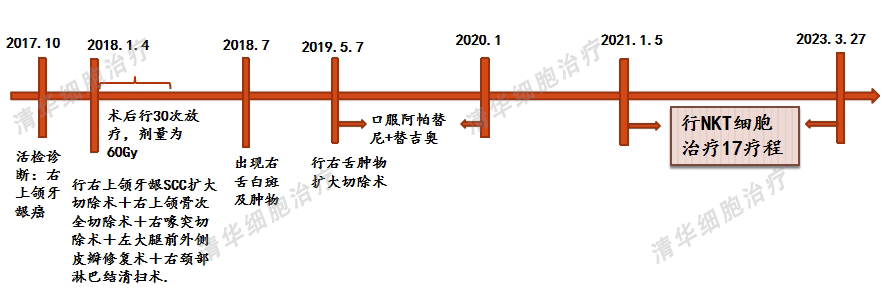
 

Half a year after the resection of the primary lesion, the disease recurred, causing Ms. Qi great panic. Therefore, she sought help from Professor Zhang Minghui's NKT cell therapy team at Tsinghua University School of Medicine, hoping to control tumor progression through combined NKT therapy.
After reviewing Ms. Qi's medical records, Professor Zhang Minghui made the following analysis and judgment:
1. The patient had a recurrence of squamous cell carcinoma of the upper right maxillary gingiva after surgery, and completed additional surgical treatment following the recurrence.
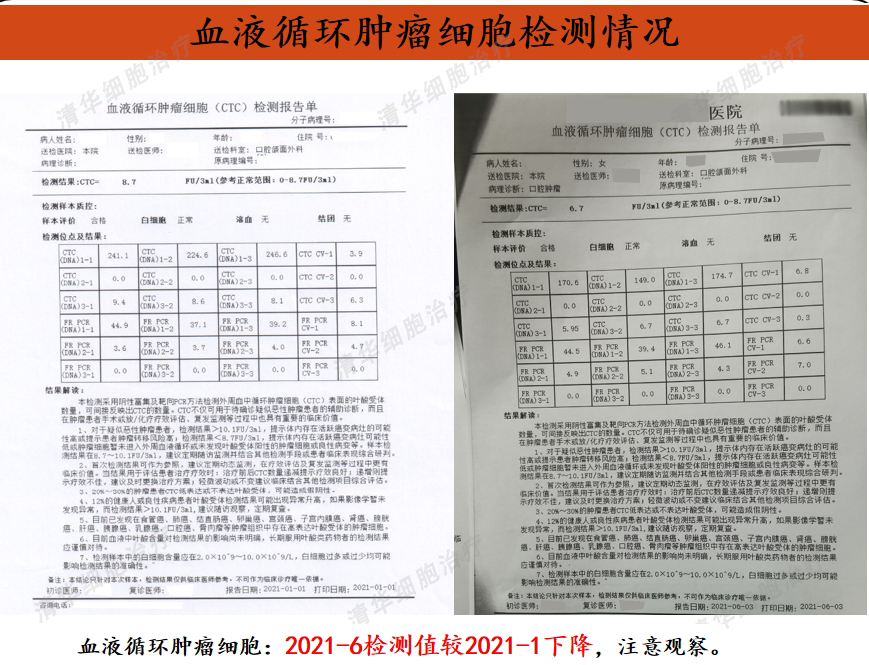
2. Radical surgery may not be able to completely eliminate tumor cells, as some tumor cells that have entered the circulatory system cannot be removed through surgery.  
3. The patient had previously been treated with targeted drugs, which have significant side effects and may develop resistance. The patient discontinued the medication in January 2020.  
4. NKT therapy utilizes powerful immune cells to eliminate potentially residual tumor cells, with essentially no side effects, making it very patient-friendly. After patients have completed conventional treatment, NKT cell therapy can be employed to enhance the immune cells' ability to kill tumors and prevent recurrence and metastasis.  

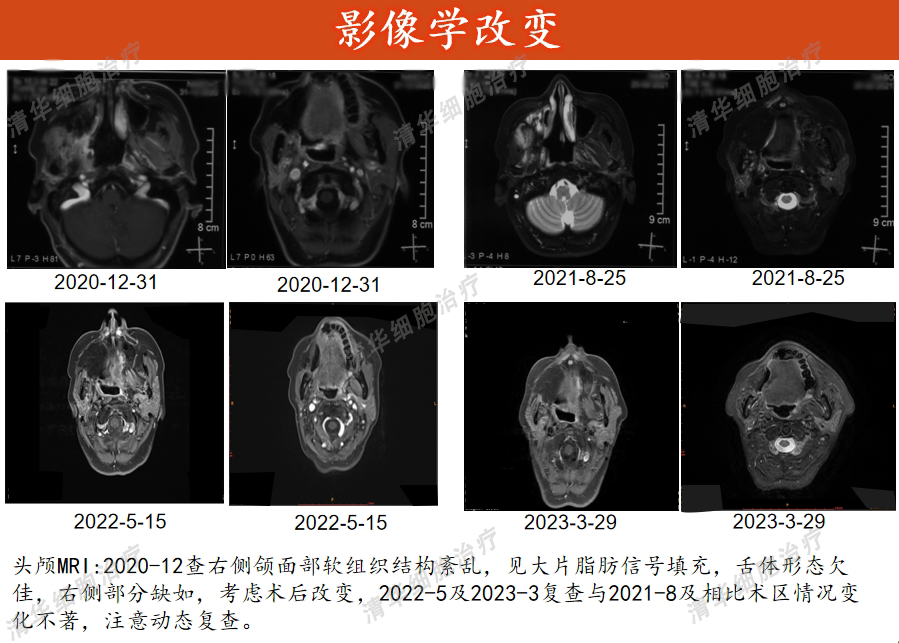
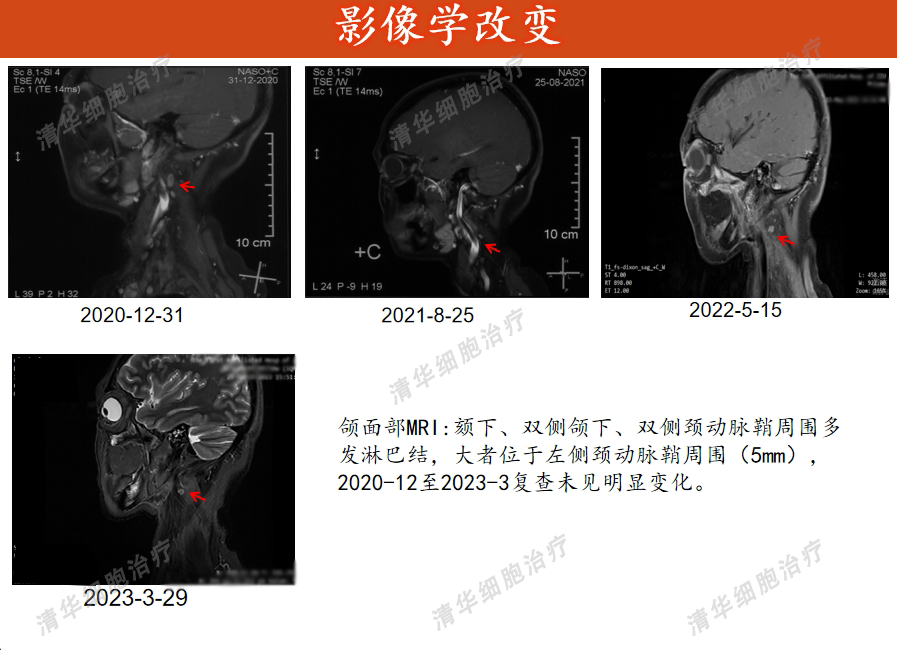
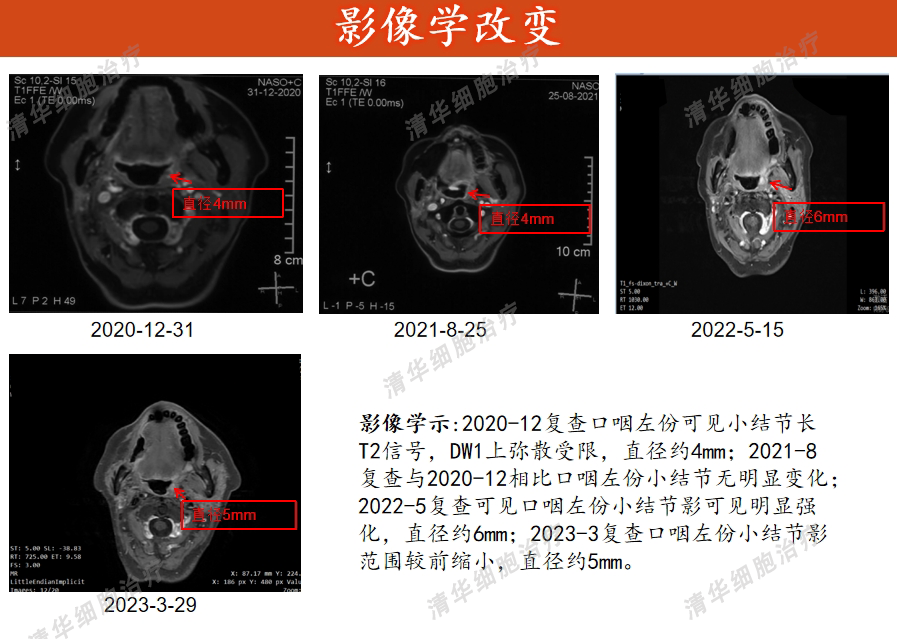
In January 2021, Ms. Qi began NKT cell immunotherapy, with the initial regimen of one course per month. As of April 2022, she has completed 17 courses, and multiple follow-up examinations have assessed her overall condition as stable!


In terms of imagery


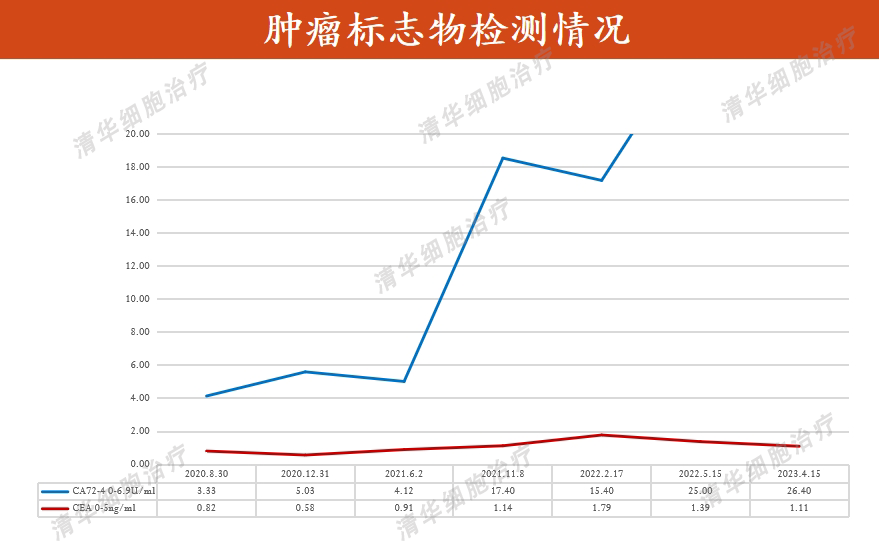
Tumor Markers
Month  
 
CEA: Re-examination from August 2020 to May 2022 was within the normal range;
CA72-4: Re-examination from August 2020 to June 2021 was within the normal range, but from November 2021 to May 2022, it exceeded the normal range and gradually increased. Dynamic re-examination and close monitoring should be paid attention to.


 Conclusion and Comments


After adopting the NKT treatment method, Ms. Qi achieved the expected results, and her quality of life improved significantly. Her mental state is very good, she feels more energetic and vigorous than before, and has returned to her pre-illness state. She can lead a normal life and work without being affected by the disease. She has achieved long-term stability, with multiple assessments over two years indicating stable disease without progression. [1]
Ms. Qi's tumor is relatively rare and has metastasized after surgery, indicating a high degree of malignancy. However, with the combination of multiple treatments, Ms. Qi's condition has been stabilized for a long time. During this process, NKT cell immunotherapy plays an indispensable role in reducing the risk of recurrence and metastasis. It not only eliminates residual tumor cells, but also strengthens the immune system, thereby providing patients with long-term stability.
Science popularization knowledge is for reference only. Individual patients should seek medical treatment based on clinical experience.   

Reference:< H420>

【1】Niu LX, Feng ZE, Wang DC, Zhang JY, Sun ZP, Guo CB. Prognostic factors in mandibular gingival squamous cell carcinoma: A 10-year retrospective study. Int J Oral Maxillofac Surg. 2017 Feb; 46(2):137-143. doi: 10.1016/j.ijom.2016.09.014. Epub 2016 Oct 28. PMID: 28029423.

Classic NKT Case Review

Click on the image

to view