About Lehe
乐于心,和与众,与己乐,与人和; 心宽念纯,百病无生。


乐于心,和与众,与己乐,与人和; 心宽念纯,百病无生。



Mr. Zhang is a patient with suspected primary colon cancer and pancreatic cancer. Before receiving NKT cell immunotherapy, he continuously developed new metastatic lesions, making his medical history particularly complex.
In February 2012, he underwent "left hemicolectomy" for cancer in the splenic flexure of the colon: moderately differentiated adenocarcinoma of the transverse colon, with cancer tissue invading the serosal layer, peritoneal fibrous fat showing cancer tissue infiltration, vascular thrombosis visible, lymph nodes (1/13), pT4aN1M0.
After surgery, he underwent two rounds of intraperitoneal hyperthermic perfusion chemotherapy, six cycles of Folfox chemotherapy, and two courses of single-agent Xeloda oral administration. Regular follow-up examinations were then conducted.
However, two years later (February 2014), a suspicious primary tumor was found in the tail of the pancreas, and he underwent surgery and chemotherapy again; but one year later (April 2015), multiple enlarged lymph nodes were found in the hepatic hilum and retroperitoneum, and he underwent two more cycles of chemotherapy. Multiple surgeries and chemotherapy have left Mr. Zhang with lingering fears and an inability to reduce the risk of recurrence and metastasis.
In July 2015, Mr. Zhang accepted our recommendation for NKT cell therapy, following a regimen of one course per month. So far, he has maintained this for 70 months without any signs of recurrence or metastasis. He reports that his hair has turned from white to black, his skin has become delicate and smooth, his diet and sleep quality are excellent, his mental state is very good, and he feels happy and content.
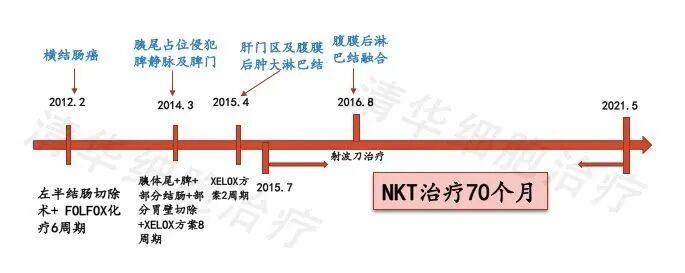
In the first year of treatment, the tumor was still active—retroperitoneal lymph nodes were enlarged and fused. However, after timely localized treatment with the CyberKnife, and continued implementation of NKT cell immunotherapy, the signs of tumor activity were completely suppressed, and since then, there have been no signs of recurrence or metastasis!
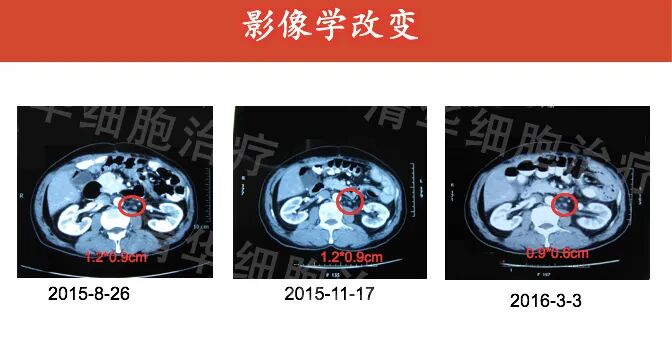
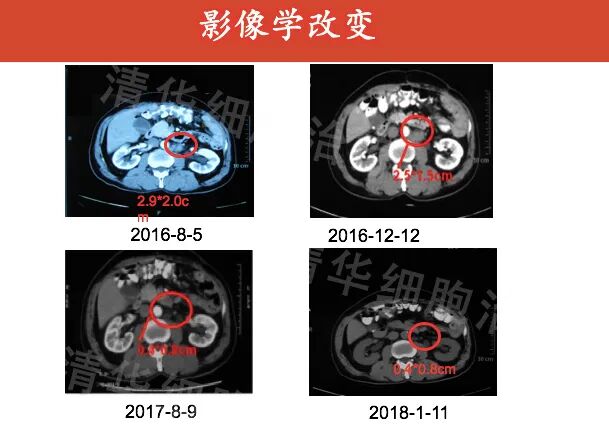
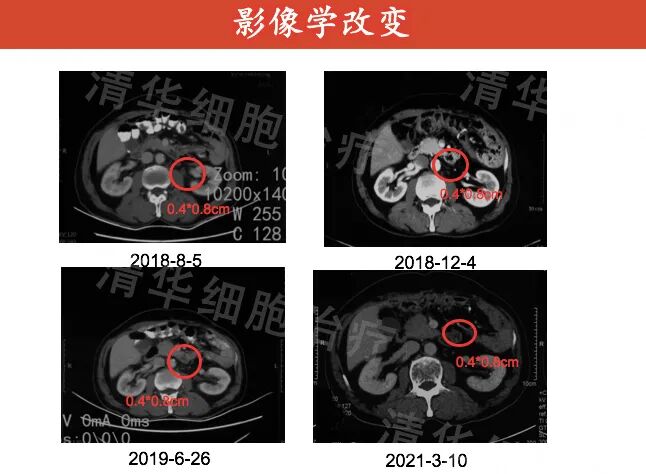
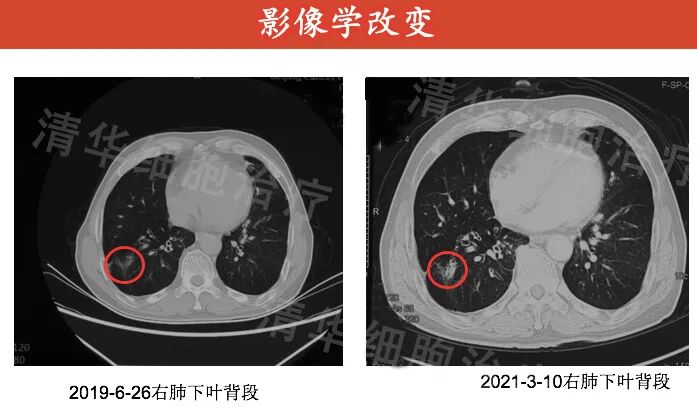
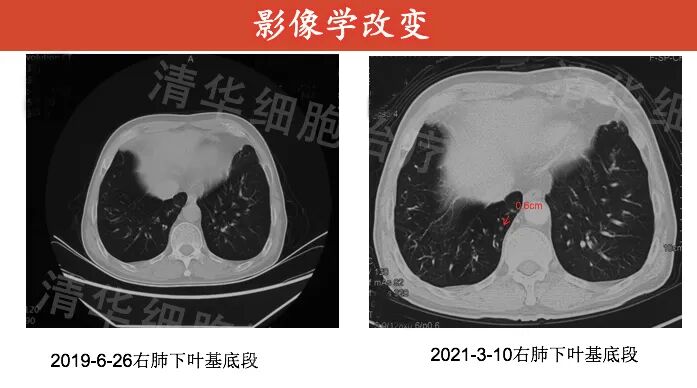
Imaging manifestation: A new small nodule is found in the basal segment of the right lower lobe. Close observation and follow-up are recommended.

From this phenomenon, we can observe that the onset of NKT cell therapy is relatively slow. In the early stages of treatment, sporadic lesions may appear, but their growth rate is not rapid, their volume is small, and they are easy to intervene in. However, once effective, the therapeutic effect can be maintained for many years, and may even meet the criteria for "cure".
NKT Classic Case Review
Click on the image
to view

Address: Room 1101 (Unit 101), 11th Floor, Building 1, No. 7 Courtyard, Kexueyuan Road, Life Science Park, Changping District, Beijing
Phone:010-8265 9866
Email:lehemedneo@hotmail.com