About Lehe
乐于心,和与众,与己乐,与人和; 心宽念纯,百病无生。


乐于心,和与众,与己乐,与人和; 心宽念纯,百病无生。

▲Click on the blue text to follow us
Targeted therapy is an effective way to treat cancer, with fewer side effects and relatively higher safety compared to traditional chemotherapy and radiotherapy. However, targeted drugs are prone to resistance. Some patients may experience good results when they first start using targeted drugs, but they may lose their effectiveness after one or two years.
Let's first understand the reasons for resistance to targeted drugs.
The occurrence of cancer is caused by gene mutations, and there are many gene mutations that lead to carcinogenesis. Targeted drugs only act on a specific "target" to prevent the growth of cancer cells. When a patient is tested to have a certain gene mutation, such as the "EGFR21 exon mutation" detected through genetic testing, the corresponding targeted drug "erlotinib" can be used. However, cunning cancer cells can also undergo adaptive changes, altering their own genes and making the targeted drug less sensitive, leading to resistance.
So what should we do when targeted therapy becomes resistant? How can we delay the occurrence of resistance? This is a question that many patients are very concerned about. Ms. Bu, who was diagnosed with lung cancer, also faced this problem. Let's take a look at her solution.

Disease Overview
In 2015, Ms. Bu discovered a mass in her left upper lung during a physical examination, but she did not take it seriously.
On November 28, 2017, a follow-up lung CT scan revealed a ground-glass mass in the left upper lobe, strongly suggesting the possibility of lung cancer. On December 7, 2017, a thoracoscopic-assisted left upper lobe resection and systematic lymph node dissection were performed under general anesthesia. Postoperative pathology revealed (left upper lobe) moderately differentiated adenocarcinoma with lymph node metastasis (4/13) .
Genetic testing identified an EGFR exon 21 mutation. From January 10, 2018, to June 2018, Ms. Bu received oral erlotinib targeted therapy. The side effects of the targeted drug caused significant discomfort for Ms. Bu, including severe rashes that made her extremely painful and unable to tolerate sunlight, severely affecting her life and work.
Despite completing surgical treatment and cooperating with targeted drug therapy, Ms. Bu was in great pain due to severe side effects and was afraid to discontinue the medication. Seeing a case of sequential use of targeted drugs and cellular immunotherapy for lung cancer that we had previously presented, she sought out Professor Zhang Minghui. She particularly hopes to gradually replace targeted therapy with vNKT cell immunotherapy to enhance the body's immune system, while ensuring therapeutic efficacy.
Tips
What is vNKT cell?
The vNKT immune cell subpopulation discovered by Zhang Minghui's team at Tsinghua University possesses both the non-specific recognition function of NK cells and the specific recognition function of CD8+ T cells. Therefore, the dual anti-tumor effect of vNKT cells can rapidly kill tumor cells. It not only directly kills cancer cells but also kills inhibitory immune cells (Myeloid-derived suppressor cells, MDSCs are a heterogeneous group of cells derived from the bone marrow, capable of significantly negatively regulating immune responses. ), regulating the microenvironment within cancer tissues, and providing new hope for the treatment of solid tumors. At the same time, vNKT cells are collected from the immune cells of healthy individuals, cultured and expanded, and then infused back into patients' bodies, making treatment more feasible.
After reviewing Ms. Bu's medical records, Professor Zhang Minghui made the following second diagnostic and treatment recommendation for Lehexin Hospital:
1. Ms. Bu has undergone conventional surgical treatment and cannot tolerate the side effects of targeted drugs for a long time. At the same time, there is a risk of lymph node metastasis. If the drugs are directly discontinued, the risk of recurrence and metastasis is high.
2. Timely follow-up with vNKT cell therapy at this point can eliminate residual cancer cells in the body, enhance immune function, and provide strong support after the patient discontinues targeted therapy.
3. If further signs of disease progression are observed during subsequent monitoring, but the patient has not yet reached the stage of resistance to targeted therapy, targeted therapy may still be reintroduced. After achieving some efficacy with targeted therapy, medication can be gradually withdrawn, and vNKT cell therapy can be continued as a subsequent maintenance treatment regimen. This strategy aims to effectively control the disease while reducing long-term dependence on targeted therapy.
4. Actively adjust emotions, shift focus, reduce distracting thoughts, cultivate a calm attitude, and establish confidence in overcoming the disease.

Ms. Bu accepted and started vNKT cell therapy in May 2018, and stopped using erlotinib in June.
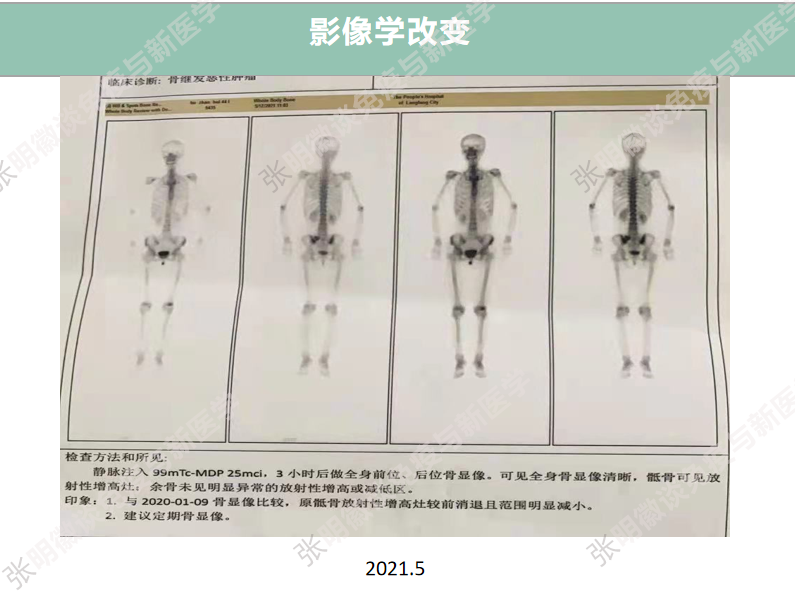
After switching to vNKT cell therapy, Ms. Bu resumed work and daily life with the disappearance of her rash, and her quality of life was quite good. After maintaining this treatment for 18 months, the tumor marker gradually increased, and a shadow was suspected in the sacrum. Professor Zhang made the latest judgment based on bone metastasis: normally, bone metastasis is usually multiple, but due to the continuous intervention of vNKT immune cells, there was only one bone metastasis in the sacrum, and it was not obvious. After the appearance of metastatic lesions, targeted drugs can be re-administered, and combined with cyber knife treatment for the sacrum. After radiotherapy, continue to cooperate with vNKT cell immunotherapy to maintain stability.
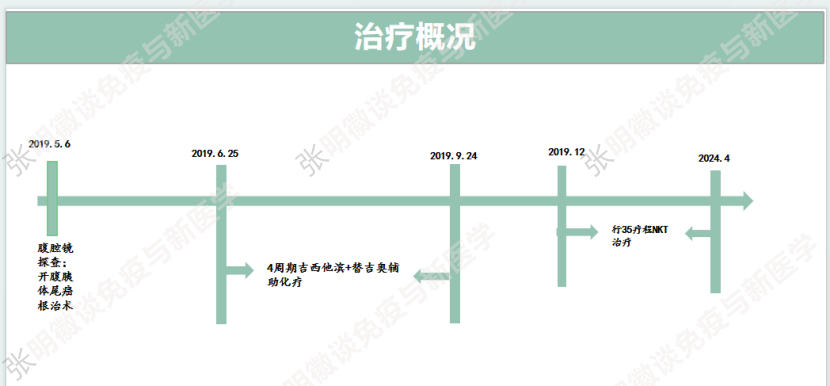
After treatment according to the plan provided by Professor Zhang, Ms. Bu underwent regular follow-up examinations. The latest examination results showed that the radioactive enhancement lesion in the left sacrum had shrunk compared to January 2020. As of June 2024, the patient had undergone 51 consecutive courses of systematic treatment, and no clear signs of metastasis were observed in other parts of the body. The patient's survival period exceeded 6 years.
Imaging changes
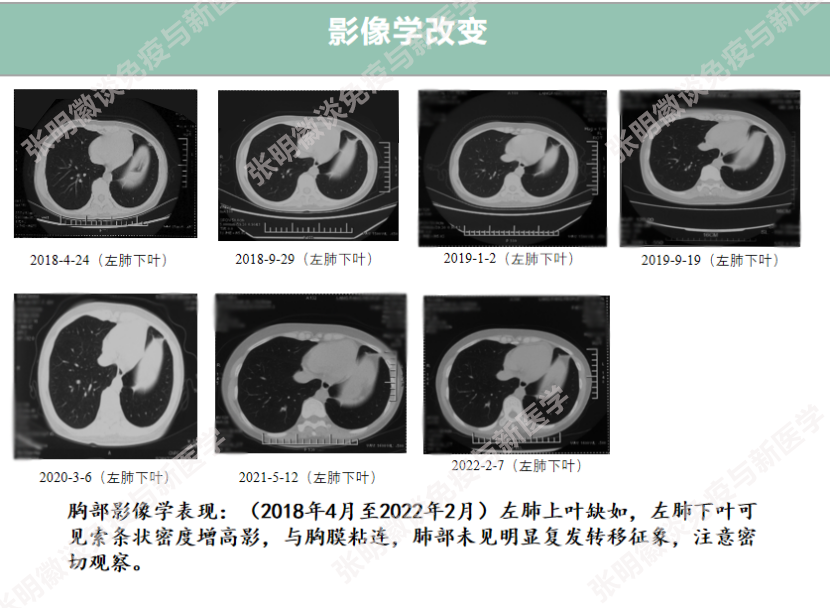
The Power of Innovative Treatment Strategies
In Ms. Bu's case, this innovative treatment approach not only successfully extended the duration of resistance to targeted drugs, significantly extending Ms. Bu's survival beyond 6 years, but also provided valuable practical experience for the field of lung cancer treatment.
We can see the importance of developing personalized treatment plans in cancer treatment. We look forward to more research exploring the combined application of vNKT cell therapy with other treatment modalities, bringing more precise and effective treatment strategies to cancer patients. At the same time, we hope Ms. Bu's story can inspire more patients to maintain confidence on the road to fighting cancer, and to work together with medical staff to create more miracles of life.

Contact Us
Scan QR Code
Communicate with Professor Zhang Minghui's Team
Click on the image to view past exciting content
Written by: Zhao Tuantuan
Reviewed by: Qiao Jiacheng, Wang Ying, Gao Chen
Edited/typeset by: Zhao Tuantuan

Address: Room 1101 (Unit 101), 11th Floor, Building 1, No. 7 Courtyard, Kexueyuan Road, Life Science Park, Changping District, Beijing
Phone:010-8265 9866
Email:lehemedneo@hotmail.com