About Lehe
乐于心,和与众,与己乐,与人和; 心宽念纯,百病无生。


乐于心,和与众,与己乐,与人和; 心宽念纯,百病无生。

▲Click on the blue text to follow us
In 2022, approximately 4.8247 million people in China were diagnosed with malignant tumors, which means that on average, over 13,000 people were diagnosed with cancer every day, and 9 people were diagnosed with cancer every minute. In other words, during the time spent waiting at traffic lights at intersections, the once-hopeful and happy lives of 9 families in China were suddenly cut short. Every member of these families, whether it's elderly parents, hardworking partners, or young children, will be forced to embark on a journey of fighting cancer, filled with unknowns and challenges.
How to alleviate the pain of cancer patients, give them hope, prolong their lives, and provide them with end-of-life care has always been a topic of research in the medical community. When inevitably facing cancer head-on, how can we defeat it and regain our lives?
The war against tumors is never a solitary battle. Science and technology, coupled with psychological support, can create a medical miracle!
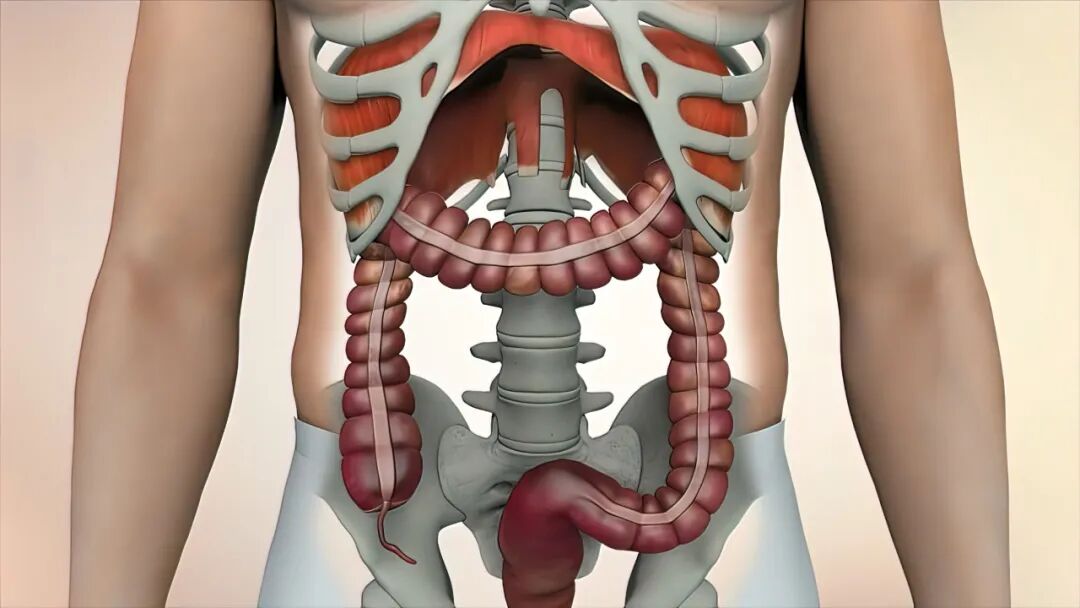
Disease Overview
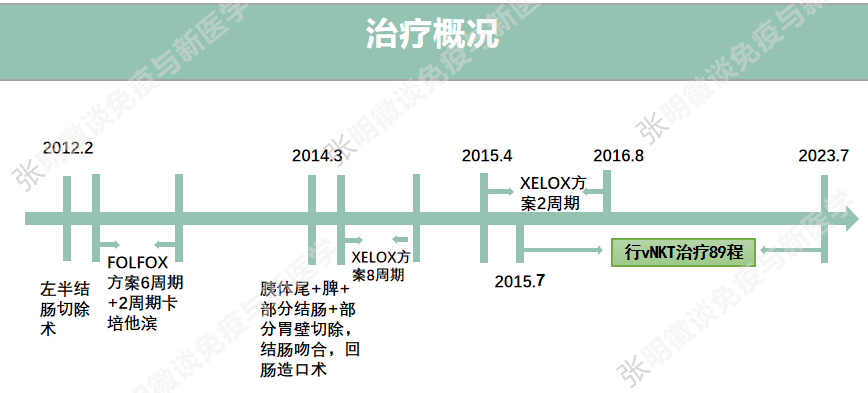
Mr. Zhang underwent a "left hemicolectomy" for splenic flexure cancer of the colon in February 2012. Postoperative pathology: moderately differentiated adenocarcinoma of the transverse colon, cancer tissue invaded the serosal layer, peritoneal fibrous fat showed cancer infiltration, cancer thrombus was found in the vessels, lymph nodes (1/13) , pT4aN1MO. Postoperatively, he received two rounds of intraperitoneal hyperthermic perfusion chemotherapy, six cycles of Folfox regimen chemotherapy, and two courses of single-agent Xeloda oral administration.
On February 26, 2014, a PET-CT scan revealed high metabolism in the body and tail of the pancreas, suggesting malignant lesions. On March 10, 2014, an enhanced MRI of the abdomen showed a mass in the tail of the pancreas, considered malignant, with a high likelihood of pancreatic cancer, and the mass invaded the splenic vein and splenic hilum.
On March 20, 2014, at Peking University Cancer Hospital, he underwent "resection of the body and tail of the pancreas, spleen, part of the colon, and part of the gastric wall, colon anastomosis, and ileostomy". Postoperative pathology: moderately and poorly differentiated adenocarcinoma infiltration : pancreatic parenchyma, spleen parenchyma; tumor adhered to the colon serosa but did not involve the colon wall; hepatic portal lymph nodes showed cancer metastasis (2/3) , combined with immunohistochemistry consistent with postoperative metastasis of colon cancer. Postoperatively, he received eight cycles of Xelox regimen chemotherapy.
Abdominal CT scan in April 2015: Multiple enlarged lymph nodes in the porta hepatis and retroperitoneum, approximately 22mm * 17mm,Considered metastasis. On April 24, 2015, PET-CT showed a maximum SUV value of 7.2 for retroperitoneal lymph nodes, suggesting metastasis. Perform Xelox regimen chemotherapy for 2 cycles.
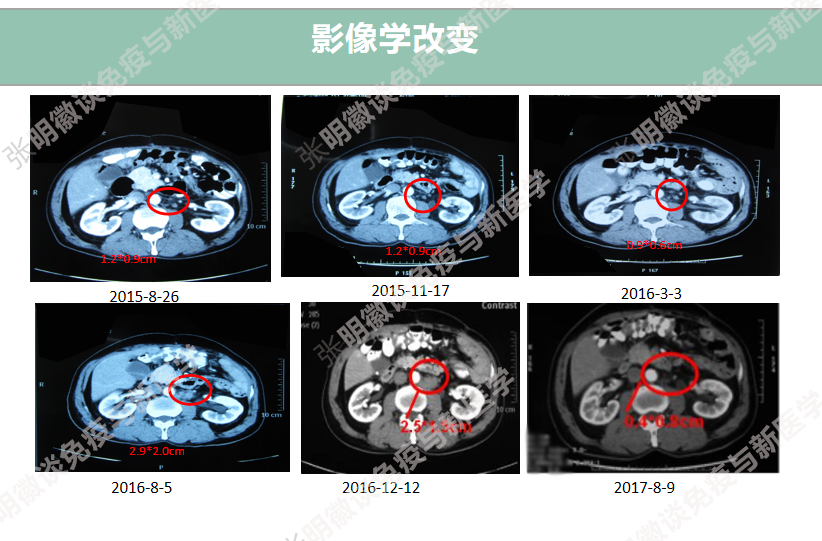
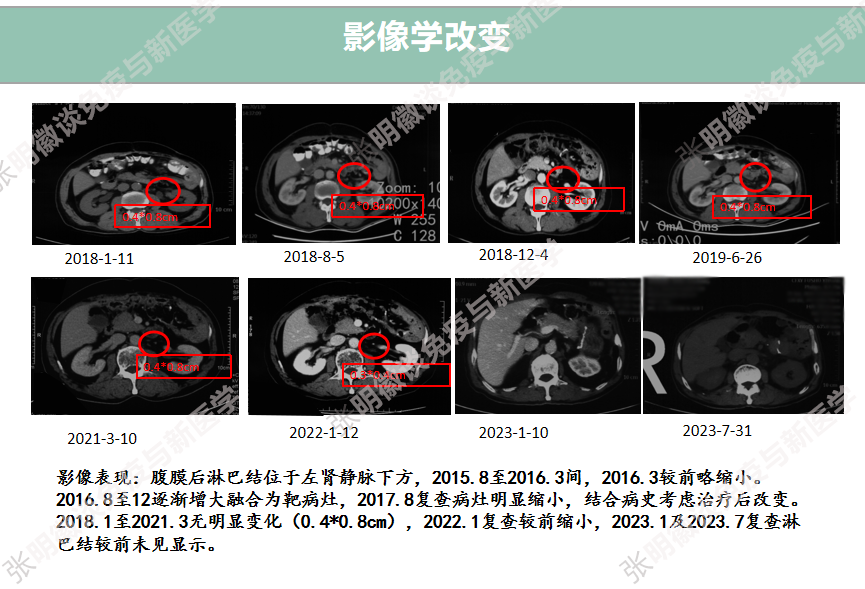
In August 2016, the retroperitoneal lymph nodes were enlarged and fused during a CT scan of the abdomen. After radiotherapy, they significantly decreased, and the lesion remained stable after multiple follow-up examinations.
.
Mr. Zhang, who had always been in good health, never thought he would get a tumor until the test results came out. He couldn't believe such an unfortunate thing had happened to him. In his fifties, with an unwilling heart and many worries, Mr. Zhang found it hard to let go. His only choice was to actively cooperate with treatment.
However, the tumor didn't want to give Mr. Zhang hope for life. From being diagnosed with advanced colon cancer in 2011 to 2015, in just a few years, there were multiple recurrences and metastases. Over four years, Mr. Zhang was either in the hospital or on his way to the hospital, having undergone 48 rounds of chemotherapy alone. Several surgeries, radiotherapy, and chemotherapy made him rapidly lose weight and lose his physical strength. Throughout the treatment process, he experienced pain such as prolonged paralysis, difficulty in eating, and artificial ostomy, enduring many sufferings that ordinary people cannot bear.
In late 2015, by a twist of fate, Mr. Zhang met Professor Zhang Minghui, a professor of immunology at Tsinghua University. After communication, Mr. Zhang regained hope for his life. After a comprehensive understanding of Mr. Zhang's condition, the Lehexin Medical team provided a second diagnosis and treatment suggestion based on a comprehensive evaluation:
1. After the first surgery, the pathology report indicated moderately differentiated adenocarcinoma, with visible tumor thrombus in the vessels and lymph node metastasis, suggesting a high risk of postoperative recurrence.
2. Mr. Zhang had recurrent colon cancer after surgery, and although he underwent a second surgery, multiple enlarged lymph nodes in the hepatic hilum and retroperitoneum still persisted, which is a potential risk for future recurrence and metastasis.
3. Multiple surgeries and chemotherapy had damaged Mr. Zhang's body and immune system. Timely intervention with vNKT cell therapy at this time can eliminate residual cancer cells in the body and activate the body's immune system to fight against tumors. vNKT cell therapy is mild and has no side effects, making it very suitable for Mr. Zhang's weak and physically exhausted state.
4. It is recommended that Mr. Zhang take both oral chemotherapy drugs and vNKT cell therapy, and after controlling the recurrence and metastasis, continue to use vNKT cell therapy to eliminate residual cancer cells.
Tips
vNKT Cell Therapy
The vNKT immune cell subpopulation discovered by Zhang Minghui's team at Tsinghua Universitypossesses both the nonspecific recognition function of NK cells and the specific recognition function of CD8+T cells,thus exhibiting a dual anti-tumor effect that can rapidly kill tumor cells. It not only directly kills cancer cells but also kills inhibitory immune cells (Myeloid-derived suppressor cells, MDSCs are a heterogeneous group of cells derived from the bone marrow, capable of significantly inhibiting immune cell responses and negatively regulating immune responses.),regulating the microenvironment within cancer tissues,providing new hope for the treatment of solid tumors. Additionally, vNKT cells are collected from the immune cells of healthy individuals, cultured and expanded, and then infused back into patients, making treatment more feasible.
In July 2015, Mr. Zhang underwent vNKT cell therapy. During the first year of treatment (August 2015 to August 2016, with 12 courses of NKT infusion), the retroperitoneal lymph nodes still showed a trend of gradual fusion and enlargement, increasing from 1.2*0.9cm (August 2015) to 2.9*2.0cm (August 2016). Precision radiotherapy was adopted for intervention, followed by continued maintenance with the vNKT cell therapy regimen. On August 9, 2017, the lesion shrank to 0.4*0.8cm and remained stable during multiple follow-up examinations. We can see that under the suppression of vNKT cells, the tumor, which had previously undergone frequent metastasis, was gradually inhibited, achieving Mr. Zhang's goal of living with the tumor. By 2022, the lymph nodes had shrunk again, and by 2023, they had completely disappeared during follow-up examinations, finally putting Mr. Zhang and his family's minds at ease.
Nearly 12 years have passed since Mr. Zhang was diagnosed with cancer, far surpassing the initial "prophecy" of the doctor regarding his survival period. Therefore, recurrent recurrence and metastasis during the treatment of cancer patients is a very common phenomenon. One should not be afraid or panic. When new lesions appear, precision radiotherapy can be used to treat them, combined with vNKT cell immunotherapy for "stability maintenance," which can also achieve the goal of prolonging survival and improving quality of life. As of July 2023, 89 courses of treatment have been completed, and treatment is still being carried out as planned.
True health: a state of physical well-being and psychological freedom from distress.
Being diagnosed with cancer is unfortunate, but fortunately, during his illness, Mr. Zhang received meticulous care from his family, who encouraged him to express his inner fears and worries while being patiently listened to and accompanied, demonstrating unwavering confidence and positive emotions, making him feel hopeful and firmly believing that he could overcome cancer.
After diagnosis, as the condition gradually worsened, to alleviate Mr. Zhang's inner fear and worry, his family chose to conceal part of his condition. It was not until later when Mr. Zhang learned the truth that he was very grateful for his family's approach. The diagnosis was at an advanced stage, and if he had known about multiple metastases, he might not have been able to face the subsequent treatment. Therefore, as a patient's family, it is appropriate to conceal part of the condition according to the actual situation, ensuring the smooth progress of treatment while also building the patient's confidence in fighting cancer.
Mr. Zhang shifted his mindset, viewing this battle against cancer, which is not a war with gunsmoke, as a spiritual journey in life, perhaps a test of his proud nature by the heavens. He realized a truth: we need to maintain an optimistic mindset and broad-mindedness at all times, as only in this way can we achieve health and happiness.
Science, technology, and psychological support create a medical miracle
After undergoing vNKT treatment, Mr. Zhang has not experienced recurrence or metastasis for 9 years. Now, Mr. Zhang has shed the heavy burden of having a tumor, enjoys spending time with his grandchildren, and even often helps his wife with household chores, greatly improving his quality of life.
Mr. Zhang's 12-year battle with cancer is a medical miracle created by science, technology, and psychological support. Despite experiencing tumor recurrence and undergoing another surgery, vNKT cell therapy stabilized his condition given the high malignancy of the tumor. This shows that vNKT cell immunotherapy plays an indispensable role in reducing the risk of recurrence and metastasis. Meanwhile, while actively cooperating with treatment, Mr. Zhang promptly adjusted his mindset, established a strong belief in fighting cancer, and never gave up, which also played an important role in providing positive psychological support!
Mr. Zhang hopes to tell everyone through his own experience that tumors are not terrible, and miracles can happen at any time.

Contact Us
Scan QR Code
Communicate with Professor Zhang Minghui's Team
Click on the image to view the exciting content from previous issues

Written by: Zhao Tuantuan
Reviewed by: Wang Ying, Gao Chen, Qiao Jiacheng
Edited/typeset by: Zhao Tuantuan
Address: Room 1101 (Unit 101), 11th Floor, Building 1, No. 7 Courtyard, Kexueyuan Road, Life Science Park, Changping District, Beijing
Phone:010-8265 9866
Email:lehemedneo@hotmail.com