About Lehe
乐于心,和与众,与己乐,与人和; 心宽念纯,百病无生。


乐于心,和与众,与己乐,与人和; 心宽念纯,百病无生。


NKT cells (Natural killer T cells) are a special T-cell subset that possesses both T-cell receptor (TCR) and NK cell receptors on their surface. They were first named by Japanese scholars more than 20 years ago. Previous studies have shown that their main function is to release danger signals for other immune cells.
vNKT cells (Variant natural killer T cells), also known as variable NKT cells, are a unique NKT cell subset discovered by Zhang Minghui's experimental team. They exhibit CD8 positivity on the cell surface and possess important characteristics of both NK cells and CD8+ T cells. They can rapidly kill tumor cells and can be described as the special forces in the immune system, the ultimate killer of tumor cells. In-depth research has found that vNKT cells play a core defensive function in tumor immune defense.
Mr. Dai, a patient with rectal cancer, underwent vNKT cell therapy and achieved a super-long stable period of 7 years without recurrence or metastasis. Let's take a look at the powerful anti-tumor ability of vNKT cells through Mr. Dai's case.
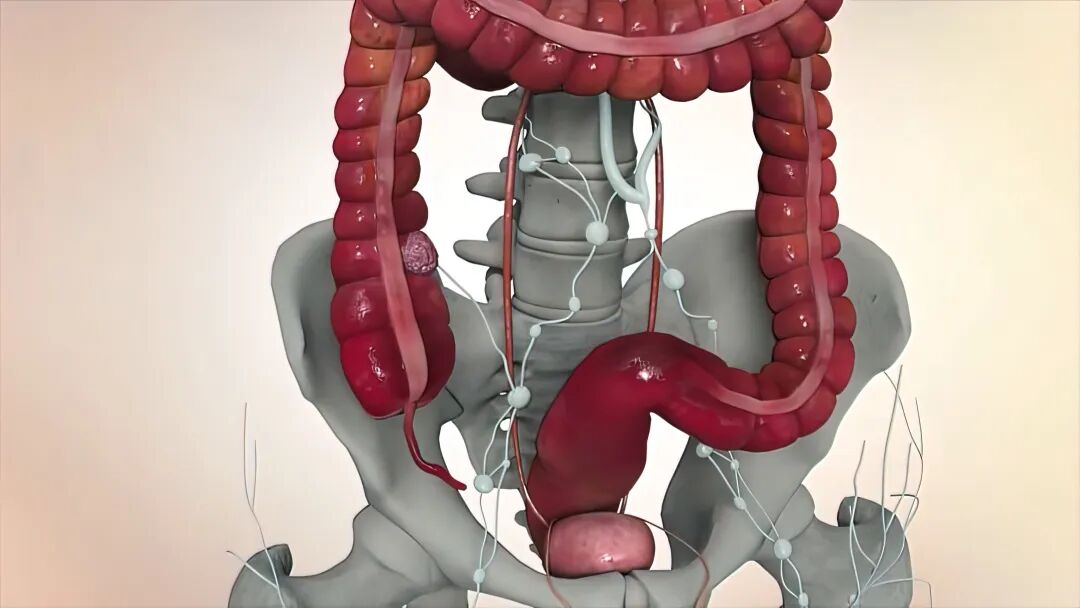
Disease Overview
Mr. Dai experienced symptoms such as hematochezia and changes in bowel habits, which initially went unnoticed. In 2013, an MRI examination revealed lower rectal cancer (T3bN2aM0 possible). Consequently, a radical resection of rectal cancer was performed on November 18, 2013. Postoperative pathology showed rectal cancer (with anal involvement) with a radical resection specimen: (rectal) ulcerative moderately-poorly differentiated adenocarcinoma, involving the full thickness of the intestinal wall and surrounding adipose tissue, with visible vascular cancer thrombus, and lymph node metastasis around the intestinal tract (1/12). Postoperatively, he underwent one cycle of adjuvant chemotherapy with the XELOX regimen and 25 fractions of radiotherapy (TOMO). In February 2014, he continued with five cycles of the original chemotherapy regimen.
After completing treatment, Mr. Dai underwent routine follow-up. In October 2015, a chest CT scan revealed a small nodule shadow in the right lung, which could not be ruled out as tumor metastasis. Given Mr. Dai's condition, a high suspicion of metastasis led to a thoracoscopic wedge resection of the right upper lobe of the lung. Postoperative pathology showed adenocarcinoma infiltration in the lung tissue, accompanied by extensive necrosis, consistent with rectal cancer metastasis. It was initially thought that surgical removal of the metastatic lesion could achieve a longer stable period. However, in March 2016, a follow-up PET-CT scan revealed new pulmonary lesions with increased uptake, suggesting metastasis. Subsequently, he underwent cyber knife radiotherapy. In April 2017, a follow-up lung CT scan again indicated new nodules, considered to be metastatic, and he underwent another round of cyber knife radiotherapy.

How to terminate the three high-frequency recurrences after surgery?
Three recurrences occurred in one and a half years, and most of the time was spent traveling to and from the hospital for treatment, which was unbearable. Recurrence after recurrence, treatment after treatment, Mr. Dai was very worried that his body would not be able to withstand it. After learning from various sources, he contacted Professor Zhang Minghui. After evaluating the condition, the Lehe New Medical team provided the following second consultation advice:
1. The patient has rectal cancer and has completed chemotherapy and radiotherapy after surgery. Due to risk factors such as perirectal lymph node metastasis and vascular cancer thrombus, lung metastasis occurred multiple times after surgery.
2. In just one and a half years, three metastases occurred, indicating a high malignancy of the tumor. After undergoing surgical treatment for the metastatic lesions, Mr. Dai could no longer tolerate surgery. However, using high-precision cyber knife treatment not only reduced the harm to the body but also decreased the tumor burden, providing favorable conditions for subsequent vNKT cell therapy.
3. Through vNKT cell therapy, residual cancer cells in the body are cleared, gradually restoring the body's immune system. The cessation of recurrence and metastasis has granted the patient a longer stable period.
4. Coupled with positive psychology, correcting psychological states, believing in oneself to overcome the disease, finding internal causes, changing unhealthy dietary and lifestyle habits, and comprehensively regulating to control disease progression.
Mr. Dai underwent vNKT cell immunotherapy in June 2017 and has completed 53 courses of vNKT cell therapy as of February 2024. Future treatments are still proceeding as planned. During this period, his condition remained stable without recurrence, achieving a stable phase of 7 years.
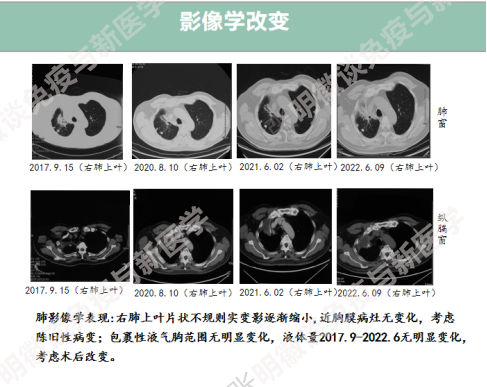
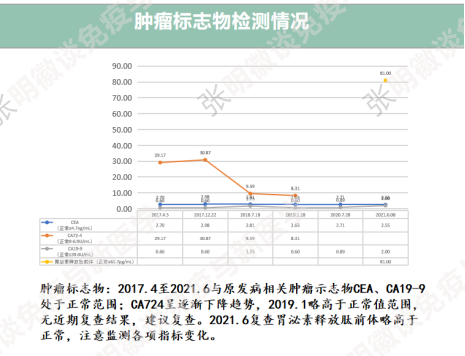
Analysis and Commentary
Colorectal cancer (CRC) ranks third in incidence rate and second in mortality rate among malignant tumors globally. The lung is the second most common metastatic site after the liver [1]. During the disease progression, up to 20% of CRC patients may develop lung metastasis [2]. For patients with lung metastasis after radical resection of CRC who have not undergone treatment, their 5-year survival rate is less than 5% [3]. Mr. Dai underwent vNKT cell therapy immediately after reducing tumor burden through radiotherapy, which cleared residual cancer cells in his body, stopped recurrence, increased his weight, and enhanced his immunity.
Currently, with the deepening of scientific research, more successful treatment cases indicate that immunocyte therapy combined with high-precision radiotherapy can effectively control tumor recurrence and metastasis, prolong patient survival, and achieve better quality of life.

Contact Us
Scan QR Code
to communicate with Professor Zhang Minghui's team
Reference Sources:
[1] Wang Shaoming, Zheng Rongshou, Han Bingfeng, et al. Analysis of the Age Characteristics of Incidence and Death from Malignant Tumors in the Chinese Population in 2022 [J]. China Cancer, 2024, 33(03):165-174.
[2] LEE K Y, LAU J, SIEW B E, et al. Does pulmonary metastasectomy of colorectal metastases translate to better survival? a systematic
review [J]. Ann Acad Med Singap, 2021, 50(10):773-781.
[3] Xu Guohui, Ma Dening Occurrence mechanism and treatment strategy of lung metastasis in colorectal cancer [J]. Colorectal and Anal Surgery, 2023, 29(03): 206-211. DOI: 10.19668/j.cnki.issn1674-0491.2023.03.002.
Edited/typeset by: Zhao Run Tuan
Medically reviewed by: Wang Ying
Address: Room 1101 (Unit 101), 11th Floor, Building 1, No. 7 Courtyard, Kexueyuan Road, Life Science Park, Changping District, Beijing
Phone:010-8265 9866
Email:lehemedneo@hotmail.com