About Lehe
乐于心,和与众,与己乐,与人和; 心宽念纯,百病无生。


乐于心,和与众,与己乐,与人和; 心宽念纯,百病无生。


If you can't understand the subsequent professional description, just take two minutes to read through this text.
Overview of the disease
Ms. Li underwent breast ultrasound examination in September 2019 due to the discovery of a cystic mass in her left breast, which revealed multiple hypoechoic nodules (BI-RADS category 4a) in the glandular layer at 3 o'clock in the right breast and a moderately echogenic nodule (BI-RADS category 3) in the glandular layer at 1 o'clock in the right breast.
The biopsy pathology indicated invasive breast cancer. Immunohistochemistry revealed: ER(-), PR(-), HER2(-), Ki-67(+70%), Calponin(-), P63(-), P120 (membrane+), E-Cadherin(+), EGFR(+).
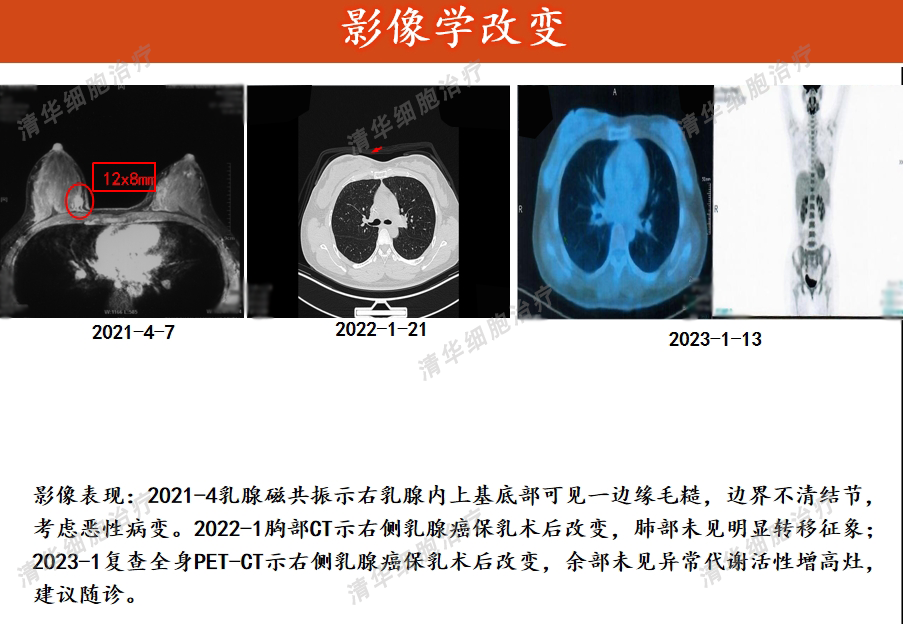
On April 7th, breast MRI showed another abnormal signal around the upper inner base of the right breast, suggesting malignancy. On April 9th, 2021, a breast-conserving radical mastectomy with sentinel lymph node biopsy was performed on the right breast.
Postoperative pathology revealed a breast mass, invasive breast cancer in the right breast, with histological grade III. The tumor had a maximum diameter of 0.9cm. No vascular tumor thrombus or nerve invasion was observed. A small cancer nodule with a diameter of 3mm was found in the breast tissue adjacent to the tumor margin, with a morphology similar to the larger tumor. Immunohistochemistry indicated: ER(-), PR(-), HER2(0) (4B5 rabbit monoclonal antibody LEICA MAX), Ki67(+70%), CK5/6(-).
In 2021, four cycles of AC regimen chemotherapy (doxorubicin liposomes + cyclophosphamide) were administered on May 13th, June 4th, June 29th, and July 20th.
On August 9th, 2021, radiotherapy was initiated (43.5 Gy to the right breast/15 fractions, with a local tumor bed boost of 8.7 Gy/3 fractions). On September 3rd, September 25th, October 15th, and November 5th, 2021, a total of 4 cycles of T-regimen (albumin-bound paclitaxel) were administered.
knowledge
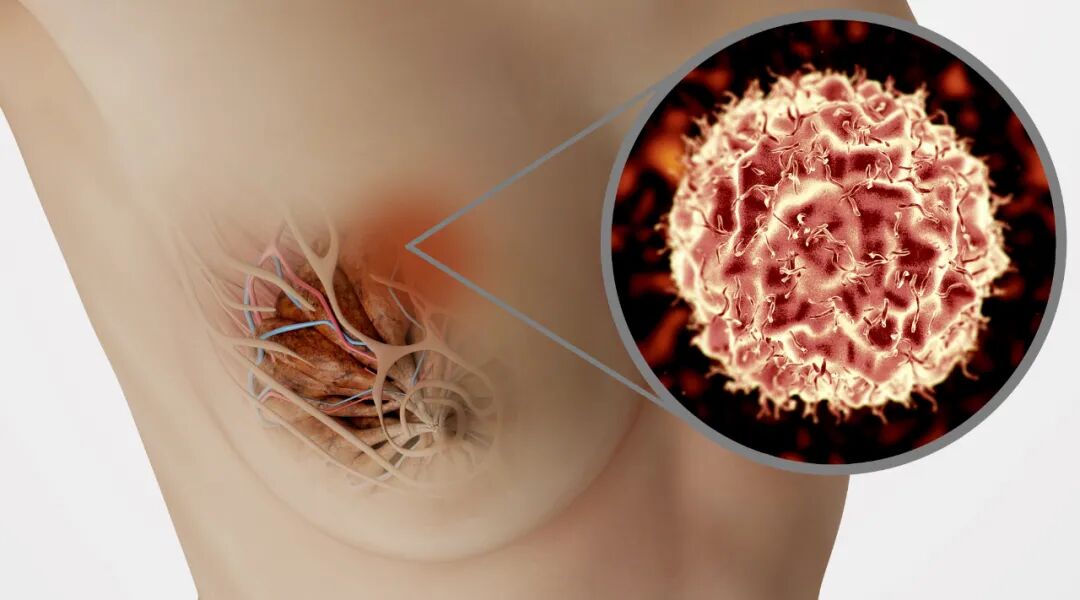
Ms. Li completed surgery and postoperative chemoradiotherapy, but she was still worried about recurrence in the future, so she sought the help of Professor Zhang Minghui's NKT treatment team at Tsinghua University School of Medicine. After carefully reviewing the case presentations of NKT cell therapy, she particularly hoped to try it to reduce the probability of recurrence .
After reviewing Ms. Li's medical records, Professor Zhang Minghui made the following analysis and judgment:
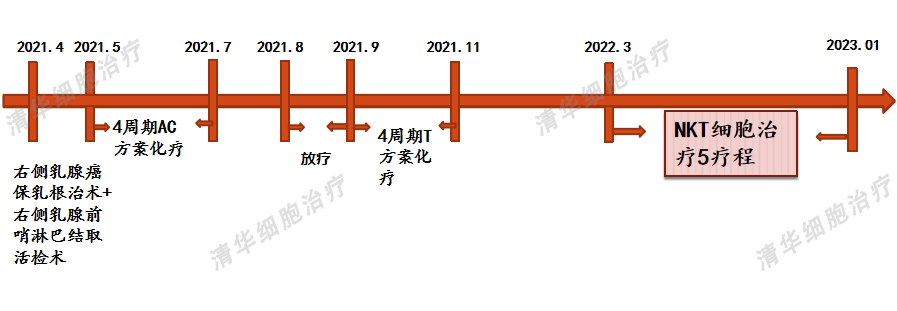
After listening to Professor Zhang's advice, Ms. Li decided to adopt NKT cell immunotherapy in March 2022. The initial plan was one course per month, and after the first stage of follow-up review, the overall evaluation was stable.
As of January 2023, five courses have been completed, and no signs of recurrence have been detected during the treatment period, achieving the initial expected effect.
Imaging
Tumor markers
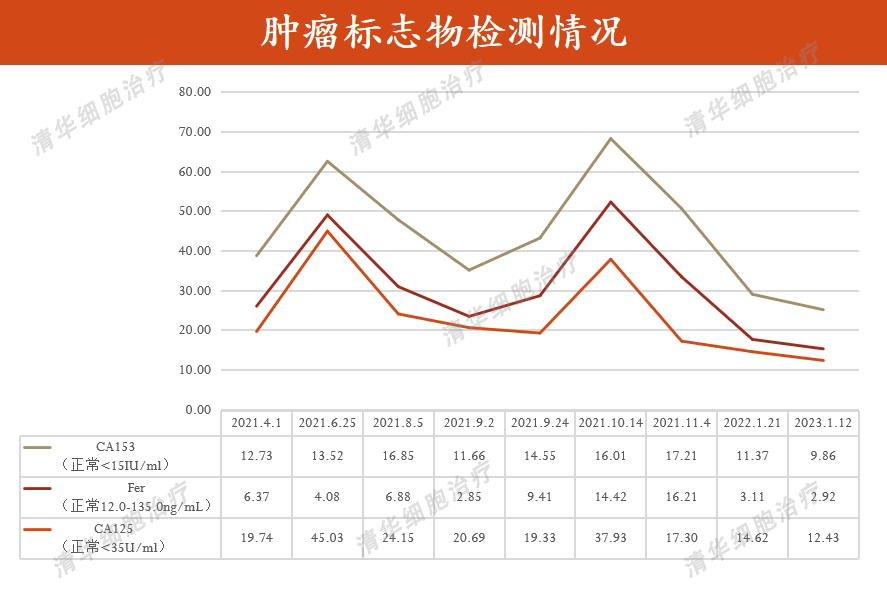
From April 2021 to January 2023, the CA125 levels were within the normal range except for slightly elevated levels in June 2021 and October 2021; the CA153 levels were within the normal range except for slightly elevated levels in August 2021, October 2021, and November 2021; ferritin levels were normal from October 2021 to November 2021, but below normal in the remaining periods. Further investigation is needed to determine the cause, and regular follow-up is recommended.
Conclusion and Comments
Ms. Li's quality of life has been greatly improved. Her mental state is excellent, and she feels more energetic when doing things than before, returning to her pre-illness state. She leads a normal life and works without being affected by the disease. The latest quality of life treatment score is 87, and she reports that her hair has become thicker.
Ms. Li underwent surgery immediately after discovering the tumor, but her ER, PR, and Her-2 were all negative, which significantly limited subsequent treatment options. In the absence of effective conventional treatment, NKT cell therapy provided a new choice for the patient. The follow-up results also confirmed this point.
Breast cancer is one of the most common malignant tumors worldwide, and its incidence rate is increasing every year. According to the latest global cancer data for 2020 released by the International Agency for Research on Cancer of the World Health Organization, the number of new cases of breast cancer worldwide reached 20,000. From the perspective of epidemiology and subsequent drug development, breast cancer with positive ER, PR, and Her-2 shows substantial differences in treatment approaches. The NCCN breast cancer guidelines indicate that both estrogen and progesterone receptor-negative and positive breast cancer require adjuvant chemotherapy and targeted therapy after surgery. Breast cancer with positive ER and PR can additionally choose endocrine therapy, but the 5-year survival rate for advanced triple-negative breast cancer is only 11%.
Ms. Li's tumor was in a high-risk situation when discovered, but her condition stabilized under NKT cell therapy intervention. In this process, NKT cell immunotherapy played an indispensable role in reducing the risk of recurrence and metastasis. It not only eliminated residual tumor cells but also strengthened the immune system, thereby providing long-term stability for the patient.
Reference:< H14>
【1】Ma, D., Yang, Q., Yin, K., Shi, P., Chen, X., Dong, T., Shang, X., & Tian, X. (2023). Analysis of the clinicopathological characteristics and prognosis of triple-positive breast cancer and HER2-positive breast cancer-A retrospective study. Frontiers in oncology, 12.
Click on the image
Address: Room 1101 (Unit 101), 11th Floor, Building 1, No. 7 Courtyard, Kexueyuan Road, Life Science Park, Changping District, Beijing
Phone:010-8265 9866
Email:lehemedneo@hotmail.com