About Lehe
乐于心,和与众,与己乐,与人和; 心宽念纯,百病无生。


乐于心,和与众,与己乐,与人和; 心宽念纯,百病无生。

Cancer is not to be feared; it can be prevented and treated. The key lies in having the correct mindset and scientific methods!
— Tsinghua University. Zhang Minghui
Before analyzing this patient's case, let's first understand how malignant SCLC really is.
Popular science article: Why is SCLC so malignant?
Small cell carcinomas mainly occur in the main bronchus and lobar bronchus, with about 70% of cases presenting as perihilar masses.0%The tumor grows rapidly, with widespread metastasis occurring early, and mediastinal involvement is common, manifesting as superior vena cava syndrome, recurrent laryngeal nerve paralysis, and dysphagia.Distant metastasis to the central nervous system, bones, and liver can cause corresponding symptoms. The clinical manifestation of small cell lung cancer (SCLC) is characterized by extensive distant metastasis in its early stages. According to literature reports, when SCLC is diagnosed, 70% to 90% of patients have either clinical or subclinical lymph node metastasis or distant metastasis. The most common sites of metastasis are mediastinal lymph nodes, followed by the liver, bones, bone marrow, and brain. Some researchers believe that SCLC has already undergone distant metastasis at the outset, and therefore treat it as a systemic tumor. There is now conclusive evidence that SCLC is a poorly differentiated neuroendocrine carcinoma, rather than a small cell variant of undifferentiated carcinoma. In the new WHO classification, SCLC is not categorized alongside other neuroendocrine tumors, primarily due to the significant differences in clinical characteristics, treatment, and prognosis between SCLC and other types of neuroendocrine tumors. Chemotherapy is the foundation of treatment for SCLC, and the combination of radiotherapy and chemotherapy is currently the mainstay of treatment. The 3-year survival rate for concurrent chemoradiotherapy is between 20% and 30%.
Blood biochemical tests are commonly used for prognosis. Factors predictive of poor prognosis include: Elevated serum lactate dehydrogenase, alkaline phosphatase, alanine aminotransferase, uric acid, low serum sodium, low serum albumin, low hemoglobin, and neurospecific enolase are also used to predict prognosis.
01
Case analysis
If you cannot understand the subsequent professional description,
just take two minutes to read this text.
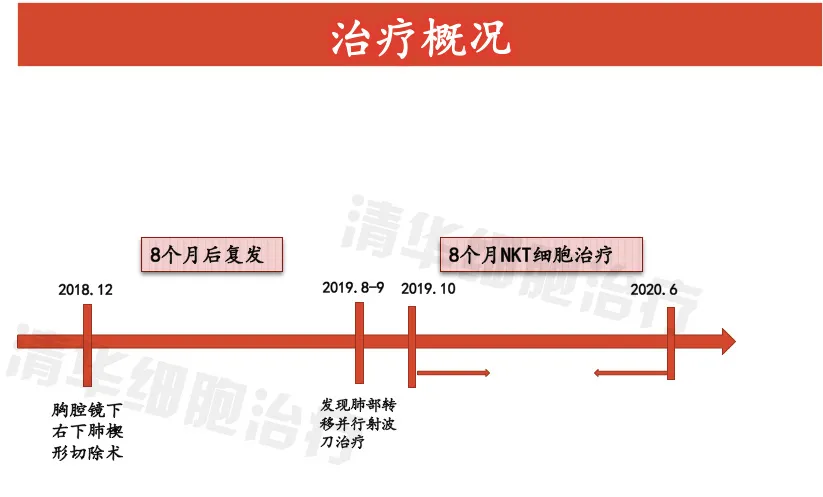
After 10 consecutive courses of systematic treatment, imaging examination did not reveal signs of recurrence or metastasis. The patient's quality of life improved, and physical strength increased compared to before. However, tumor markers did not show a downward trend, and continued observation and follow-up are still necessary.
02
Imaging data
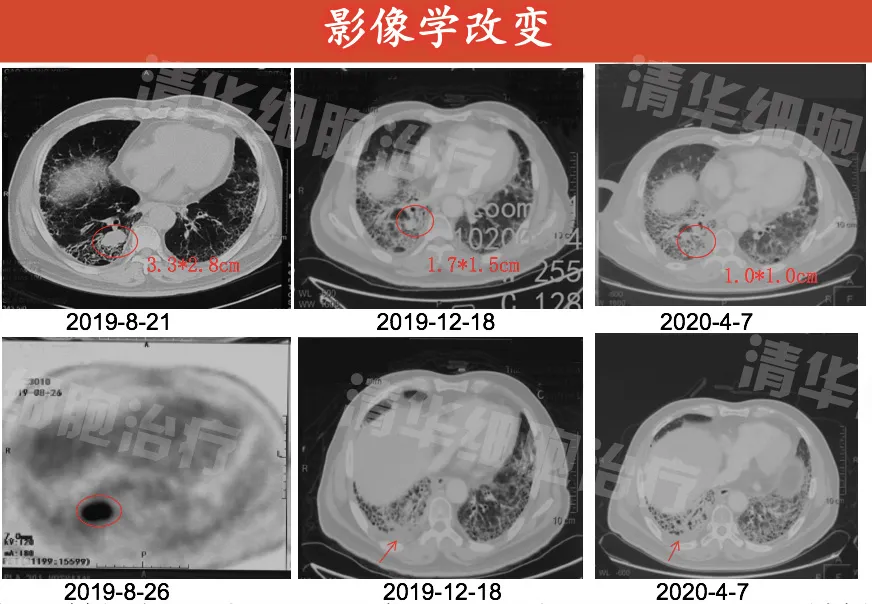
Lung CT: multiple interstitial fibrosis changes in both lungs, with a 3.3*2.8cm mass shadow visible in the right lower lung on August 21, 2019, combined with 2019-The 8-26 PET-CT imaging suggests metastatic lesions.
, a follow-up examination on December 18, 2019, showed a significant reduction in the mass compared to the examination on August 21, 2019, with a small amount of pleural effusion visible in the right lower lung. Considering the history of cyberknife treatment, it is considered a post-treatment change.
Summary of the patient's condition
Of course, the patient's current tumor markers did not show a downward trend. However, considering that it took four years from the discovery of elevated tumor markers to the diagnosis of small cell lung cancer, we will continue to follow up and track the patient's condition in the hope that he can smoothly pass the 18th and 28th months.
Article reference:
[1] Modern Oncology Zhaoqiu Tang
Address: Room 1101 (Unit 101), 11th Floor, Building 1, No. 7 Courtyard, Kexueyuan Road, Life Science Park, Changping District, Beijing
Phone:010-8265 9866
Email:lehemedneo@hotmail.com