About Lehe
乐于心,和与众,与己乐,与人和; 心宽念纯,百病无生。


乐于心,和与众,与己乐,与人和; 心宽念纯,百病无生。

▲Click on the blue text to follow us
According to the cancer report "Cancer Science Progress (JNCC)" published by the National Cancer Center Journal, the "2022 Cancer Incidence and Mortality in China" shows that there were 4.8247 million new cancer cases in China in 2022. In terms of age of onset, the incidence rate of cancer in various parts is relatively low in the 0-34 age group, sharply increases in the 35-39 age group, and is even higher in the 80-84 age group. However, in terms of mortality trends, from 2000 to 2018, the mortality rate of all cancers decreased by approximately 1.3%[1] annually.
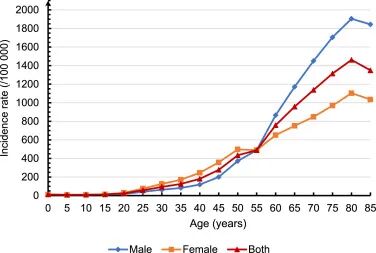
▲Age-specific incidence rate of all cancers in China in 2022, source: reference [1]
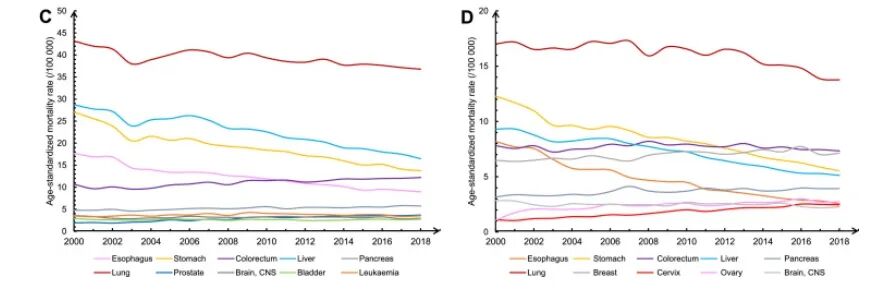
▲Trends in mortality rates of specific cancers by gender in China from 2000 to 2018
(left panel for male data, right panel for female data
With the continuous improvement of medical technology, the field of cancer treatment is moving towards a more precise and personalized direction, and new treatment methods and technologies are emerging, providing more possibilities for improving the survival rate and quality of life of cancer patients.
Tips
Five year survival rate
Five year survival rate is an important medical statistical indicator mainly used to evaluate the prognosis and treatment effectiveness of cancer and other diseases. It refers to the proportion of patients with a certain tumor who survive for more than five years after various comprehensive treatments.
Ms. Zhang, a professor of nuclear physics at Tsinghua University, was unfortunately diagnosed with lung cancer in June 2016 and anal canal malignant melanoma in February 2017. However, fortunately, due to early detection and treatment, as well as actively choosing cellular immunotherapy to enhance her immune system post-surgery, Ms. Zhang managed to gain a second chance at life!
With vNKT cell therapy, there has been no recurrence or metastasis for 7 years
Diagnosis and treatment process of Ms. Zhang :
►In 2013: A chest CT scan during a physical examination revealed a "space-occupying lesion with spicules in the right middle lung lobe, with a maximum diameter of 0.9CM". Ms. Zhang did not experience any discomfort, so no treatment was given. Since then, Ms. Zhang has undergone annual chest radiography.
►2016: In June, a follow-up chest PET-CT scan indicated "possible lung cancer in the lateral segment of the right lung middle lobe." Consequently, Ms. Zhang underwent a right lung middle lobe resection at Peking University People's Hospital on June 24, 2016. Postoperative pathology revealed invasive adenocarcinoma, predominantly presenting as mucinous adenocarcinoma. The tumor had been partially resected, with a residual tumor size of 1.8×1.3cm. Focal tumor invasion was observed in the visceral pleura, but no clear intravascular thrombus or lymph node metastasis was detected.
►2017: At the beginning of the year, Ms. Zhang experienced bloody and purulent stools, prompting her to undergo colonoscopy at multiple hospitals from January to February 2017. She was ultimately diagnosed with malignant melanoma in the anal canal . On February 25, 2017, she underwent ESD (Endoscopic Submucosal Dissection) at Tsinghua Chang Gung Hospital in Beijing. Postoperative pathology indicated "tumor cells involving the muscularis mucosae, without penetration. No lesions were observed at the base or resection margin, and no intravascular thrombus was detected." Following surgery, she underwent three cycles of chemotherapy at Beijing Cancer Hospital in May 2017, with the chemotherapy regimen consisting of temozolomide and Endostar.
Tips
Malignant melanoma of anal canal
Malignant melanoma of anal canal is a rare tumor with extremely poor prognosis, strong aggressiveness, and metastatic potential, and is highly prone to misdiagnosis in clinical practice. The main cause of the disease is the malignant transformation of melanocytes. Malignant melanoma of anal canal presents with a wide range of clinical manifestations, severe symptoms, and a low survival rate, making it difficult to study at present.
During chemotherapy, Ms. Zhang experienced severe discomfort and was unable to walk on both legs. To ensure her basic quality of life, after weighing the options, she decided to discontinue chemotherapy. Through a recommendation from a Tsinghua University alumnus, Ms. Zhang learned about the vNKT cell therapy offered by Lehe New Medicine.
After comprehensively understanding Ms. Zhang's condition, the Lehe New Medical team provided a comprehensive evaluation and gave the following second diagnosis and treatment suggestions with :
1. Ms. Zhang suffers from dual primary cancers. Although the disease is in an early stage, it indicates that she has an immune deficiency, and the lung cancer lesion has invaded the visceral pleura, making her prone to pleural metastasis. This requires high attention and systematic mobilization of immune activity from a preventive perspective.
2. Ms. Zhang underwent conventional chemotherapy to some extent, which killed residual tumor cells. However, due to her advanced age and thin build, the side effects and drug resistance of chemotherapy made it impossible for her to complete the treatment.
3. After chemotherapy, the tumor cells in Ms. Zhang's body were at their weakest stage, which was the best opportunity for cellular immune intervention. By infusing vNKT cells, residual tumor cells in the body can be cleared, the damage to the body caused by chemotherapy can be repaired, and the body's immunity can be improved.
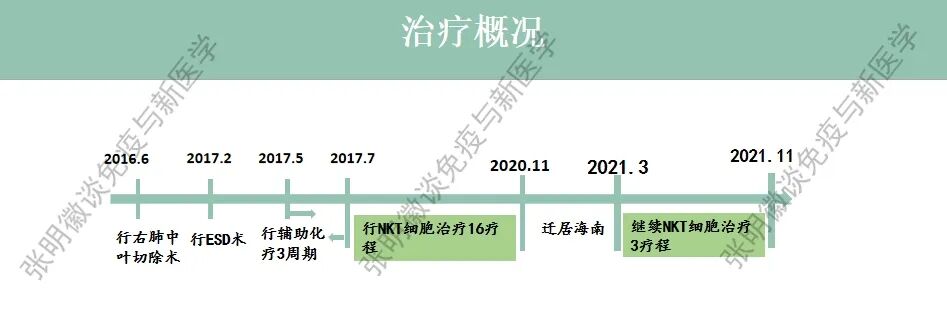
According to the second diagnosis and treatment suggestion, Ms. Zhang began vNKT cell immunotherapy in July 2017.
vNKT Cell therapy process< H395>:
►2017:In July, vNKT cell immunotherapy was used, with an initial regimen of 6 courses per year.
►2019:The August regimen was changed to one course of treatment per three months, and 16 courses were completed by November 16, 2020.
►2021:From March 23 to November 16, 3 courses of vNKT cell immunotherapy were performed again. Currently, 19 courses have been completed, and the condition has been evaluated to be stable during this period.
Ms. Zhang, who had primary lung cancer and malignant melanoma, underwent vNKT cell therapy after excluding contraindications. Her survival period extended to over 7 years, during which no signs of recurrence or metastasis were observed.
Furthermore, Ms. Zhang returned to her normal life after the infusion, with improved hair quality; her skin tone shifted from dull, yellowish, and dark to fair and translucent, and her skin changed from rough and dry to rosy and delicate; she felt more energetic than before; her appetite improved; and the frequency of colds and fever in spring and winter decreased. Meeting the criteria for clinical cure, vNKT therapy was discontinued after evaluation.
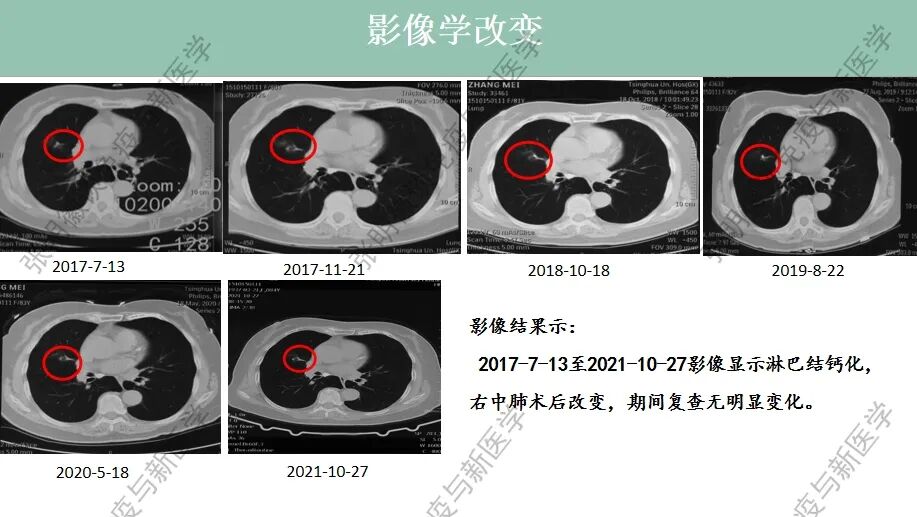
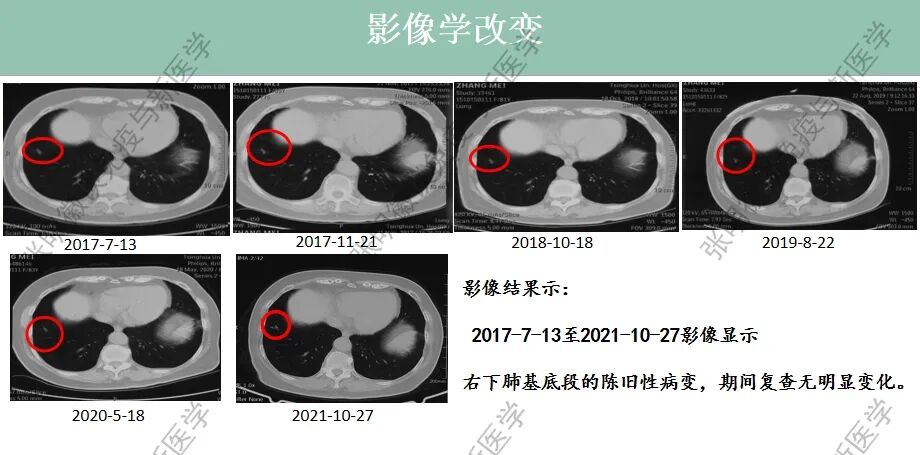
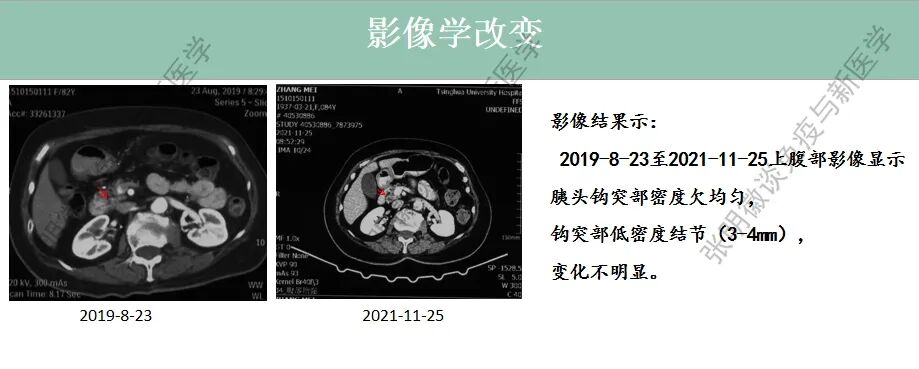
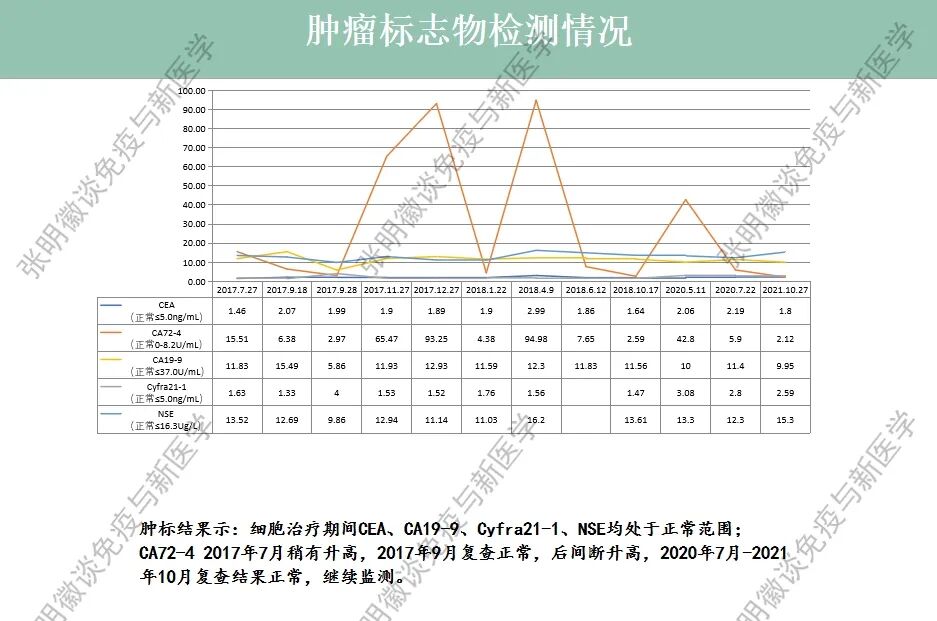
In June 2024, the Lehe New Medical team conducted a follow-up visit to Ms. Zhang. Follow-up visits and imaging examinations revealed no clear signs of tumor recurrence. It is evident that vNKT cell therapy is safe and effective for the treatment and prevention of recurrence and metastasis in Ms. Zhang's dual primary cancer condition.
Summary: Ms. Zhang was diagnosed with dual primary cancers of lung cancer and malignant melanoma. Due to her advanced age and frail physical condition, she was unable to tolerate the side effects of chemotherapy. Fortunately, she promptly opted for vNKT cell therapy. This treatment not only had no significant side effects but also effectively reduced the risk of metastasis and recurrence, enabling Ms. Zhang to achieve a survival period of over 7 years. This is because vNKT cells can precisely target diseased cells, rapidly activate the immune system, and form an immune memory effect, providing long-term immune protection for patients, improving their overall quality of life, and extending their lifespan. Lehexin Medical hopes that this technology can be applied to more cancer patients for the benefit of the public.
Reference source:
[1]Bingfeng Han, Rongshou Zheng, Hongmei Zeng … &He J. (2022). Cancer incidence and mortality in China, 202[R
[2] Zeng H, Chen W, Zheng R, et al. Changing cancer survival in China during 2003–15: a pooled analysis of 17 population-based cancer registries[J]. The Lancet Global Health, 2018, 6(5): e555-e567.
Contact Us
Scan QR Code
Communicate with Professor Zhang Minghui's Team
Click on the image to view past exciting content

 Contributor: Liu Fengmei
Reviewed by: Qiao Jiacheng, Wang Ying, Gao Chen
Editor/Typesetter: Liu Fengmei

Address: Room 1101 (Unit 101), 11th Floor, Building 1, No. 7 Courtyard, Kexueyuan Road, Life Science Park, Changping District, Beijing
Phone:010-8265 9866
Email:lehemedneo@hotmail.com