About Lehe
乐于心,和与众,与己乐,与人和; 心宽念纯,百病无生。

乐于心,和与众,与己乐,与人和; 心宽念纯,百病无生。



This complex disease, triggered by gene mutations, has always been a challenging problem for the medical community to overcome. With the advancement of technology, targeted drugs have emerged, bringing new hope to cancer patients. However, cunning cancer cells can also undergo corresponding changes, rendering the targeted drugs insensitive and resulting in drug resistance. This not only worries patients and their families, but also poses a huge challenge for doctors.
Targeted drugs, as the name suggests, are aimed at specific "targets" of cancer cells to prevent their growth and spread. These targets are usually proteins or genes that are unique or overexpressed in cancer cells. By inhibiting the function of these targets, targeted drugs can precisely target cancer cells and reduce damage to normal cells. However, cancer cells are highly heterogeneous and adaptable, and they constantly undergo genetic mutations and variations to adapt to environmental changes and evade drug attack. This is the fundamental reason for the emergence of resistance to targeted drugs.
Targeted drug resistance can be divided into two types: primary resistance and secondary resistance.
Primary resistance refers to the presence of other genetic mutations in patients themselves, which leads to poor efficacy of targeted drugs. This situation is not uncommon in cancer treatment, as the genetic mutations in cancer patients are often very complex, and different patients may have different combinations of genetic mutations.
Secondary resistance, on the other hand, occurs when tumors undergo additional genetic mutations to evade the effects of targeted therapies, leading to drug resistance. This situation is even more challenging, as the emergence of resistance often indicates that the tumor has adapted to the drugs, necessitating more complex and personalized treatment regimens.
Facing the challenge of resistance to targeted drugs, we cannot remain helpless. In fact, by comprehensively utilizing various treatment methods and approaches, we can effectively address the resistance issue, enhance treatment efficacy, and improve patients' quality of life. Below are some specific solutions:
1. Strictly follow the instructions when taking targeted drugs
First and foremost, we must emphasize the importance of strictly following the instructions when taking targeted drugs. The efficacy and safety of targeted drugs have been verified through extensive clinical trials, and the parameters such as medication time, dosage, and method are based on the optimal solutions derived from these trials.
In practical terms, some patients may adjust the dosage or discontinue the medication due to concerns about side effects or ineffective treatment. This practice is highly dangerous, as non-standard medication not only reduces the efficacy of the drug but may also increase the risk of side effects. Therefore, patients must strictly follow the doctor's advice and the instructions provided in the medication guide, taking targeted drugs on time and in the correct dosage. Additionally, it is important to avoid interactions with other medications or food, as this may affect the efficacy and safety of the medication.
2. Evolution of Targeted Drugs: Upgrade from First to Third Generation
With the continuous advancement of medical research, targeted drugs have undergone continuous evolution and upgrading. From the first generation to the second generation, and then to the third generation, the efficacy and safety of targeted drugs have been significantly improved. For patients who have developed resistance, upgrading treatment is an effective solution.
Taking lung cancer as an example, EGFR mutation is one of the common gene mutations in lung cancer. Targeted drugs targeting EGFR mutations have undergone three generations of development. The first generation of targeted drugs, such as erlotinib and gefitinib, mainly inhibit the growth of cancer cells by suppressing EGFR phosphorylation. However, as treatment duration increases, some patients may develop resistance. In this case, second-generation targeted drugs such as afatinib and dacomitinib can be considered, which have stronger abilities to inhibit EGFR phosphorylation and can more effectively combat cancer cells. If second-generation targeted drugs also develop resistance, then third-generation targeted drugs such as osimertinib and amatinib can be considered. These third-generation targeted drugs are specifically developed for specific gene mutations that are resistant to first- or second-generation targeted drugs, and have higher efficacy and lower side effects.
It should be noted that upgrading treatment is not a panacea. Although the new generation of targeted drugs has improved efficacy and safety, there is still a risk of resistance. Therefore, before upgrading treatment, comprehensive gene testing and analysis must be performed on patients to determine whether there are resistance-related gene mutations. At the same time, close attention must be paid to changes in patients' conditions and treatment responses, and treatment plans must be adjusted in a timely manner.
3. vNKT cell combined with targeted drug therapy: Innovative therapy brings new hope
vNKT cell combined with targeted drug therapy combines the precise targeting ability of targeted drugs with the powerful immune killing ability of vNKT cells, achieving a synergistic anti-cancer effect of 1+1>2.
vNKT cells are a special type of immune cell that possesses both the nonspecific killing function of NK cells and the specific recognition function of CD8+ T cells. Therefore, vNKT cells can rapidly recognize and kill tumor cells, while regulating the microenvironment within cancer tissues and inhibiting tumor growth and metastasis. When vNKT cells are used in combination with targeted drugs, they can synergize to combat cancer cells. Targeted drugs can precisely target and inhibit the growth of cancer cells, while vNKT cells can eliminate those cancer cells that escape the attack of targeted drugs, thereby extending the efficacy of targeted drugs and reducing the occurrence of drug resistance.
In practical applications, the treatment of vNKT cells combined with targeted drugs requires personalized treatment plans and meticulous operational procedures.
Overview of the illness

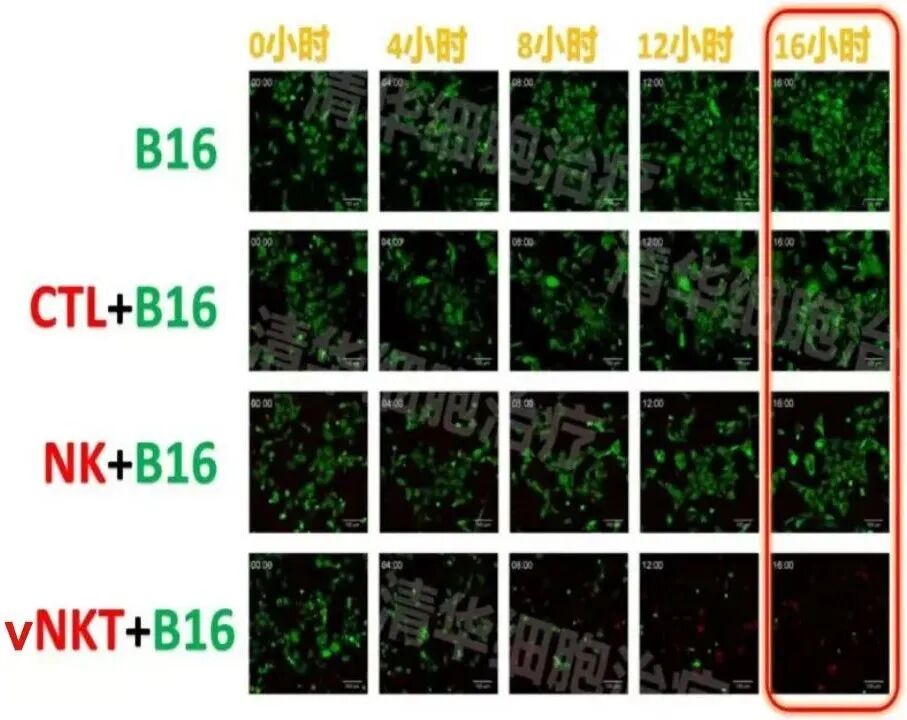
Experimental conditions: In the presence of vNKT cells, after 16 hours, nearly all B16 tumor cells were killed!
Treatment Experience
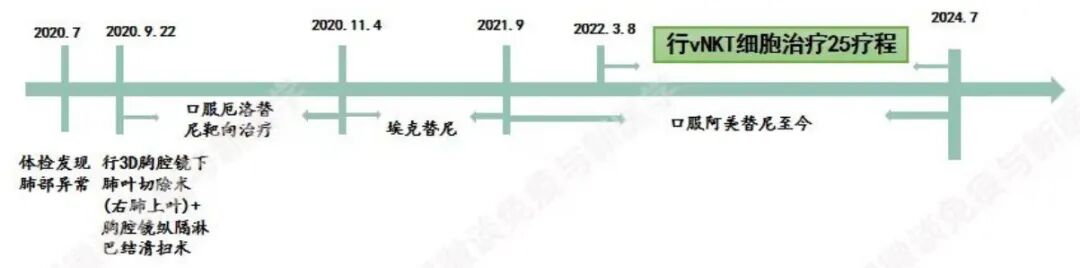
Conclusion and Commentary

Scan QR code
Communicate with Professor Zhang Minghui's team
Click on the image to view the exciting content from previous issues

Address: Room 1101 (Unit 101), 11th Floor, Building 1, No. 7 Courtyard, Kexueyuan Road, Life Science Park, Changping District, Beijing
Phone:010-8265 9866
Email:lehemedneo@hotmail.com