About Lehe
乐于心,和与众,与己乐,与人和; 心宽念纯,百病无生。


乐于心,和与众,与己乐,与人和; 心宽念纯,百病无生。


Overview of the illness
In July 2021, Ms. Zhang, 41 years old, went to the hospital for examination due to paroxysmal dry cough, chest tightness and shortness of breath after activity . She thought it was just ordinary bronchitis, but the final examination results were unacceptable ——an irregular 2.5x2.4cmtumor in the left upper lobe, with multiple metastatic lesions in the brain and bones, staging directly indicating stage IV lung cancer .
Pathological biopsy confirmed: poorly differentiated adenocarcinoma in the left upper lobe of the lung -(H201); Immunohistochemical results showed : AEl/AE3 (3+), PD-L1 Neg (-), PD-L1 (22C3) (TPS=0%). Gene testing results: EGFR gene exon 19 mutation (80.3%). This means: the chance of surgery is slim, and traditional treatment may not be effective .
"The doctor said I might not survive more than a year, but I don't want to spend my last days vomiting and losing my hair in bed." Between the side effects of chemotherapy and radiation and maintaining a quality of life, Ms. Zhang chose the latter. Facing the dilemma of life and death, she decided to try living with the tumor. Three years later, she still accompanies her family and works normally, with the tumor remaining stable in a "dormant" state. Her treatment plan provides a unique answer to survival for patients with advanced cancer
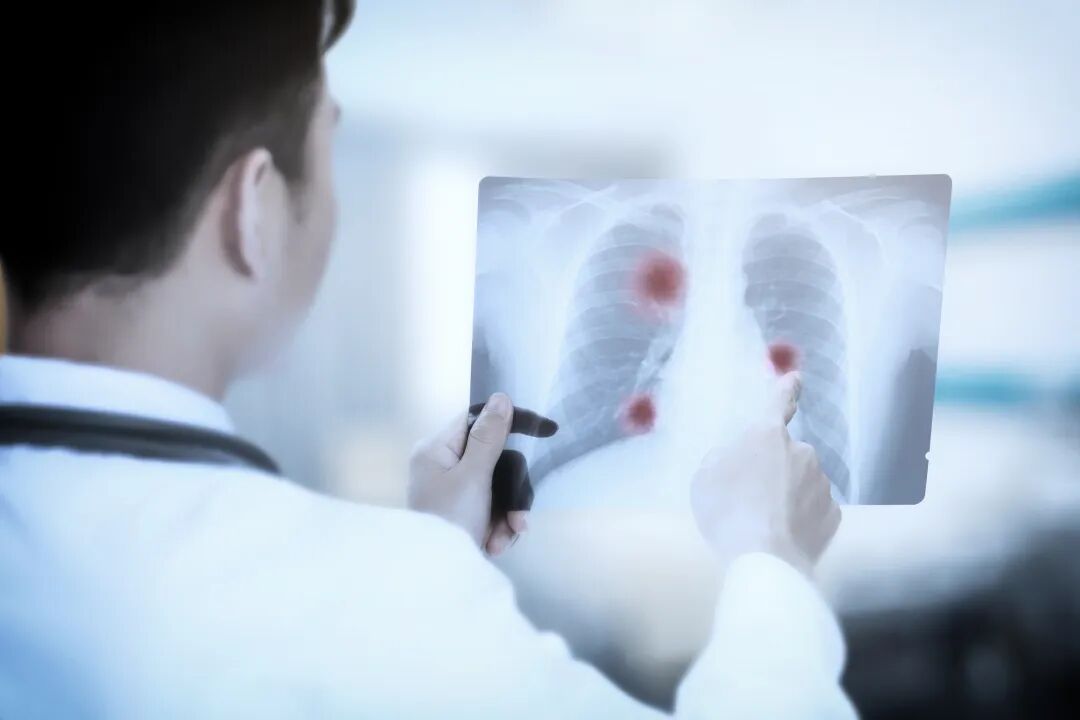
The treatment was fraught with difficulties. Fortunately, Ms. Zhang had an EGFR gene mutation. In September 2021, she successfully started using targeted therapy: Osimertinib. After one month of treatment, Ms. Zhang's dry cough and chest tightness significantly improved, and the pulmonary lesion also shrank from the previous 2.5cm to 1.5*1.5cm. Although the targeted therapy quickly controlled the disease, it always faced the risk of recurrence and drug resistance. After comprehensive consideration, Ms. Zhang chose to join the vNKT cell therapy to jointly control the tumor.
vNKT cell therapy: rebuilding the immune "protective wall"
In December 2021, Ms. Zhang began receiving vNKT cell therapy. vNKT cells exhibit bidirectional anti-tumor effects, while possessing important characteristics of NK cells and CD8+ T cells, allowing them to rapidly kill tumor cells; they also exert anti-tumor effects by regulating the microenvironment within cancer tissues. They are capable of killing inhibitory immune cells, MDSCs, effectively inhibiting tumor growth and spread.
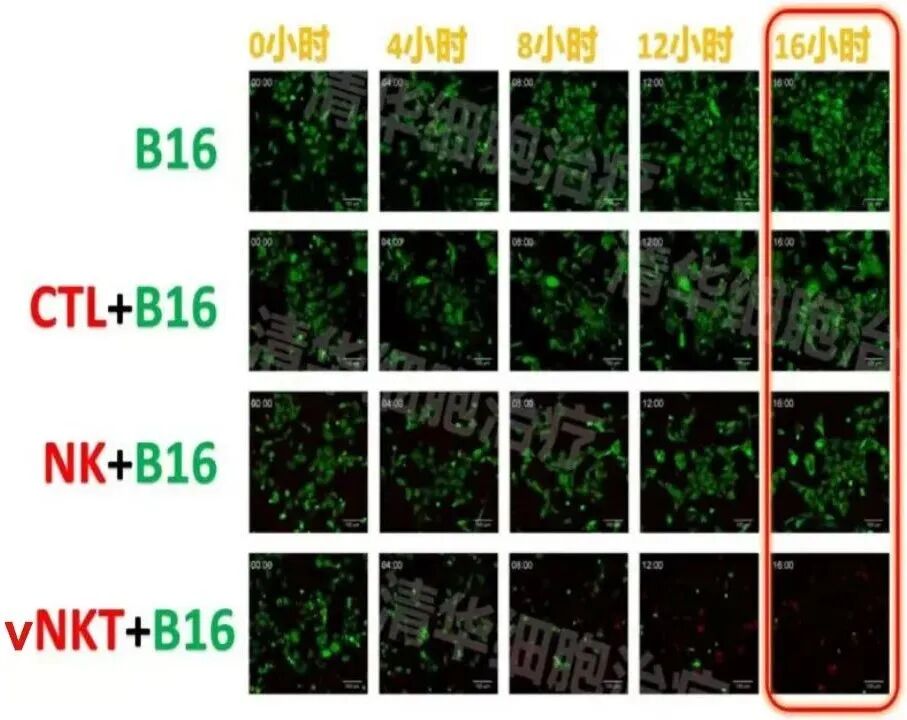
Experimental conditions: In the presence of vNKT cells, after 16 hours, nearly all B16 tumor cells were killed!
In March 2022, under the advice of the Lehe New Medical team, Ms. Zhang underwent CT-guided radiofrequency ablation for the stubborn primary lesion in her left lung . The cyberknife can precisely “burn out” the core tumor area , which not only reduces tumor burden, but also minimizes damage to surrounding normal tissues and avoids the trauma of traditional thoracotomy.
Since the initiation of vNKT cell therapy in December 2021, Ms. Zhang has completed 28 courses of treatment. Follow-up visits and imaging reviews have shown that her condition remains stable
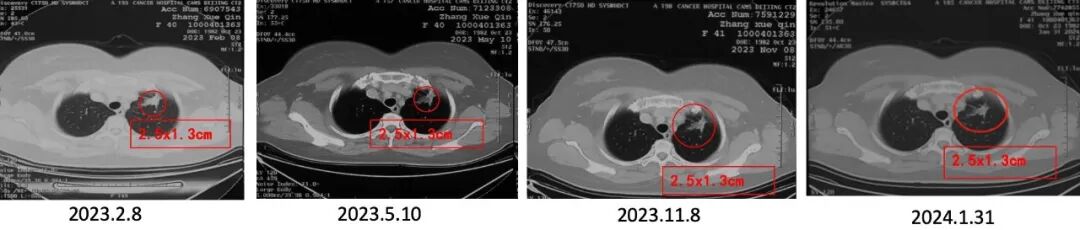
Imaging findings:
In August 2021, a left lung mass measuring approximately 2.5x2.4cm was observed, with unclear boundaries and visible short spicules at the edge. There was also visible streaking around the mass, which pulled on the local pleura, suggesting lung cancer. From September to November 2021, follow-up imaging showed a continuous shrinkage of the left lung mass.
In February 2022, the size of the mass was similar to that observed previously. In April 2022, a large area of consolidation was visible, with clearer edges. Considering the patient's medical history, this was attributed to post-treatment changes. In May 2022, follow-up imaging showed localized consolidation, measuring approximately 2.0x2.0cm, with visible vacuoles inside.
In July 2022, the size of the mass was approximately 2.0x2.3cm, with solid content filling the vacuoles. This raised concerns about the potential activity of the tumor, and it was recommended to undergo a PET-CT scan or short-term follow-up.
From October 2022 to June 2024, the size of the mass remained unchanged, measuring 2.5x1.3cm. The overall extent of the lesion slightly decreased compared to previous observations, with adjacent traction on the apical pleura. Regular follow-up is recommended.
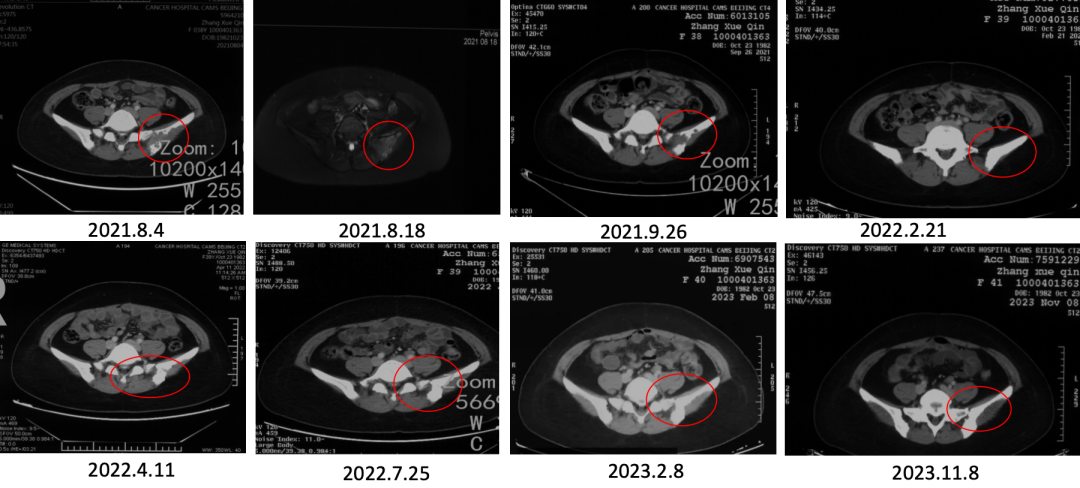
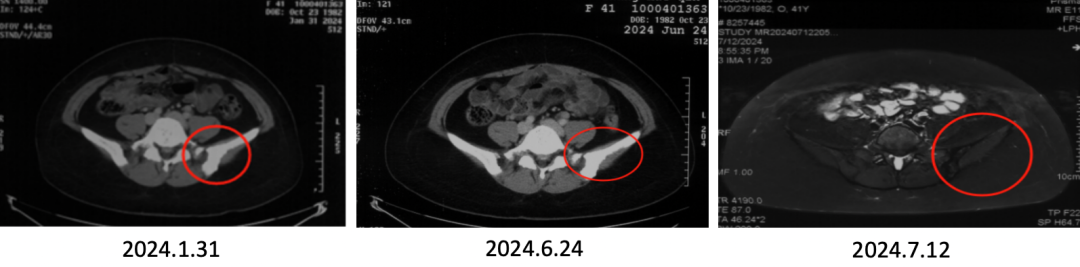
Imaging findings:
In August 2021, pelvic CT and MRI revealed destruction of the left ilium, suggesting metastasis; in September 2021, follow-up examination showed no significant change in size compared to previous findings;
In February 2022, follow-up examination showed a significant reduction in the lesion area of the left ilium and increased bone density; in April 2022, follow-up examination showed a further significant reduction in the lesion area of the ilium compared to previous findings, with no soft tissue shadow observed and increased bone density; in July 2022, follow-up examination showed no significant change compared to previous findings,
From February 2023 to June 2024, follow-up examinations were largely consistent with previous findings, and there was no bone window in the film, thus unable to observe abnormal changes in bone quality.
In July 2024, follow-up examination of the left ilium showed no abnormal signals.
Conclusion and Review< H200>
"Living with cancer" is by no means allowing tumors to grow unchecked. Instead, it involves treating the tumor such that the protective power of the immune system overwhelms the proliferative capacity of cancer cells, thereby placing the tumor in a "dormant state".
The choice of treatment plan is crucial
For patients with advanced tumors, survival with tumor requires reliance oncontinuous treatmentto delay tumor progression. Therefore, treatment plans must be carefully selected, as only appropriate plans can truly achieve the effect of controlling tumors.The goal of anti-cancer treatment is not to“eliminate”, but to “manage”——to control tumors in a stable state through scientific means, while minimizing harm to the body.
Regular Recheckups Are Essential
For patients living with tumors, the tumor has not been completely eradicated, so it is imperative to undergo regular and scheduled recheckups to assess changes in the lesion and the progression of the disease, allowing for timely adjustments to the treatment plan. Recheckups are not only a means of monitoring the tumor, but also provide patients with an opportunity for “dynamic adjustments”, ensuring that the treatment remains on the right track.
Four years have passed for a patient with advanced lung cancer who was initially diagnosed with multiple brain and bone metastases. Ms. Zhang's story not only showcases the progress of modern medicine but also interprets the profound significance of "living with cancer" as described in —when the prognosis is grim, it may be a more rational choice to coexist peacefully with the tumor through scientific strategies. The value of life lies not in the presence of tumors in the body, but in the ability to breathe freely under the sun and feel the pulsation of every moment in love.
If you or your family members are facing treatment choice difficulties, scan the QR code below, add the assistant WeChat, and you can get:
Professor Zhang Minghui [Second Diagnosis and Treatment Opinion]:Personalized Treatment Plan,Professional StrengthHelp
Join the Anti Cancer Mutual Aid Community:Share experiences with more patients and get real case support.

Scan QR code
to communicate with Professor Zhang Minghui's team
Founder of Lehe New Medicine
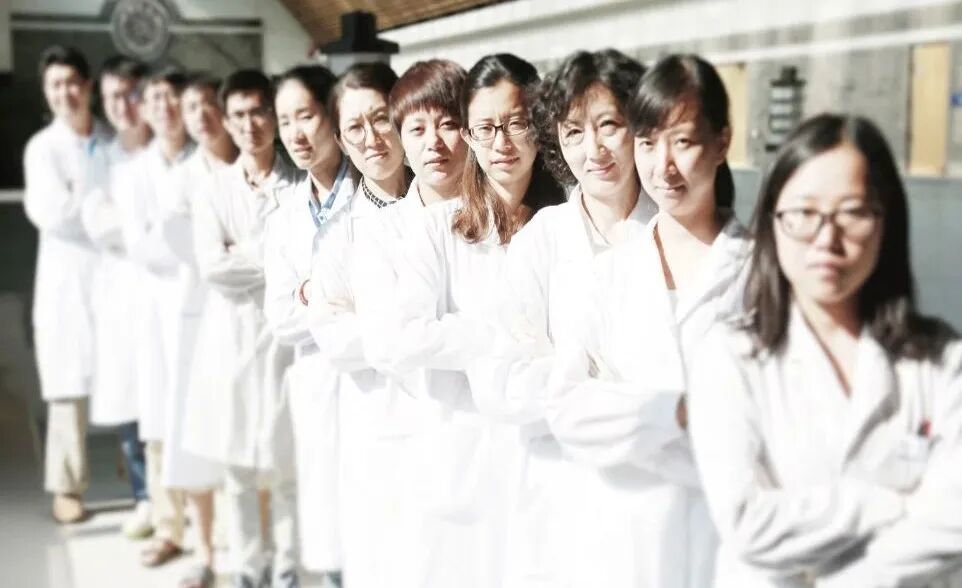
Professor Zhang Minghui, who holds a PhD in Immunology from Tsinghua University School of Medicine, has led a research team for over 20 years since the discovery of vNKT cells in 2002. They have accumulated treatment experience in over 700 cases of solid tumors, covering almost all common solid tumors. The research results fully demonstrate the great value of vNKT cells in the treatment of solid tumors.
It is suitable for postoperative patients with high pathological malignancy or a risk of recurrence; patients whose tumors have been basically controlled but not cured through conventional treatments such as chemotherapy, radiotherapy, and targeted therapy; patients with persistent high carcinogenic factors; and patients intolerant to radiotherapy and chemotherapy. If these patients do not receive effective follow-up treatment after traditional anti-tumor therapy, recurrence, metastasis, or reoccurrence of tumors will be highly probable. In this case, vNKT cell therapy is an ideal follow-up treatment method that can significantly improve patient prognosis.
Click on the image to view past exciting content



Address: Room 1101 (Unit 101), 11th Floor, Building 1, No. 7 Courtyard, Kexueyuan Road, Life Science Park, Changping District, Beijing
Phone:010-8265 9866
Email:lehemedneo@hotmail.com