Contact Us Careers
Hepatobiliary and Pancreatic Cancers

One year after breast cancer surgery, liver and bone metastases occurred successively, which requires attention

时间:2026-04-22 人气:

If you cannot understand the subsequent professional descriptions, you can just spend two minutes to read through this text.

Overview of the condition

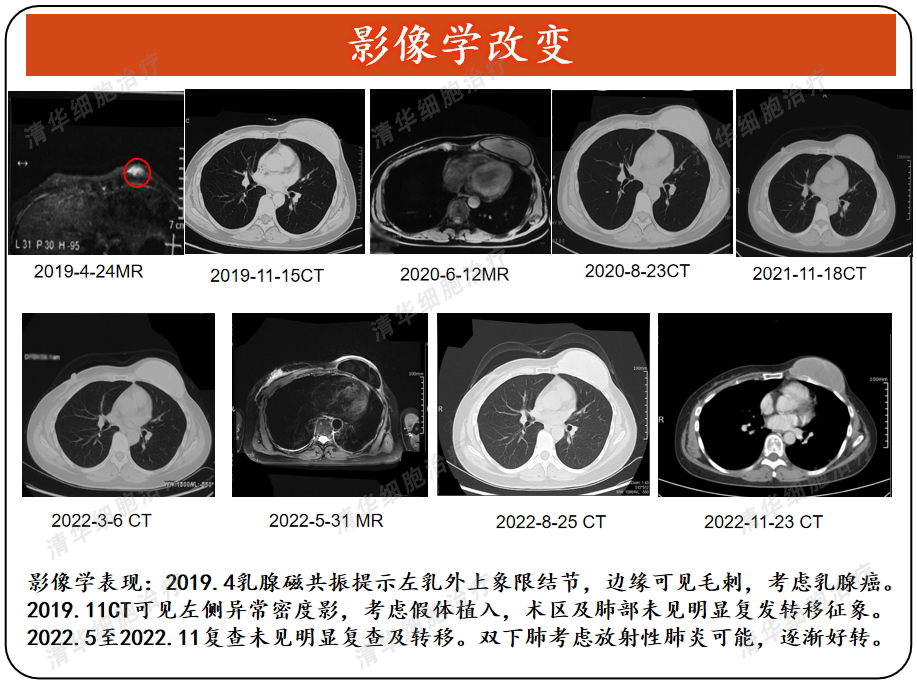
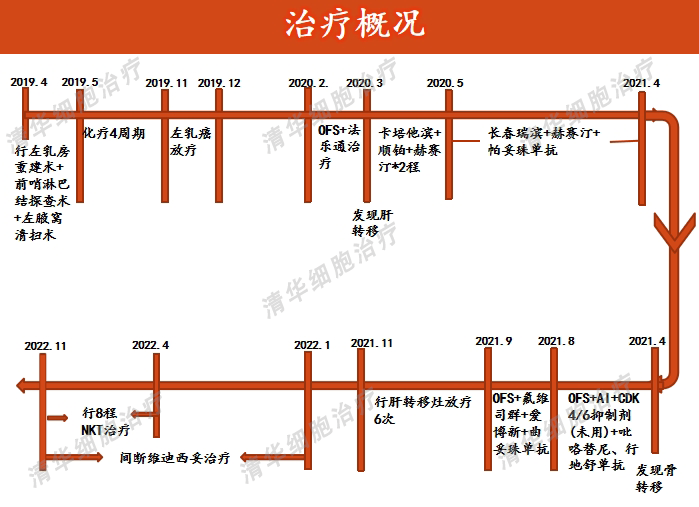
In December 2018, Ms. Jing was found to have a left breast mass during a physical examination. In March 2019, a breast ultrasound suggested a BI-RADS category 3 lesion. Subsequent breast MRI further diagnosed a mass in the inferior-medial quadrant of the left breast at approximately 6-7 o'clock, with a possibility of malignant tumor lesions, as well as a mass in the 9 o'clock position of the left breast, consistent with BI-RADS-MRI category 4c changes. Multiple lymph nodes were found in both axillae, some of which were slightly enlarged. Considering the possibility of a tumor, Ms. Jing underwent immediate surgical treatment. Postoperative pathology revealed (left breast mass) adenocarcinoma with invasive ductal carcinoma in situ, visible intravascular tumor thrombus, and cancer metastasis in 2/8 specimens. Immunohistochemistry showed intraductal carcinoma with ER (approximately 90%+), PR (approximately 90%+), and HER2 (intraductal carcinoma+). Postoperative chemotherapy with CTX and liposomal doxorubicin was administered for one course.
From May to June 2019, four cycles of chemotherapy (doxorubicin + docetaxel) were administered. From November to December 2019, radiotherapy for left breast cancer was performed.
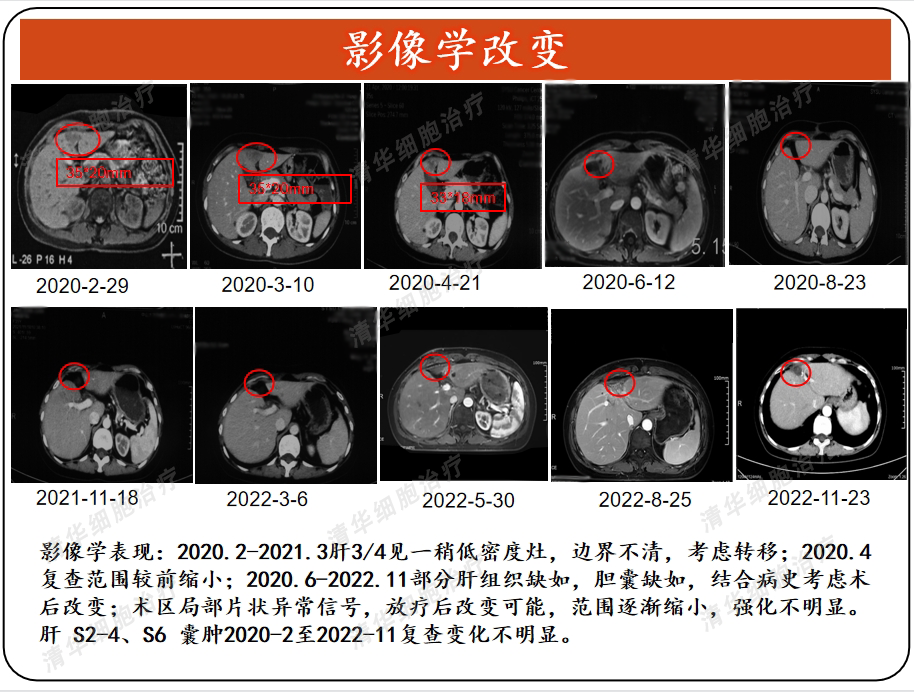
In February 2020, OFS and tamoxifen treatment were administered. In March 2020, a PET/CT scan revealed a low-density shadow in the left lobe of the liver with increased metabolism, suggesting metastasis. Two courses of treatment with capecitabine + cisplatin + herceptin were administered. In April 2020, an upper abdominal CT scan showed a reduction in the size of the liver metastatic tumor compared to previous scans.
In May 2020, a resection of the liver metastatic tumor was performed. Postoperative pathology revealed: one frozen paraffin-embedded specimen (paracolic lymph node) with cancer metastasis; one frozen paraffin-embedded specimen (hepatic artery lymph node) with cancer metastasis; one parahepatic lymph node with no cancer; three prehepatic lymph nodes with one-third showing cancer metastasis; and four celiac artery lymph nodes with one-quarter showing cancer metastasis. (Liver S4 tumor) Microscopically: Poorly differentiated cancer infiltration was observed in the liver tissue. Combined with the medical history and immunohistochemical results, it was consistent with breast cancer liver metastasis. Immunohistochemical results: CK7 (+), GATA-3 (+), Mammaglobin (+), GCDFP-15 (minimal +), ER (90% +), PR (10% +), HER2 (2+), Ki-67 (60% +), HepPar-1 (-). FISH test result on May 14, 2020: Positive amplification of the HER2 gene. Postoperative treatment with vinorelbine + Herceptin + Pertuzumab was administered.
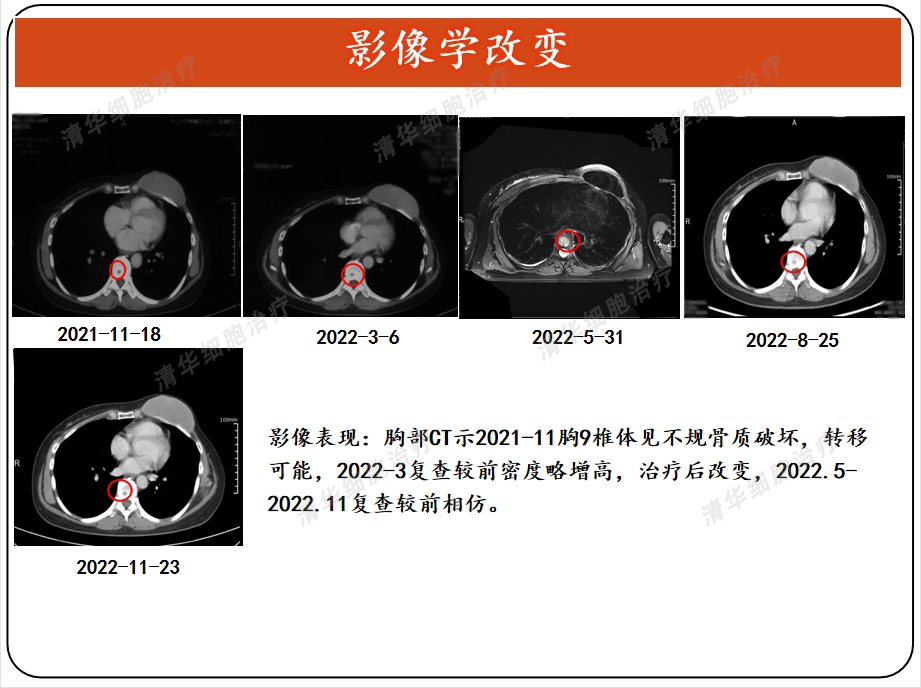
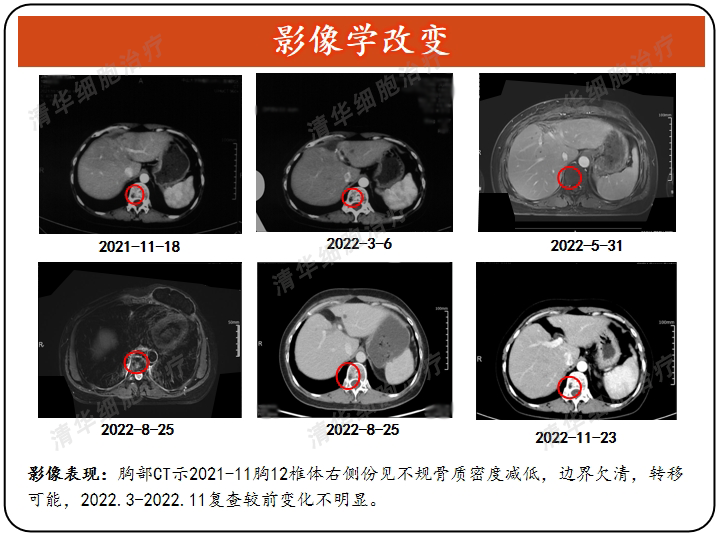
In March 2021, a follow-up CT scan revealed slight thickening and adhesion of the pleura in the right lower lung, which was new compared to previous findings. New osteolytic changes were observed in the 9th and 12th thoracic vertebrae, suggesting bone metastases. In April 2021, OFS+AI+Ibrutinib and dexamethasone were administered.
In August 2021, a follow-up MRI indicated the presence of four new nodules at the surgical margin, strongly suggesting the possibility of tumor activity. In September 2021, radiotherapy for liver metastases (MR-Linac, SBRT) was administered in six sessions.
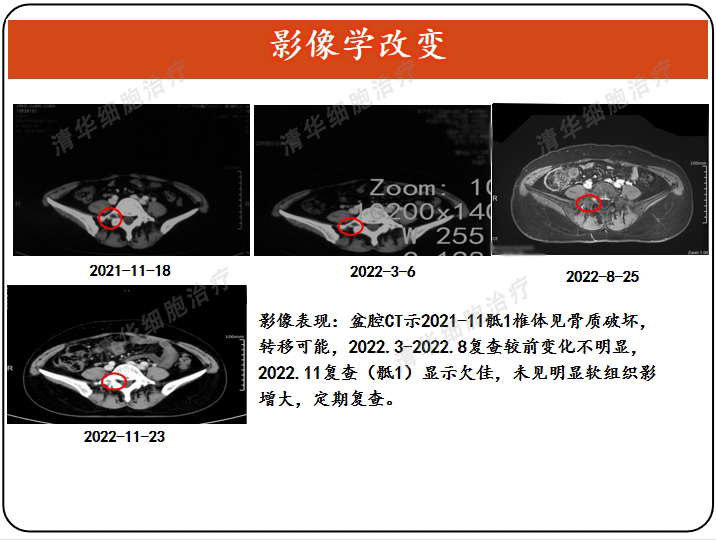
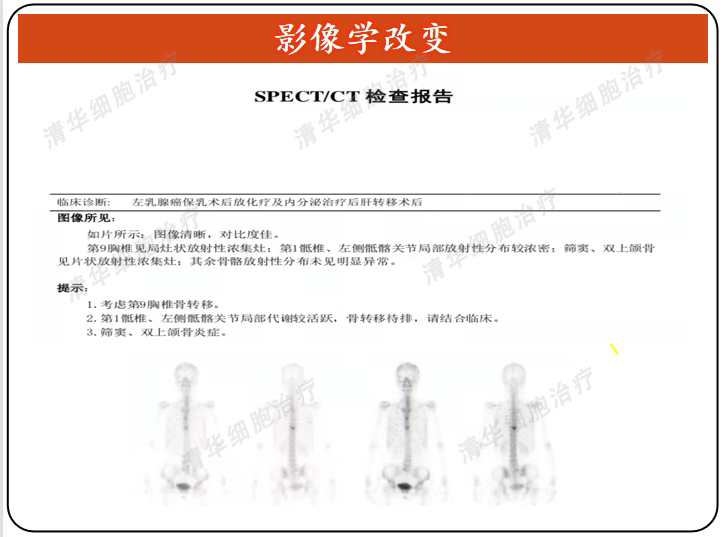
In October 2021, a follow-up SPECT/CT scan suggested: 1. Consideration of bone metastasis in the 9th thoracic vertebra. 2. Local metabolic activity in the 1st sacral vertebra and left sacroiliac joint, with bone metastasis pending exclusion. In January 2022, treatment with Vemurafenib was initiated.
Department
   
Pu
Small
Knowledge

knowledge

Breast BI-RADS Grading

Breast BI-RADS Grading is a widely recognized classification system for breast diseases in ultrasound, radiology, and clinical practice. During color Doppler ultrasound (CDUS) examination, breast nodules can be classified into 1-6 categories. Most of the 1-3 category breast nodules are relatively common benign diseases that do not cause serious complications, so patients can undergo regular CDUS follow-up without excessive treatment. Category 5 breast nodules have a high risk of being malignant, and Category 6 nodules are almost certainly breast cancer. Patients are advised to undergo surgical removal of the diseased tissue in a timely manner. Category 4 nodules are generally difficult to determine, but they also have a high risk of being malignant. Typically, BI-RADS Category 4a is an indication for surgical treatment.
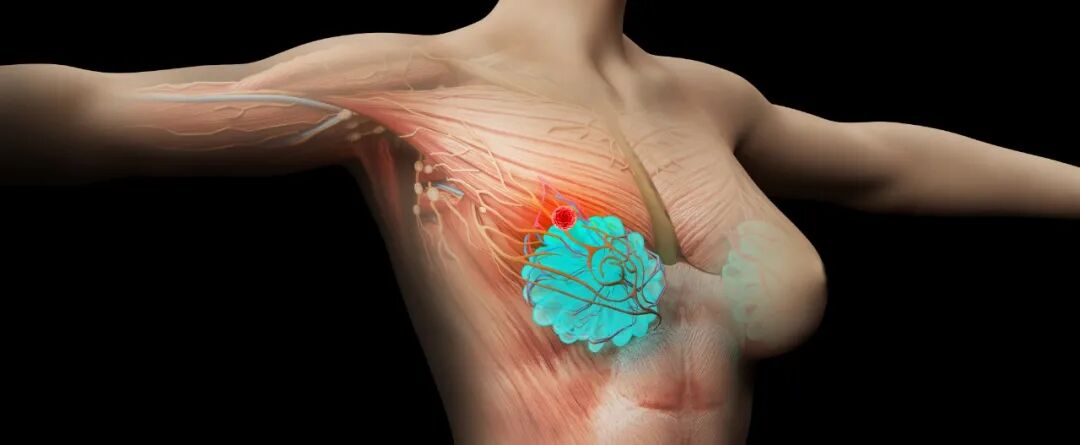
 

Upon discovering the tumor, Ms. Jing promptly underwent surgery and chemoradiotherapy. However, just over a year later, liver metastasis occurred, necessitating another surgery. Despite undergoing surgery, chemotherapy, targeted therapy, and other treatments, the tumor progressed in 2021. Recurrent relapses have caused Ms. Jing considerable distress. In order to achieve long-term stability and prolong her survival, she sought the assistance of Professor Zhang Minghui's team.
After reviewing Ms. Jing's medical records, Professor Zhang Minghui made the following analysis and judgment:

1. The patient was diagnosed and underwent surgery in 2019. Postoperative pathology indicated lymph node metastasis and vascular cancer thrombus, which are risk factors for future metastasis.

2. The patient has experienced multiple recurrences after surgery and has undergone two surgical treatments, as well as various treatments such as multiple rounds of chemoradiotherapy. Currently, tumor lesions still persist.

3. Recurrence after multiple treatments indicates a high malignant potential of the tumor, making it difficult to control tumor progression with conventional treatment alone.
4. NKT therapy utilizes powerful immune cells to eliminate tumor cells that may remain undetected in the body, with essentially no side effects. Combining conventional treatment with NKT cell therapy can effectively inhibit tumor growth, prolong survival, and improve quality of life.  

In April 2022, Ms. Jing began to receive NKT cell therapy. By November 2022, she had completed 8 courses of treatment. After more than half a year of treatment, the first follow-up assessment showed no clear signs of tumor progression, and her overall condition remained stable.


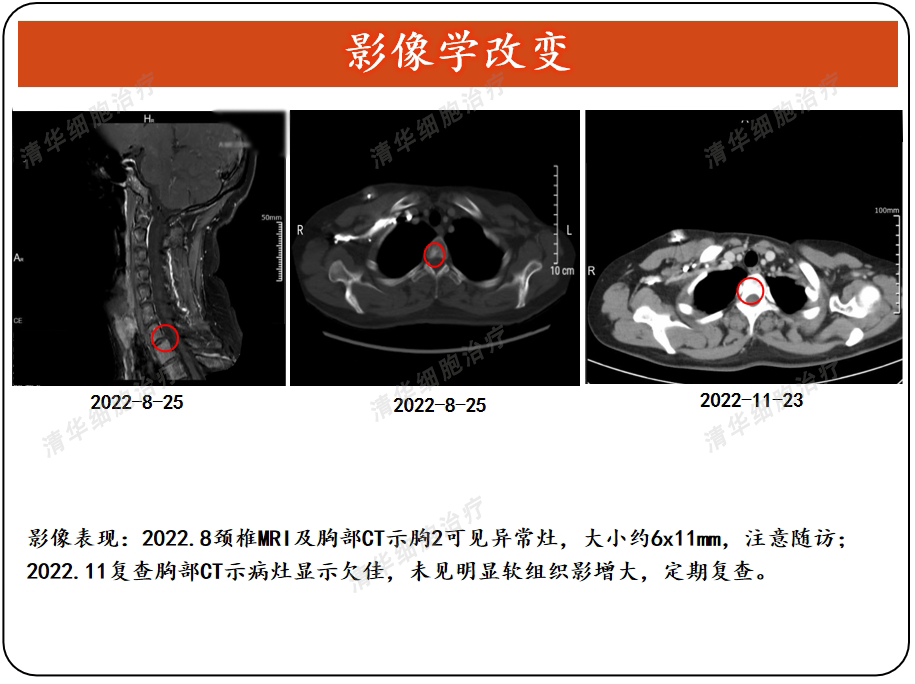
Imaging


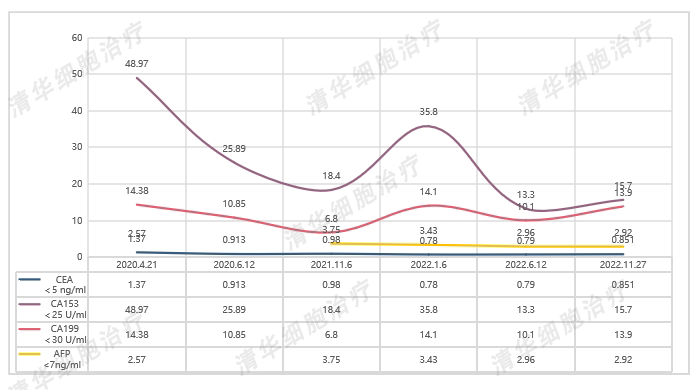
Tumor markers

 
Tumor marker changes: CA153 gradually decreased to normal from April 2020 to November 2021, then increased again in January 2022, and remained within the normal range during follow-up examinations in June 2022 and November 2022; other tumor markers fluctuated within the normal range, and continued monitoring is recommended.


 Conclusion and Comments


Ms. Jing reported that she has been living and working normally, and her skin has changed from being dull, yellowish, and rough to being fair, translucent, ruddy, and delicate. She feels more energetic than before. Currently, she is in a normal state of life, with reduced daily activities. From diagnosis to surgery and multiple recurrences, Ms. Jing has undergone multiple treatments. After 8 courses of NKT cell therapy, the results of this follow-up are satisfactory and reassuring. We look forward to more good news from subsequent treatments and follow-ups.
Bone is the most common site of distant metastasis in breast cancer. Due to pain, pathological fractures, and electrolyte abnormalities, skeletal lesions can lead to a high incidence rate. Currently, the treatment for breast cancer patients with bone metastasis is highly personalized, often involving multidisciplinary approaches such as chemotherapy, hormone therapy, bone-targeted anti-resorptive agents, radiotherapy, and surgery. Various treatment options can effectively improve survival rates.
Ms. Jing has completed two surgical treatments, indicating a high malignant degree of the tumor. NKT cell therapy not only eliminates residual tumor cells but also strengthens the immune system, thereby providing patients with long-term stability.
Popular science knowledge is provided for reference only. Individual patients should seek clinical medical advice.   

Reference:< H400>

【1】Qu, Y., Zhao, D., Mu, J., Che, N., Zhang, C., Liu, Z., Su, D., Zhou, L., Zhang, H., & Wei, L. (2016). Prognostic analysis of primary mucin-producing adenocarcinoma of the lung: a comprehensive retrospective study. Tumour biology : the journal of the International Society for Oncodevelopmental Biology and Medicine, 37(1), 887–896.

NKT Classic Case Review

Click on the image

to view