About Lehe
乐于心,和与众,与己乐,与人和; 心宽念纯,百病无生。


乐于心,和与众,与己乐,与人和; 心宽念纯,百病无生。


If you cannot understand the subsequent professional description, you can finish reading this text in two minutes
Overview of the condition
Recognition
Hepatocellular carcinoma
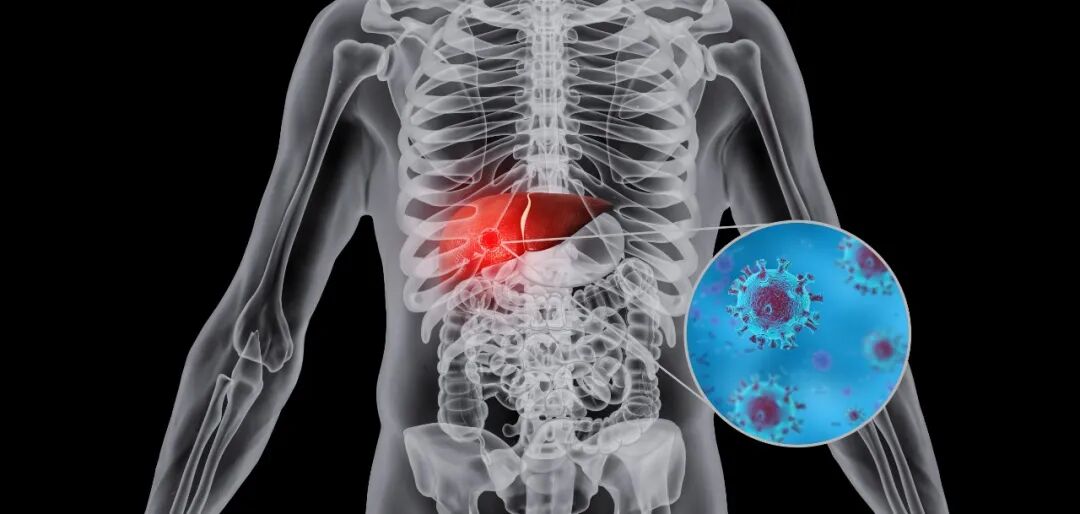
Liver cancer is the sixth most common cancer globally, with 841,080 new cases reported in 2018, making it the fourth leading cause of cancer-related deaths worldwide. Hepatocellular carcinoma is the most common pathological type of liver cancer. The typical CT manifestation is that after injection of contrast medium, the concentration of contrast medium in liver cancer tissue is significantly higher than that in normal liver tissue within a very short period of time, known as "fast-in and fast-out".
The main reason for the unsatisfactory therapeutic effect of liver cancer is late diagnosis. Clinical practice has shown that there is a "world of difference" in the therapeutic effect between small liver cancer (less than 3 cm in diameter) and advanced liver cancer. Advanced liver cancer often accompanies intrahepatic and extrahepatic metastasis, making surgery impossible and "liver transplantation" a contraindication. Pharmacotherapy also rarely yields significant results. Even for cases that are operable, patients have to bear the risks of "high mortality rate" and "high incidence of complications".
1. The patient has undergone multiple recurrences after liver cancer surgery and has completed three surgeries.
2. Post-operative pathology indicated poorly differentiated hepatocellular carcinoma, which has a poor prognosis and a high risk of recurrence.
3. NKT therapy utilizes powerful immune cells to eliminate tumor cells that may remain in the body but are undetectable, with essentially no side effects, making it very patient-friendly. After completing conventional treatment, NKT cell therapy is used to maintain long-term systemic stability.
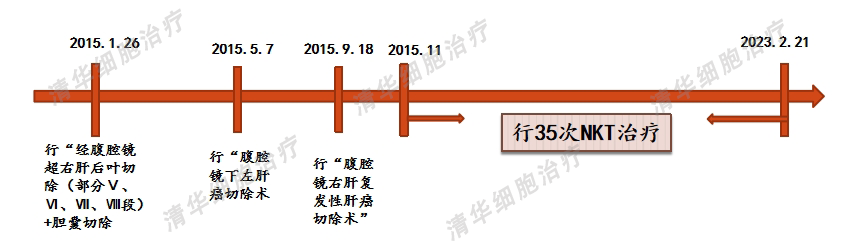
After listening to Professor Zhang's advice, Mr. Yan decided to undergo NKT cell immunotherapy in November 2015. Initially, he received an intensive regimen for 2 months, and then in January 2016, the treatment was changed to one course per month without interruption. After multiple follow-up examinations showed stable conditions, the treatment was adjusted to six courses per year in August 2016. Two years later, in 2018, the treatment was changed to one course every three months. To date, Mr. Yan has completed a total of 35 courses of treatment, with overall stability and no significant recurrence or metastasis observed.
Image aspect
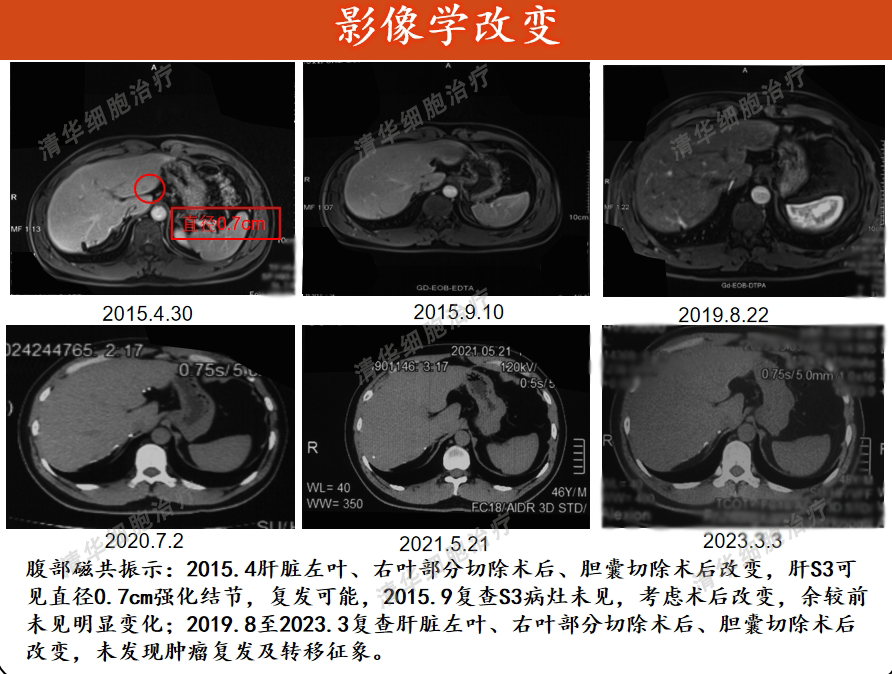
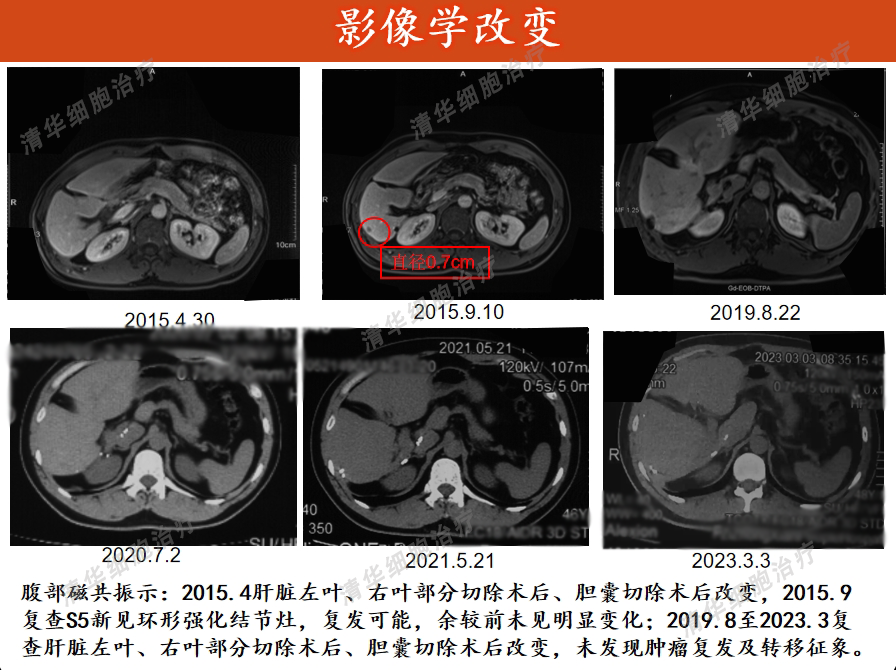
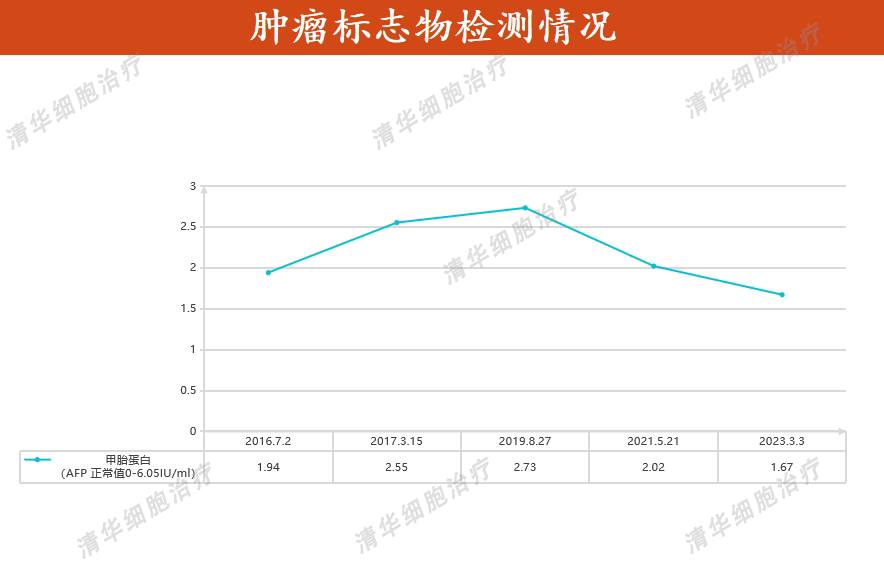
Tumor markers
From July 2016 to March 2023, the AFP levels were within the normal range during follow-up examinations.
Conclusion and Comments
Reference:< H352>
【1】Hayato Abe, Kazu Shibutani, Shintaro Yamazaki, Tatsuo Kanda, Mitsuhiko Moriyama, Masahiro Okada, Masahiko Sugitani, Shingo Tsuji, Tadatoshi Takayama, Yukiyasu Okamura, Tumor stiffness measurement using magnetic resonance elastography can predict recurrence and survival after curative resection of hepatocellular carcinoma, Surgery, 10.1016/j.surg.2022.11.001, 173, 2, (450-456), (2023).
Click on the image

Address: Room 1101 (Unit 101), 11th Floor, Building 1, No. 7 Courtyard, Kexueyuan Road, Life Science Park, Changping District, Beijing
Phone:010-8265 9866
Email:lehemedneo@hotmail.com