About Lehe
乐于心,和与众,与己乐,与人和; 心宽念纯,百病无生。


乐于心,和与众,与己乐,与人和; 心宽念纯,百病无生。


If you cannot understand the subsequent professional descriptions, you can finish reading this text in two minutes.
Disease Overview
knowledge
Early Clinical Manifestations of Colon Cancer
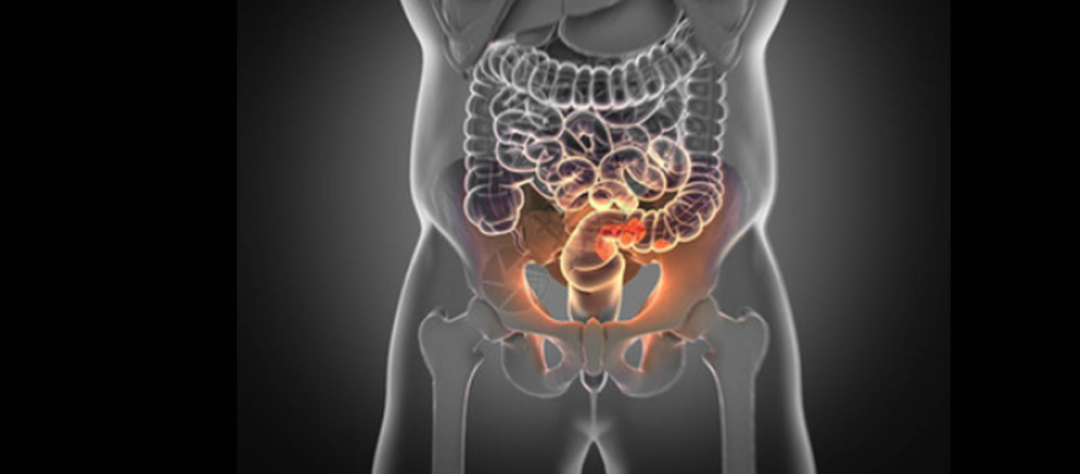
Colon cancer is a common malignant tumor of the digestive tract, and the most obvious symptom in its early stage is the presence of blood in the stool. However, blood in the stool is commonly seen in various digestive tract diseases. When blood in the stool occurs, it is necessary to distinguish it and not to panic immediately. There are several types of blood in the stool. When the blood is dark in color, it usually indicates upper gastrointestinal bleeding, such as bleeding from gastric ulcers or gastric cancer, which appears as black "tarry stool." In this case, a gastroscopy should be performed to confirm the diagnosis. When the blood in the stool is bright red, it indicates that the bleeding site is in the lower gastrointestinal tract, specifically the rectum and colon. The feces in the colon are mostly formed and do not undergo significant changes, so the blood in the stool caused by colon cancer is mainly located on the surface of the stool. Since the blood in the stool caused by colon cancer is mostly due to the stimulation of the colon cancer by stool, leading to rupture and bleeding on the tumor surface, patients may also experience abdominal pain at this time.
In addition to rectal and colon cancer, hemorrhoids can also cause bright red blood in the stool. The characteristic of blood in stool caused by hemorrhoids is that the feces and blood do not mix, and the feces are discharged along with the blood, which is very similar to rectal and colon tumors and requires further confirmation with colonoscopy.
1. The patient was diagnosed with colon cancer in 2020 and underwent surgical treatment.
2. Currently, imaging examinations show no clear signs of tumor recurrence or space occupation. However, this does not necessarily mean the patient has passed the critical stage for malignant tumors. Although no nerve invasion was detected, the tumor has infiltrated to the deep muscular layer and invaded adjacent organs. Histologically, it is impossible to determine the presence of intravascular cancer thrombus, indicating a high risk of future metastasis.
3. NKT therapy utilizes powerful immune cells to eliminate tumor cells that may remain undetected in the body, with essentially no side effects. Combining NKT cell therapy after surgical treatment can effectively reduce the risk of tumor recurrence.
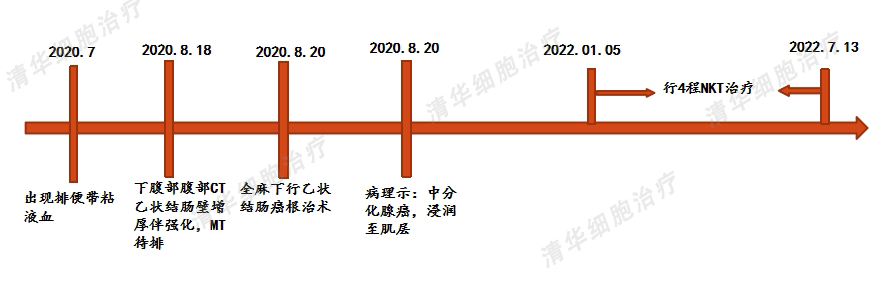
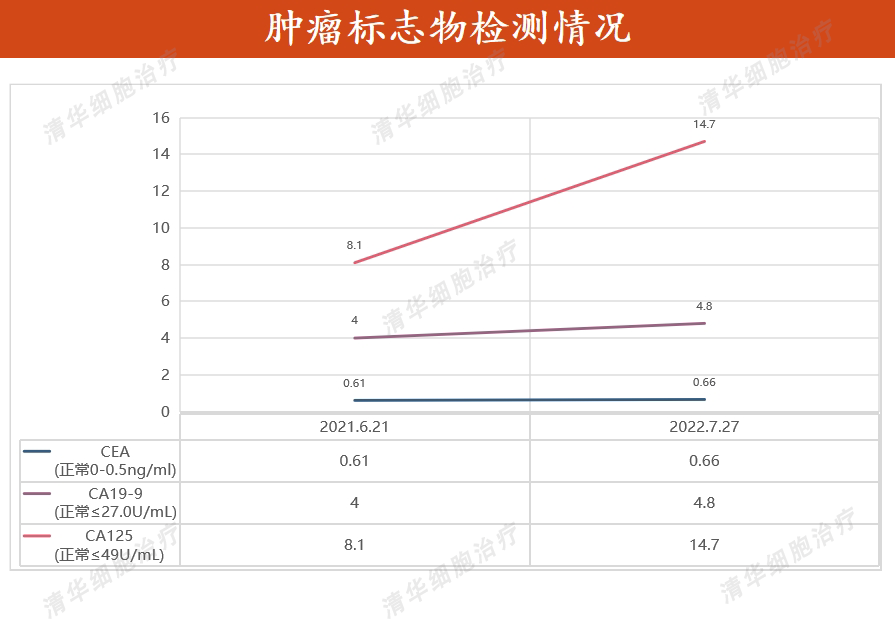
From January 2022 to July 2022, Ms. Huang completed the first phase of treatment. During this follow-up examination, no clear signs of tumor recurrence were observed, and her overall condition remained stable.
Imaging
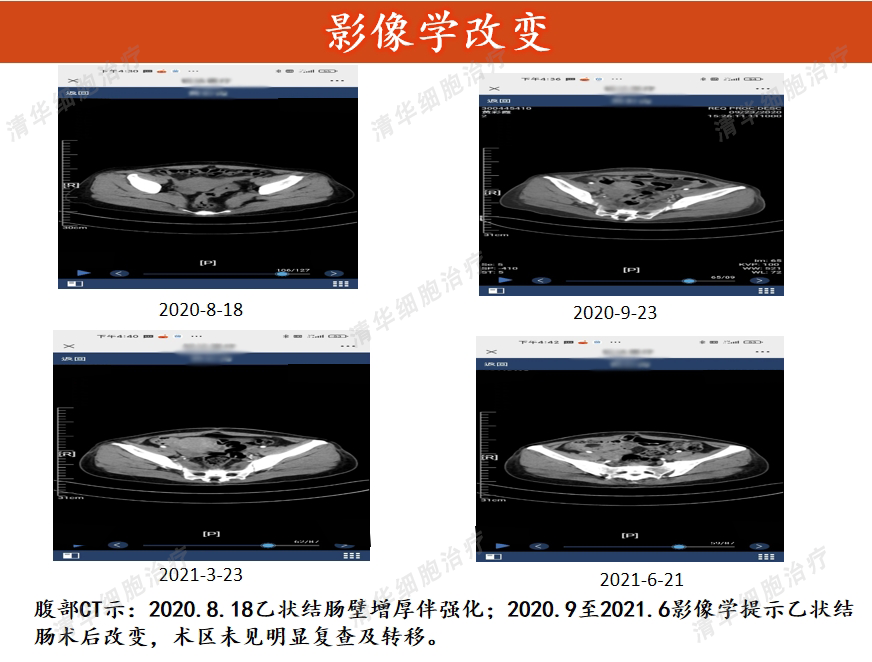
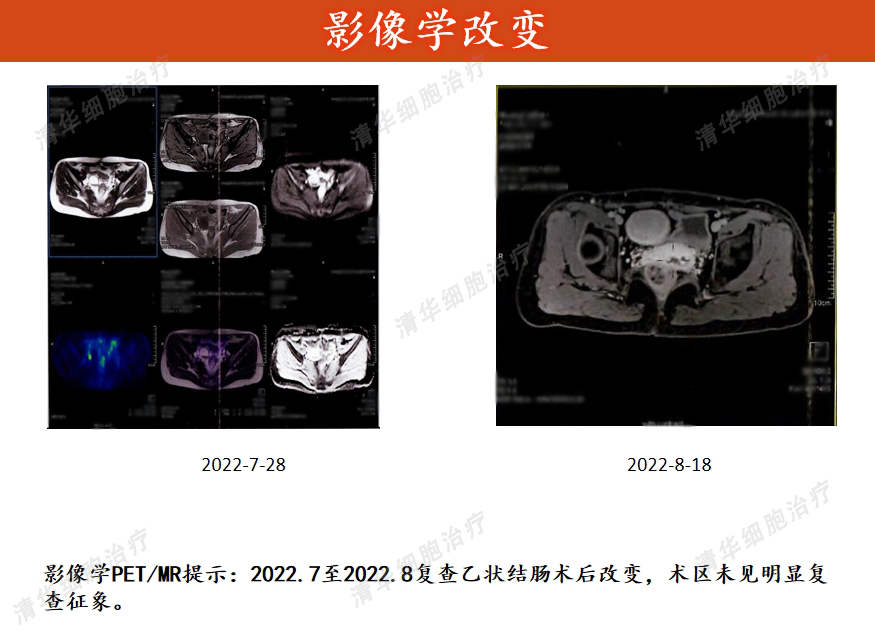
Swelling < H228>
Conclusion and Comments
【1】 O'Connell J.B., Maggard M.A., Ko C.Y. Colon cancer survival rates with the new American Joint Committee on Cancer sixth edition staging. J Natl Cancer Inst. 2004; 96:1420–1425.
【2】Amin M.B., Edge S., Greene F., editors. AJCC Cancer Staging Manual. 8th ed. Springer International Publishing; New York: 2017.
【3】Swanson R.S., Compton C.C., Stewart A.K., Bland K.I. The prognosis of T3N0 colon cancer is dependent on the number of lymph nodes examined. Ann Surg Oncol. 2003; 10:65–71.
【4】Taieb J, Karoui M, Basile D. How I treat stage II colon cancer patients. ESMO Open. 2021 Aug; 6 (4): 100184. doi: 10.1016/j.emoop.2021.100184. Epub 2021 July 5.
Click on the image

Address: Room 1101 (Unit 101), 11th Floor, Building 1, No. 7 Courtyard, Kexueyuan Road, Life Science Park, Changping District, Beijing
Phone:010-8265 9866
Email:lehemedneo@hotmail.com