Contact Us Careers
Intestine Cancer

After rectal cancer metastasizes, how can secondary recurrence and metastasis be avoided?

时间:2026-04-22 人气:

If you can't understand the subsequent professional description, just take two minutes to read through this text

Overview of the condition


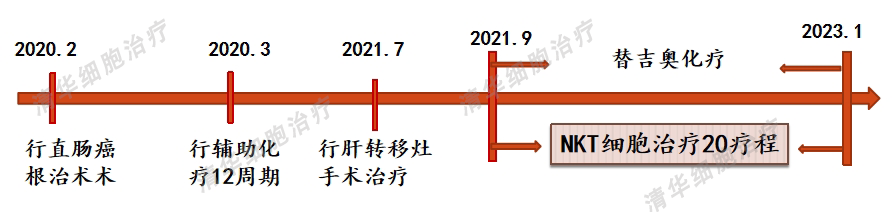
In February 2020, Ms. Zhang went to the hospital due to increased frequency of bowel movements and blood in her stool. Colonoscopy and pathological examination revealed rectal cancer.
Ms. Zhang underwent immediate surgical treatment, and the postoperative pathology was (straight) intestinal adenocarcinoma, grade II, ulcerative type, with visible vascular invasion.
After surgery, Ms. Zhang underwent 12 cycles of chemotherapy. However, during a follow-up examination in July 2021, it was found that tumor markers CEA and CA19-9 were elevated. MRI further revealed a mass in the left lobe IV segment of the liver, with unclear boundaries and enhanced edges, suggesting possible metastasis.
Upon discovering liver metastasis, Ms. Zhang underwent another surgical treatment, followed by postoperative temozolomide chemotherapy.
Department
   
Pu
small
Knowledge

Recognition


Early clinical manifestations of rectal cancer
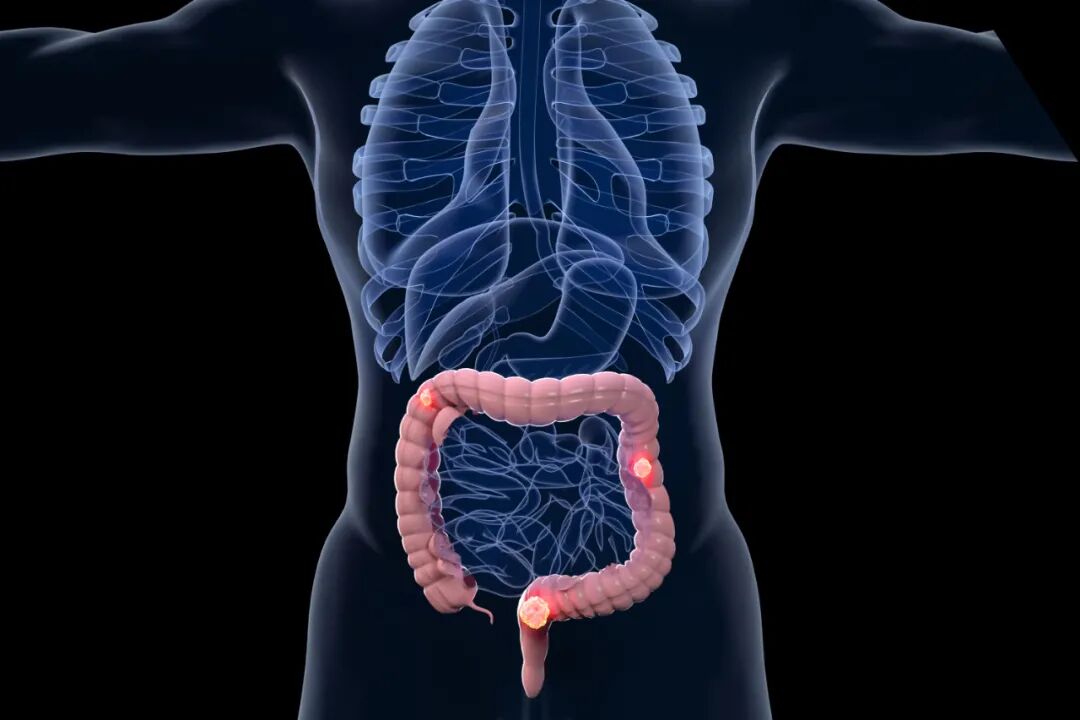
Rectal cancer is a common malignant tumor of the digestive tract, and the most obvious symptom in its early stage is the presence of hematochezia. However, hematochezia is commonly seen in various digestive tract diseases. When hematochezia occurs, it is necessary to distinguish it and not to panic immediately. There are several types of hematochezia. When the hematochezia is dark in color, it usually indicates upper gastrointestinal bleeding, such as bleeding from gastric ulcers or gastric cancer, which appears as black "tarry stools". In this case, a gastroscopy should be performed to confirm the diagnosis. When the hematochezia is bright red blood, it indicates that the bleeding site is in the lower gastrointestinal tract, specifically the rectum and colon. The feces in the colon are mostly formed and do not undergo significant changes, so the hematochezia caused by rectal cancer is mainly located on the surface of the stool. Since the hematochezia in rectal cancer is mostly caused by the stimulation of the tumor surface by stool and subsequent rupture and bleeding, patients may also experience symptoms of tenesmus at this time.  
Besides colorectal cancer, hemorrhoids can also cause bloody stools. The characteristic of hemorrhoidal bleeding is that the feces and blood are not mixed, and the feces are discharged along with the blood, which is very similar to colorectal tumors. Further colonoscopy is needed for confirmation.  
 

Although Ms. Zhang had undergone surgery and postoperative chemotherapy, she still developed liver metastases. Considering that even if the liver metastases were removed through surgery, there might still be residual cancer cells in the body that were undetectable, Ms. Zhang was deeply worried about the tumor recurring. After extensive research, Ms. Zhang and her family learned about Professor Zhang Minghui's NKT technology at Tsinghua University School of Medicine through a friend's recommendation, and carefully reviewed the displayed cases of NKT cell therapy, particularly hoping to try it to reduce the risk of tumor recurrence and delay the time of recurrence and metastasis.
After reviewing Ms. Zhang's medical records, Professor Zhang Minghui made the following analysis and judgment:

1. The patient developed liver metastases after undergoing radical resection for rectal cancer.
2. After undergoing resection and chemotherapy for the liver metastases again, the patient's physical condition would be difficult to tolerate a third surgery.  
3. NKT therapy utilizes powerful immune cells to eliminate tumor cells that may remain undetected in the body, with essentially no side effects. On the basis of conventional treatment, NKT therapy can effectively reduce the risk of tumor recurrence and delay the time of recurrence and metastasis.  

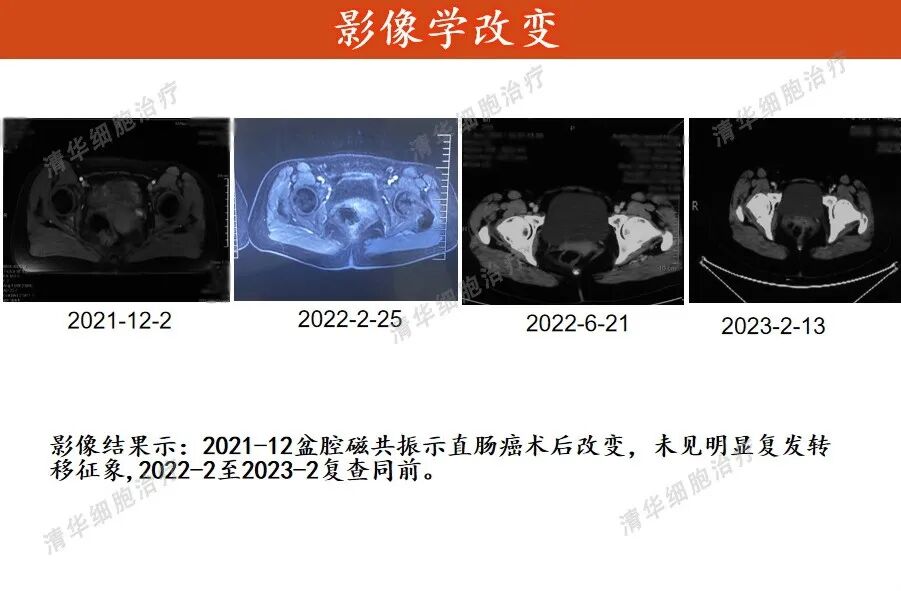
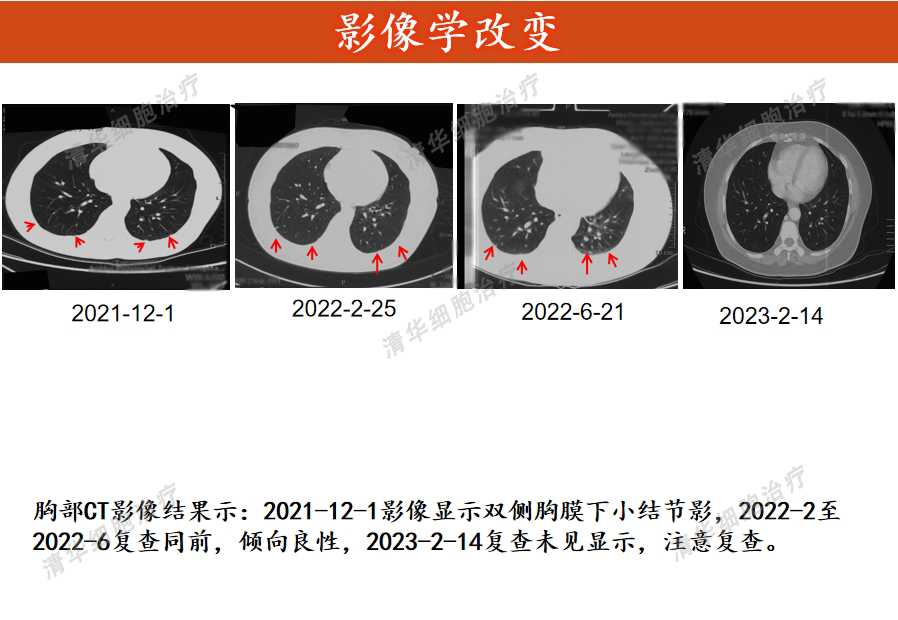
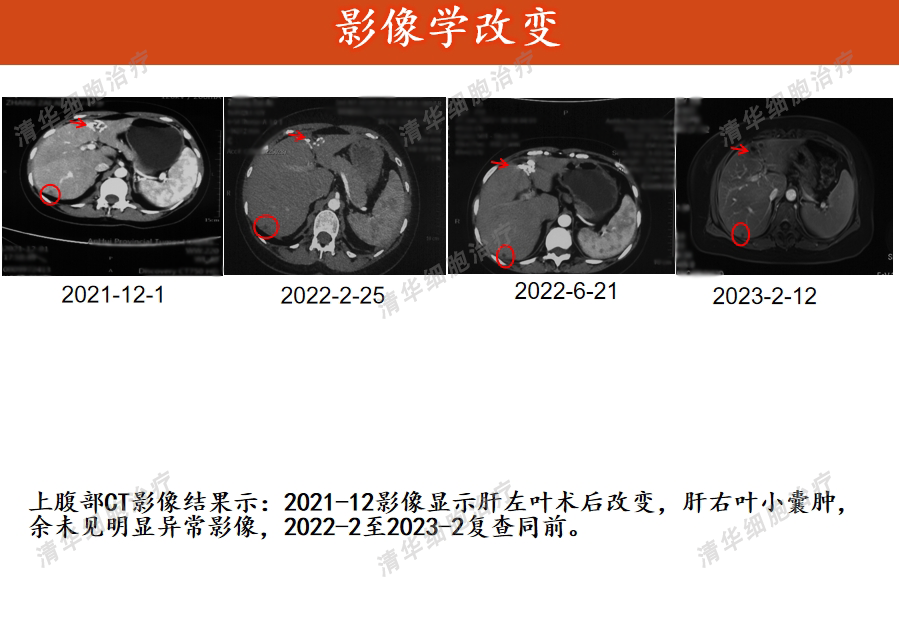
Ms. Zhang underwent NKT cell immunotherapy in September 2021, with an initial regimen of 2 courses per month. In January 2022, due to stable evaluations multiple times, the regimen was adjusted to 1 course per month. As of January 2023year1month, 20 courses of treatment have been completed. During this period, multiple follow-up examinations have shown no signs of recurrence or metastasis.

Imaging

,  


Tumor markers

,  

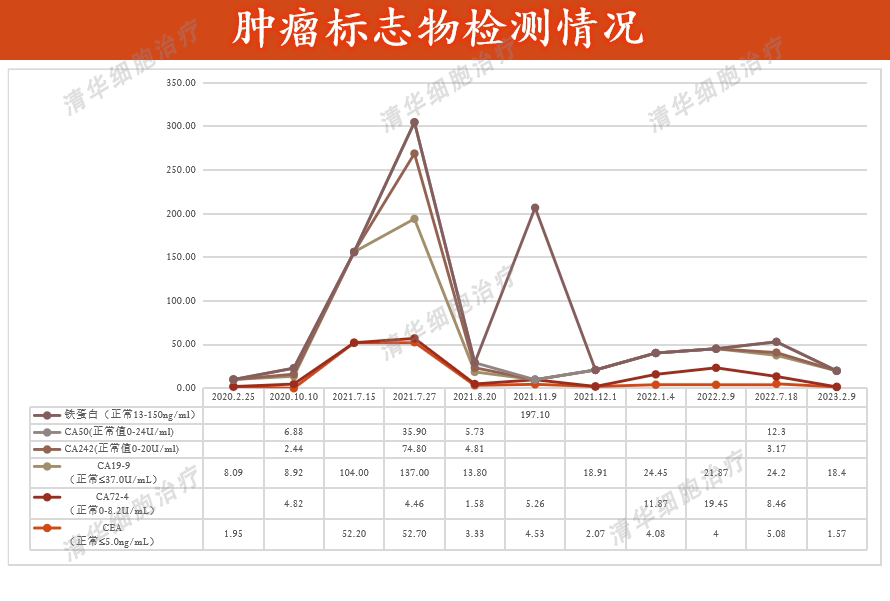
Tumor marker results showed that CEA, CA199, and CA242 were significantly elevated in July 2021, but returned to normal range during the follow-up in August. During the cell therapy period, CEA, CA19-9, and CA125 were all within the normal range. On November 9, 2021, ferritin levels were elevated, and a follow-up examination was recommended. From January 2022 to July 2022, CA72-4 levels were intermittently elevated compared to previous levels (November 2021), and close monitoring was advised.


 Conclusion and Comments


After adopting NKT cell therapy, Ms. Zhang's quality of life has been significantly improved, her mental state is excellent, and she feels more energetic and vigorous than before. She has recovered to her pre-illness state, achieving the expected results. After more than a year of treatment, the latest assessment results remain stable with no progression, and immunotherapy is considered one of the most promising directions in tumor treatment, effectively reducing the risk of recurrence for Ms. Zhang.
Hepatectomy is the optimal treatment option for patients with colorectal liver metastasis (CRLM). A 10-year follow-up study investigated the factors affecting long-term survival in patients with CRLM. Multiple tumor nodules and multifocal involvement in metastatic lesions are poor prognostic factors for overall survival, while adjuvant chemotherapy can improve prognosis.
Ms. Zhang developed metastatic lesions again after surgery, which is usually associated with a poor prognosis. However, after undergoing adjuvant NKT cell therapy again, she achieved the expected results. Now, after more than a year, the latest assessment results remain stable with no progression.
Popular science knowledge is provided for reference only. For individual patients, clinical medical treatment should prevail.   

Reference:< H480>

【1】Wang, Y., Lin, H. C., Huang, M. Y., Shao, Q., Wang, Z. Q., Wang, F. H., Yuan, Y. F., Li, B. K., Wang, D. S., Ding, P. R., Chen, G., Wu, X. J., Lu, Z. H., Li, L. R., Pan, Z. Z., Sun, P., Yan, S. M., Wan, D. S., Xu, R. H., & Li, Y. H. (2018). The Immunoscore system predicts prognosis after liver metastasectomy in colorectal cancer liver metastases. Cancer immunology, immunotherapy : CII, 67(3), 435–444.

NKT Classic Case Review

Click on the image

You can view