Contact Us Careers
Intestine Cancer

New rehabilitation program for rectal cancer: vNKT cell immunotherapy + positive psychology

时间:2026-04-15 人气:
           
Click on the blue word to follow us  


# Colorectal cancer              

According to the latest data on the burden of malignant tumors in China released by the National Cancer Center in JNCC, the incidence of colorectal cancer is as high as 517,100, ranking second only to lung cancer as the most prevalent cancer in China, with a total of 240,000 deaths caused by it. This grim situation reminds us that we must pay attention to the early detection and effective treatment of colorectal cancer.

Ms. Zhang's journey of fighting cancer serves as a vivid example.


01              


Disease Overview

Overview of the illness


In February 2020, Ms. Zhang went to the hospital due to increased frequency of bowel movements accompanied by blood. She was diagnosed with rectal cancer. Faced with this sudden blow, Ms. Zhang quickly adjusted her mindset and underwent surgery. However, the postoperative pathology results showed that her rectal cancer was grade II, ulcerative, measuring approximately 3.1cm x 2.5cm x 1cm, with cancer tissue invading the extraserous fat tissue and visible vascular invasion. Mesenteric lymph nodes were positive (8/22), and the AJCC pTNM staging (8th Ed, 2017) was pT4N2. This indicated that her condition was not optimistic.


Ms. Zhang underwent 12 cycles of chemotherapy after her surgery. However, the follow-up results in July 2021 showed elevated tumor markers CEA and CA19-9, and MRI further revealed an ill-defined, margin-enhanced mass in the IV segment of the left lobe of the liver, suggesting metastasis. She underwent surgery again and received temozolomide chemotherapy.

From diagnosis to recurrence, Ms. Zhang experienced significant psychological fluctuations. At the beginning of her diagnosis, her mood plummeted to the bottom, and her lack of understanding of the disease and fear of the unknown plunged her into despair and anxiety. During treatment, although medication and physical therapy provided some relief, psychological stress remained difficult to eliminate. After recurrence, her mood was once again severely affected, and previous psychological stress and anxiety erupted like a volcano.      

     
Amidst anxiety and concern, Ms. Zhang learned about the tumor postoperative rehabilitation recommendations from Professor Zhang Minghui's team through the official account. This team is capable of providing personalized postoperative rehabilitation plans for patients who have undergone surgery, chemotherapy, and radiotherapy. Taking into comprehensive consideration the patients' psychological state, expectations, and economic situation, the team plans and reasonably applies treatment methods at appropriate times to achieve the best therapeutic effect. This approach not only aims to contain or eliminate the tumor and prolong survival but also enhances the quality of life.      


After reviewing Ms. Zhang's medical records, Professor Zhang Minghui summarized the second diagnosis and treatment suggestions from Lehe New Medicine as follows:


Given that the postoperative pathology of colon cancer indicated a risk factor for vascular invasion of the tumor, and liver metastasis was discovered one and a half years later, further surgical treatment was performed, followed by vNKT cell therapy to eliminate residual cancer cells after surgery and reduce the risk of tumor recurrence. At the same time, a positive psychological rehabilitation plan was formulated for Ms. Zhang's psychological condition, successfully solving her problems.


vNKT cell immunotherapy            


Natural killer T (NKT) cells, a special T cell subset with both T cell receptor (TCR) and NK cell receptors on its surface, possess important characteristics of both NK cells and T cells, with the dual ability to recognize tumor cells nonspecifically and specifically, and can rapidly kill tumor cells. Among the NKT cell subsets, there is a larger and more potent special soldier, which was discovered by the experimental team led by Professor Zhang Minghui of Tsinghua University, namely the variant natural killer T (vNKT) cells.

           
The population of vNKT cells in the body is very small and they are not easily activated. However, once activated, they can be extremely effective in killing tumor cells that may remain undetected in the body. Additionally, research has found that vNKT cells have a dual anti-tumor effect. They can not only directly kill cancer cells but also regulate the immune microenvironment within tumor tissues, kill inhibitory immune cells (MDSCs), break tumor immune evasion, rebuild the normal immune system, and further prevent recurrence and metastasis.            

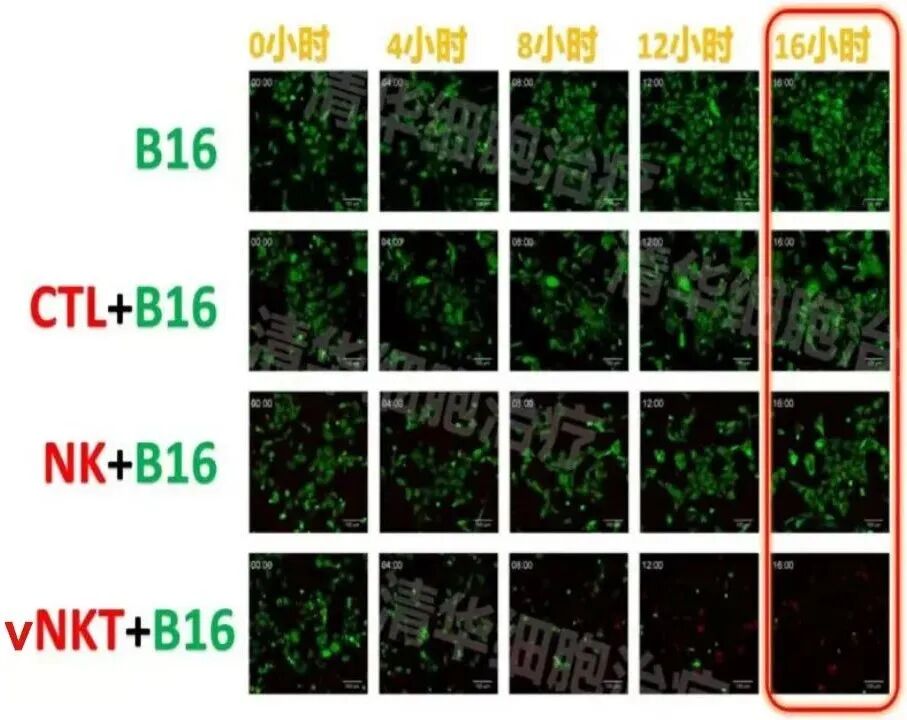
Experimental conditions: In the presence of vNKT cells, after 16 hours, nearly all B16 tumor cells were killed!

After 20 courses of systemic treatment and active mindfulness training, Ms. Zhang has successfully passed the 3-year recurrence risk period, with no signs of tumor recurrence observed during follow-up and imaging examinations. Her psychological stress has been alleviated, and her sleep quality has significantly improved.


02              


Imaging changes 

Imaging  changes              


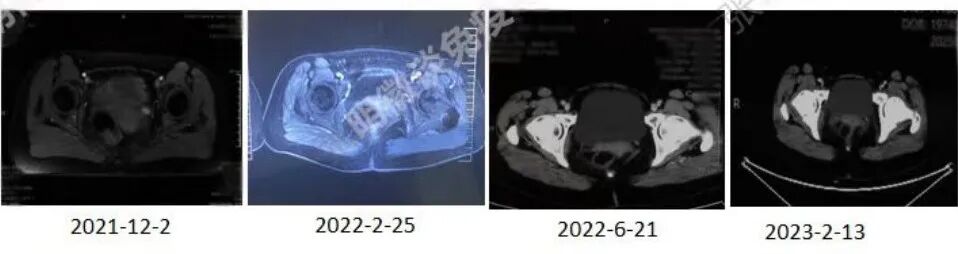
Imaging results show that the pelvic MRI in December 2021 demonstrated postoperative changes of rectal cancer without obvious recurrence or metastasis. The follow-up MRI from February 2022 to February 2023 showed no changes compared to the previous one.        


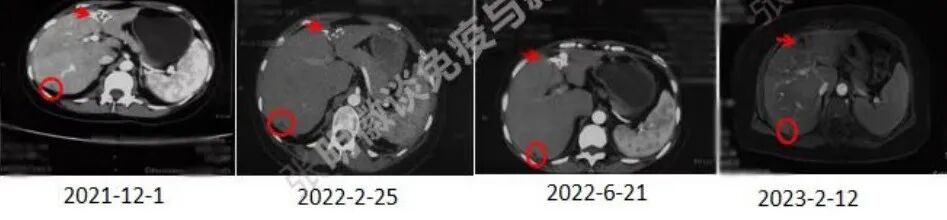
Imaging results show that in December 2021, an upper abdominal CT scan revealed postoperative changes in the left lobe of the liver and a small cyst in the right lobe, with no significant abnormal findings. A follow-up examination from February 2022 to February 2023 showed no changes compared to the previous results.


03            


Case Inspiration

Conclusion  and Commentary


Observing stools is important, and these alarm signals cannot be ignored:


The early symptoms of rectal cancer are often overlooked, especially the symptom of blood in stool. 80% of people will mistakenly believe that blood in stool
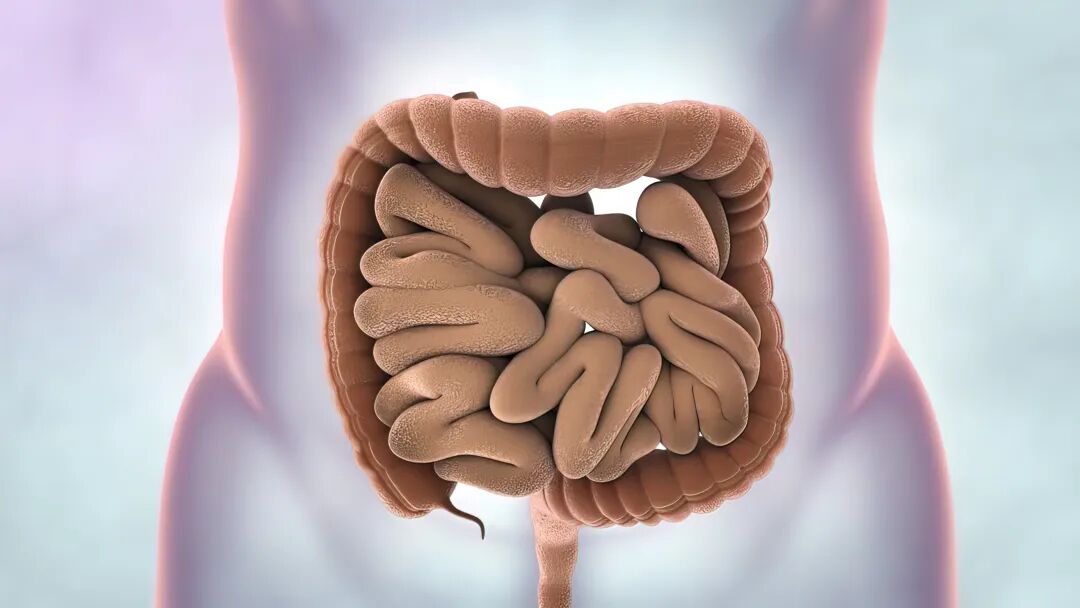

is hemorrhoids. In the early stages of cancer, our body will send out some warning signals. If we can detect them in time and take measures, we can minimize the damage.      


Bloody stool: The most common symptom in rectal cancer patients is bloody stool, which is mostly red or dark red, mixed with fecal mucus, or bloody and purulent stool; while hemorrhoidal bloody stool is bright red, and the blood appears mostly in the form of spraying or flowing out, without mixing with feces;      


Changes in bowel habits: Tumor secretions can irritate the intestines, leading to symptoms such as frequent bowel movements and tenesmus;


Thinning of stool: If cancer grows into the intestinal lumen, it can cause narrowing of the lumen, resulting in stool that is often thinner when discharged.      

     
Positive mindfulness: An effective strategy for psychological rehabilitation of cancer patients    


Many cancer patients experience a series of complex psychological states after being diagnosed, including fear, anxiety, despair, etc. These psychological states not only affect the patients' emotions but may also have a negative impact on their recovery process and quality of life. To cope with this situation, the method of active mindfulness is increasingly accepted and recommended by patients and medical teams.


Mindfulness-based stress reduction method              


  Body Scan

             
Lie on your back or sit upright, adjust your breathing, and feel and experience each part of your body, from your toes to the top of your head.              
  Mindful Breathing              

             
Sit or lie down, focus your attention on your breathing movements, and experience the process and changes of your breath.
  Mindful Walking              


Pay attention to the sensations on the bottom of your feet during walking, or the sensations when your feet are lifted, paused, and placed down.

  Meditation     Thoughts


Send blessings to everyone, including yourself, with phrases such as peace, joy, health, and freedom from pain.

  Righteous Mindfulness Listening              


Listen to the sound, perceive its natural attributes, feel the occurrence, change, and disappearance of the sound, without judgment or analysis.

  Mindful living


Integrate mindfulness into daily life and work, be aware of and accept the present moment, and enjoy it.



Written by Cao Tingting
Reviewed by: Qiao Jiacheng, Wang Ying, Gao Chen      
Edited/typeset by Zhang Jiao


Zhang Minghui  Founder of Lehe New Medicine and Ph.D. in Immunology from Tsinghua University School of Medicine
Since the discovery of vNKT cells in 2002, Professor Zhang Minghui's research team has been engaged in research for over 20 years, accumulating treatment experience from over 700 cases of solid tumors, covering almost all common solid tumors. The research results fully demonstrate the great value of vNKT in the treatment of solid tumors.


It is suitable for postoperative patients with high malignant potential or at risk of recurrence; patients whose tumors have been largely controlled but not cured through conventional treatments such as chemotherapy, radiotherapy, and targeted therapy; and patients who continue to have high carcinogenic factors. If these patients do not undergo effective follow-up treatment after traditional anti-tumor therapy, recurrence, metastasis, or secondary tumor development will be highly probable. In this case, vNKT cell therapy is an ideal follow-up treatment method that can significantly improve the prognosis of patients.            


Link          
system
I
         

Scan QR code

Communicate with Professor Zhang Minghui's team


Click on the image to view past exciting content


Reposting is a driving force, sharing is a virtue